
A Brief History of the Russia-Ukraine War
Why in News?
The ongoing Russia-Ukraine conflict has witnessed significant developments in recent weeks. Former U.S. President Donald Trump has introduced a drastic shift in America’s policy toward the war, raising concerns about future U.S. involvement. Additionally, European leaders are debating their stance on Ukraine’s NATO aspirations and the long-term impact of the war on global security. 
Background of the Conflict
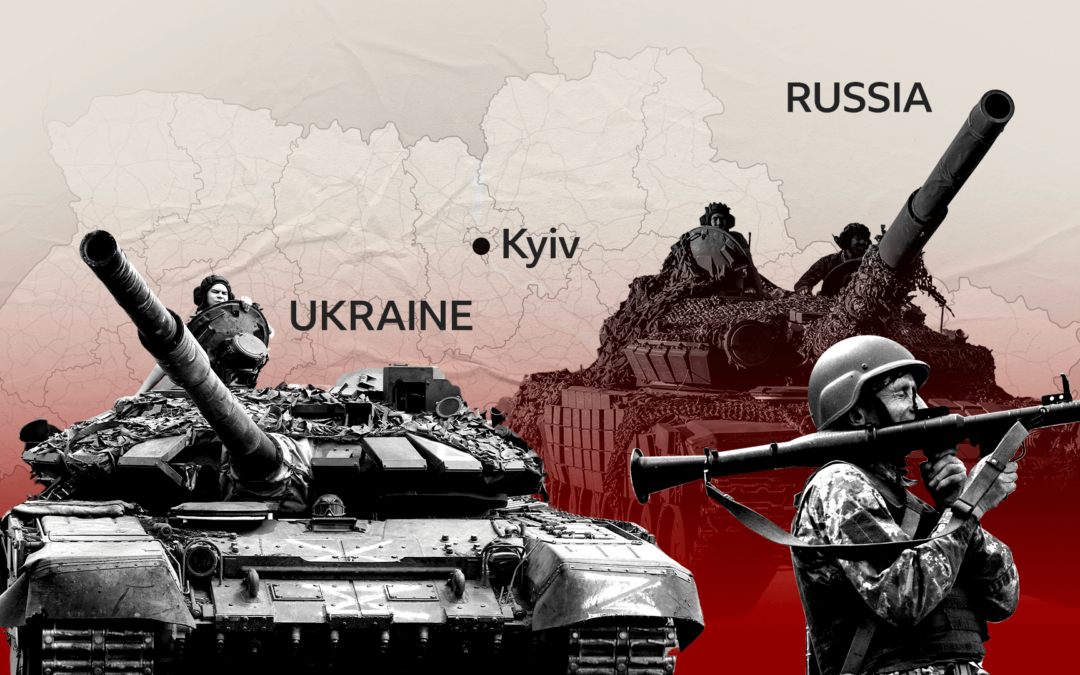
The Russia-Ukraine war began on February 24, 2022, when Russian President Vladimir Putin launched a full-scale invasion of Ukraine. The invasion followed years of tensions stemming from Ukraine’s aspirations to join NATO and the European Union, which Russia viewed as a direct threat to its sphere of influence. The war, initially anticipated to end swiftly, has dragged on for over two years, with both sides suffering heavy casualties.
Key Events in the War
- Early Stages of the Invasion – Russia’s initial goal was to quickly capture Kyiv and install a pro-Russian government. However, Ukraine, with Western military assistance, successfully resisted, forcing Russia to shift focus to the eastern and southern regions.
- Western Response – The U.S. and European allies imposed severe sanctions on Russia and provided extensive military aid to Ukraine, totaling over $120 billion by the end of 2023.
- Battles for Strategic Cities – Russia captured key areas, including Mariupol, while Ukraine launched counteroffensives, reclaiming parts of Kharkiv and Kherson in late 2022.
- Shifts in Military Strategy – By 2023, Russia reinforced defensive lines, while Ukraine launched drone and missile strikes on Russian infrastructure, including Crimea.
- Recent Developments – Russia continues offensive operations in Donetsk and Luhansk, while the U.S. debates the future of military support under shifting political leadership.
Changing U.S. Policy
Trump’s stance on the war marks a significant shift from the Biden administration’s policies. He has suggested reducing aid to Ukraine and prioritizing negotiations with Russia. This reflects a broader strategic shift, where Trump sees China, rather than Russia, as the primary threat to the U.S. and global stability.
Europe’s Position
European nations remain divided. While countries like the U.K., Poland, and the Baltic states strongly support Ukraine, others, including Hungary and some factions in Germany and France, are more cautious about prolonged engagement. The economic burden of the war and fears of escalation with Russia have influenced European policy debates.
Future of the Conflict
The war remains unpredictable. Ukraine seeks continued Western military aid and NATO membership, while Russia aims to solidify territorial gains and weaken Western unity. The outcome of U.S. elections and shifts in European policies will significantly impact the war’s trajectory.
Conclusion
The Russia-Ukraine war has reshaped global geopolitics. With shifting U.S. priorities, divided European opinions, and Russia’s continued aggression, the future of the conflict remains uncertain. As the war enters another year, the world watches closely to see how international policies evolve in response to this prolonged crisis.

