
About Anatomy of Three Riot-Like Situations in Karnataka:
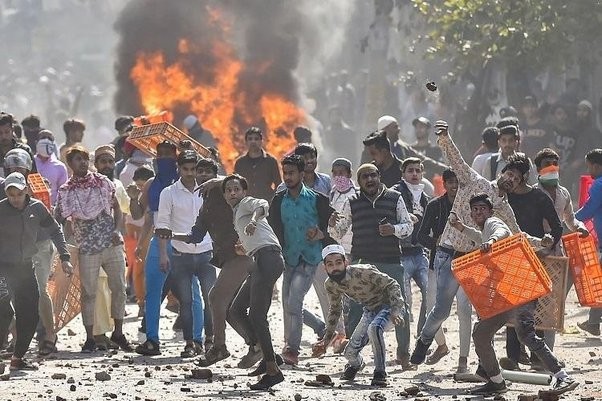
Karnataka has witnessed multiple riot-like situations over the past four years, with the latest incident occurring in Udayagiri, Mysuru, following the Delhi Assembly election results. The event was triggered by a social media post showing opposition leaders Rahul Gandhi, Akhilesh Yadav, and Arvind Kejriwal with Arabic verses written on their bodies. The provocative nature of the post led to unrest in Udayagiri, a Muslim-majority locality, culminating in a violent protest outside the local police station on February 10. 
Timeline of Events
- Incident in Udayagiri: A large crowd gathered outside the police station, demanding action against the individual responsible for the post. Though the police arrested the individual, rumors spread that he would be released on bail, further fueling the unrest. A local Maulvi reportedly addressed the crowd with a provocative speech, leading to violent stone-pelting, which injured 14 police personnel.
- Previous Incidents: Similar riot-like situations occurred in D.J. Halli, Bengaluru (August 2020), and Hubballi (April 2022). In both cases, large crowds gathered outside police stations in response to allegedly blasphemous social media posts. The police crackdown on the accused did not pacify the mobs, which eventually turned violent. The D.J. Halli incident resulted in police firing, killing four people.
Role of Social Media and Political Responses
- The Bharatiya Janata Party (BJP), in power during the first two disturbances, invoked the Unlawful Activities (Prevention) Act (UAPA), 1967, and transferred the probe to the National Investigation Agency (NIA).
- Social media platforms like Facebook, X (formerly Twitter), WhatsApp, and Telegram played a significant role in amplifying misinformation and fueling tensions. Police struggle to monitor encrypted platforms like WhatsApp and Telegram, which makes preventing such riots difficult.
- Legal Implications: Karnataka saw a rise in sedition cases related to social media posts between 2019 and 2021. According to a study by Article 14, the state ranked first in arrests for sedition over social media content in 2021.
Challenges in Policing and Prevention
- Limitations of Social Media Monitoring: Police monitoring tools are ineffective due to language barriers and their inability to analyze images and comment sections.
- Overreach in Law Enforcement: Many individuals have been booked for simply criticizing the ruling party, leading to a spike in sedition cases.
- Escalation of Religious Polarization: In each riot-like situation, those mobilizing the crowd failed to control them even when they attempted to do so.
Key Takeaways and Solutions
- Need for Community Outreach: Effective community engagement between police, leadership, and the community can help prevent escalation.
- Better Social Media Monitoring: Advanced AI-based tools capable of detecting regional languages and images should be deployed.
- Preventing Religious Polarization: Efforts should be made to curb the misuse of social media by extremist groups.
- Strict Action Against Provocateurs: Holding those who incite violence accountable—whether religious leaders or political figures—can help deter future incidents.
Why This Is in the News
This incident underscores the increasing challenge of controlling religiously motivated violence fueled by social media. Karnataka has now witnessed multiple cases where online hate speech translates into real-world violence, raising concerns about law enforcement strategies, digital regulation, and communal harmony in the state.

