
About Increase in Government Spending and Private Consumption Bode Well for India’s Economy:
India’s economic performance in the December quarter of the financial year 2024-25 (Q3FY25) showed a notable improvement, with the real GDP growth rate reaching 6.2%. This was an increase from the previous quarter’s revised estimate of 5.6% (earlier 5.4%). However, despite this positive shift, the growth rate remains the slowest since Q4FY23, apart from the preceding quarter. The Indian economy continues to navigate global headwinds, including trade restrictions and sectoral slowdowns that may impact overall performance in the coming months.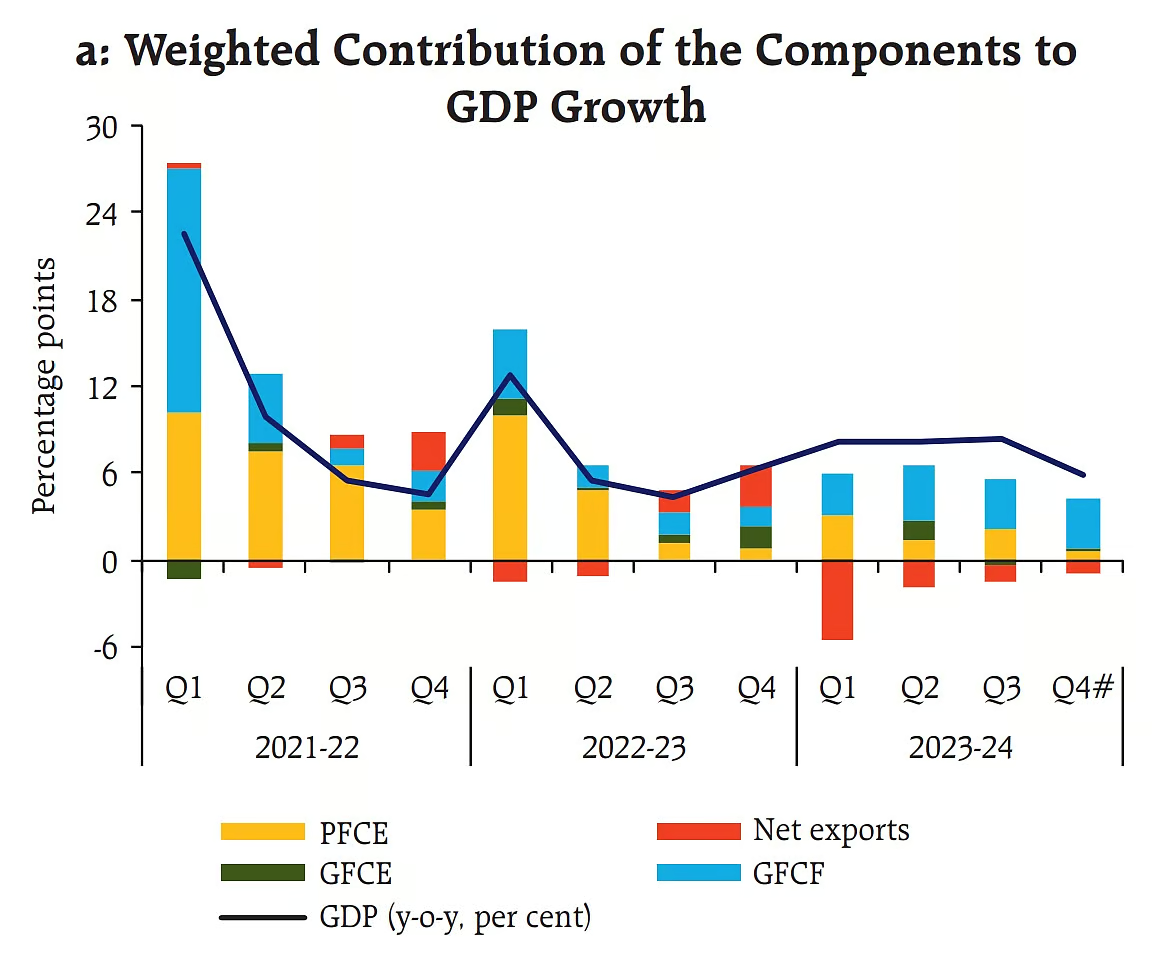
Sectoral Growth Trends and Challenges:
1. Primary, Secondary, and Tertiary Sector Performance:
- The primary sector (agriculture, forestry, and fishing) was the main driver of growth, witnessing a value addition of 5.2%, a sharp rise from 1.8% in the same quarter last year. A good monsoon season and improved rural infrastructure played a key role in this growth.
- The secondary sector (manufacturing and industry), however, slowed down significantly to 4.8%, compared to an impressive 12.4% growth in the previous year. This decline is largely due to supply chain disruptions, global trade uncertainties, and rising raw material costs.
- The tertiary sector (services) saw a moderate slowdown, growing at 7.4% compared to 8.3% last year. Key service industries such as IT, retail, and financial services faced demand fluctuations, but strong domestic consumption kept the sector afloat.
2. Global Trade Uncertainties and Export Challenges:
- The government’s full-year GDP growth target of 6.5% now appears difficult to achieve due to various external factors, including increasing trade restrictions imposed by major economies.
- The United States’ proposed 25% import tariff on steel and pharmaceuticals poses a serious threat to Indian exports. India’s pharmaceutical industry, which exported $8.7 billion worth of goods to the U.S. in FY24, is particularly vulnerable. About 31% of India’s total pharma exports go to the U.S., meaning any major policy change could cause significant revenue losses.
- In response, some Indian firms are considering shifting production to the U.S. to bypass these tariffs, a move that could reduce domestic manufacturing output and impact employment in the sector.
Positive Indicators Supporting Economic Growth:
3. Increase in Government Spending and Private Consumption:
- Government spending saw a remarkable 8.3% increase, compared to just 2.3% last year, primarily driven by infrastructure projects, public sector investments, and welfare schemes.
- Private consumption expenditure also rose by 6.9%, up from 5.7% in the previous year. The rising consumer confidence, festive season demand, and increased rural consumption contributed significantly to this surge.
- Major events such as the Maha Kumbh festival have further stimulated domestic demand, particularly in sectors like hospitality, travel, and retail.
4. Inflation Control Measures and RBI’s Projections:
- Inflation remains a crucial factor in India’s economic stability. The Reserve Bank of India (RBI) has projected an average inflation rate of 4.8% in FY25, with expectations that it will further decline to 4.2% in FY26.
- If these projections hold, India may align with the RBI’s medium-term inflation target of 4%, which could lead to further monetary policy easing and interest rate cuts, boosting investment and growth.
Concerns Over Economic Data Transparency:
5. NSO’s Methodology Changes and the Need for Clarity:
- The National Statistical Office (NSO) has made adjustments to its data collection methodology, incorporating industry-wise and institution-wise details.
- However, there is limited transparency on how these changes have impacted GDP calculations, raising concerns among economists and policymakers.
- The NSO attributed sectoral variations to benchmark revisions and updated data availability, but further clarification is needed to ensure the credibility of India’s economic statistics.
Conclusion:
India’s economy has shown resilience, with government spending and private consumption providing strong growth momentum. However, global trade uncertainties, sectoral slowdowns, and data transparency concerns pose challenges that require close monitoring. Moving forward, policymakers must focus on fostering a competitive manufacturing sector, negotiating favorable trade agreements, and ensuring economic data transparency to maintain India’s growth trajectory and achieve sustainable development.

