Foundational Values, the Journey of the Indian State
by rohit | Jan 27, 2025 | Courses |
About Foundational Values, the Journey of the Indian State:
-
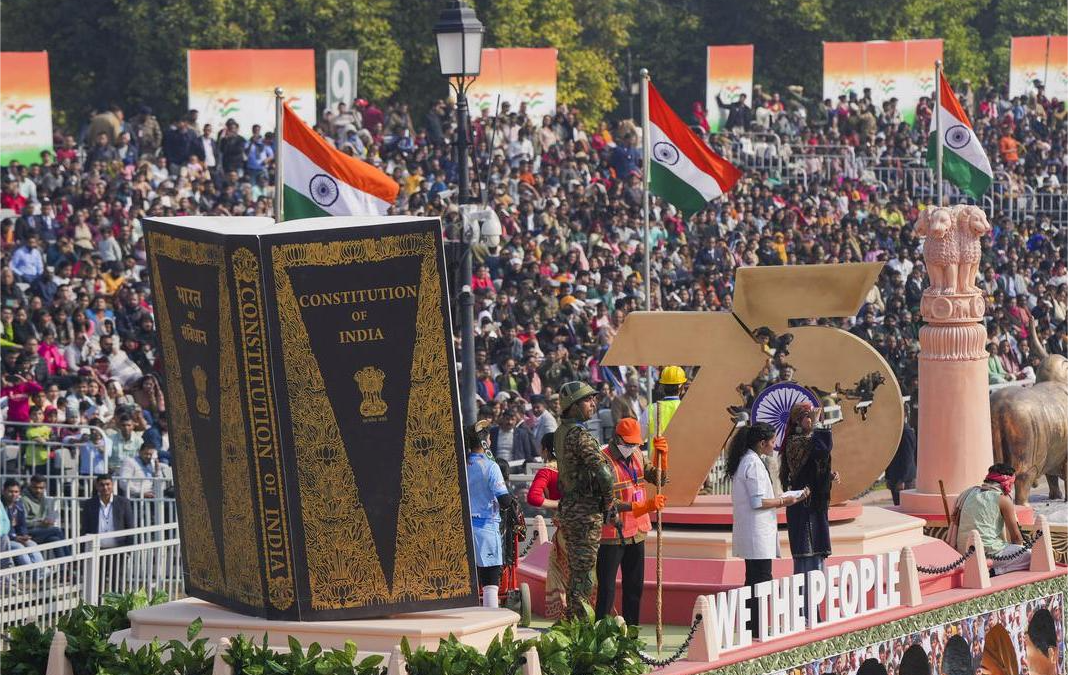
- As India celebrates the 75th anniversary of the enforcement of its Constitution, it is a pivotal moment to reflect on the nation’s journey while reaffirming its foundational values.
- This transformative document laid the groundwork for a sovereign democratic republic, aspiring to uphold liberty, equality, and fraternity.
- However, as B.R. Ambedkar’s prophetic remarks during his closing address to the Constituent Assembly in November 1949 remind us, this journey has been fraught with challenges.
- Indian Federalism: Features, Contemporary Challenges and Resilience Shown
- The Unique Nature of Indian Federalism
- India’s federal structure is distinct, designed to accommodate its diverse socio-cultural and historical realities.
- Unlike classical federations, India operates on a ‘quasi-federal’ model that blends unitary and federal characteristics.
- This flexibility has enabled the country to address regional aspirations while maintaining national unity,but the relationship between the Union and States has often been fraught with challenges.
- The Role of State Governors: A Source of Tension
- State Governors, expected to act as neutral arbiters, have often been perceived as partisan agents of the Union government.
- This has led to legal disputes and strained centre-state relations,particularly in politically sensitive contexts.
- Recent Supreme Court rulings have sought to reaffirm the constitutional mandate of neutrality, strengthening the federal character of the Indian system.
- Simultaneous Elections: A Contentious Proposal
- The idea of holding simultaneous elections for the Lok Sabha and State Assemblies has sparked significant debate.
- Proponents argue that it would reduce costs and administrative disruptions, while critics caution that it could centralise power and overshadow state-specific issues.
- This proposal underscores the tension between efficiency and the preservation of regional autonomy.
- Linguistic Diversity and Federal Challenges
- India’s linguistic diversity poses unique challenges to its federal structure.
- The marginalisation of regional languages like Tamil, Kannada, Bengali, and Marathihas fuelled demands for greater linguistic equality.
- Perceptions of Hindi imposition have led to protests, emphasising the need for policies that respect multilingualism while fostering national unity.
- Fiscal Federalism: Balancing Resource Distribution
- Fiscal arrangementsunder the Finance Commission and GST regime have been a contentious issue, with States often arguing that the system disproportionately favours the Union
- Delayed GST compensation payments, especially during crises like the COVID-19 pandemic, have highlighted the vulnerabilities of the current fiscal framework and the need for reforms to ensure equitable resource distribution.
- Delimitation Exercise: A Test of Federal Harmony
- The upcoming delimitation exercise to redraw parliamentary constituencies based on population data poses a significant challenge.
- States with successful population control measures fear losing political representation, creating a conflict between policy success and equitable representation.
- This issue exemplifies the complexities of India’s federal system.
- The Resilience of Indian Federalism
- Despite these challenges, federalism remains a cornerstone of India’s democracy.
- R. Ambedkar’s vision of co-equal powers between the Union and States emphasises the need for mutual respect and cooperation.
- Judicial interpretations, such as the S.R. Bommai vs Union of India case, have reinforced federalism as part of the Constitution’s basic structure, ensuring its continued relevance in India’s governance.
- The Issue of Unequal Democracy: The Challenge of Social and Economic Justice
- Legal and Institutional Challenges to Liberty
- Critics argue that India is increasingly veering towards becoming a police state, with stringent laws and practices that stifle dissent and curtail individual freedoms.
- Laws such as the Unlawful Activities (Prevention) Act (UAPA) and the Prevention of Money Laundering Act (PMLA) have been criticised for their overreach, vague definitions, and potential for misuse.
- These statutes, alongside the retention of colonial-era laws like sedition, are seen as tools to suppress political opposition and curtail freedom of speech.
- While these measures are often justified in the name of national security, their application has raised concerns about eroding democratic liberties and violating constitutional guarantees.
- Caste and Social Inequalities: A Persistent Challenge
- One of the most enduring social issues in India is caste-based inequality, which continues to dominate the social and economic landscape.
- Despite constitutional safeguards such as the abolition of untouchability and affirmative action policies, caste still plays a significant role in determining access to education, employment, and social mobility.
- The intersections of caste, class, and gender exacerbate inequalities, leaving marginalised communities with limited opportunities to break free from systemic oppression.
- The persistence of caste-based discrimination and violence indicates that India is far from achieving the vision of an egalitarian society.
- Economic Inequalities: The Growing Divide
- India’s economic growth over the past few decades has been remarkable, but the benefits of this growth have not been evenly distributed.
- The gap between the rich and poor has widened, with wealth concentrated in the hands of a few. Rural-urban disparities, unequal access to quality education and healthcare, and limited opportunities for upward mobility further deepen economic inequalities.
- Gender Inequality: A Barrier to Social Justice
- Another critical dimension of inequality is gender disparity, which continues to limit women’s participation in political, economic, and social spheres.
- Despite constitutional provisions ensuring equal rights, women in India face systemic challenges such as wage gaps, underrepresentation in leadership roles, and gender-based violence.
- The struggle for gender equality is further complicated by cultural and social norms that perpetuate patriarchal attitudes, often rendering progressive legal frameworks ineffective in practice.
- The Way Forward: Preserving the Constitution
- Of late, there has been some noise about revamping the Constitution, as the accusation is that it has evolved from a European colonial perspective.
- It has become a common trope to suggest replacement of the present-day Constitution with an ‘Indic’ constitutional
- Rather than dismantling the existing framework, the need of the hour is to protect and strengthen the constitution.
- Ambedkar’s call to defend democratic principles and preserve the Constitution is more relevant than ever.
- India requires a new generation of constitutional guardians, judges, bureaucrats, politicians, activists, journalists, and citizens, who prioritise the nation over personal or sectarian interests.
- These guardians must uphold the Constitution’s vision, ensuring that governance reflects the ideals of justice, liberty, equality, and fraternity.
- Conclusion
- The 75th anniversary of India’s Constitution is a moment to celebrate its achievements and confront its challenges.
- The Constitution has provided a robust framework for India’s democratic evolution, but its promise remains incomplete without addressing the deep-seated inequalities that persist in society.
- As the nation looks to the future, it must heed Ambedkar’s vision, creating a sense of fraternity and safeguarding democratic principles.


