
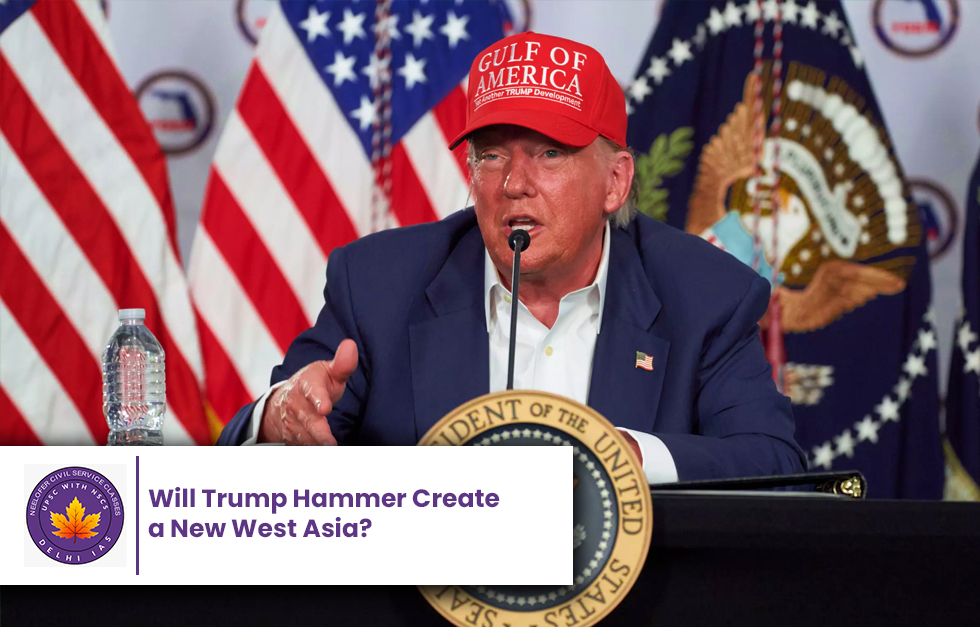
Will Trump Hammer Create a New West Asia?
Despite his lack of historical understanding, Donald Trump’s aggressive West Asia policy could reshape the region’s fragile balance — but lasting peace remains uncertain without addressing local aspirations for genuine independence. 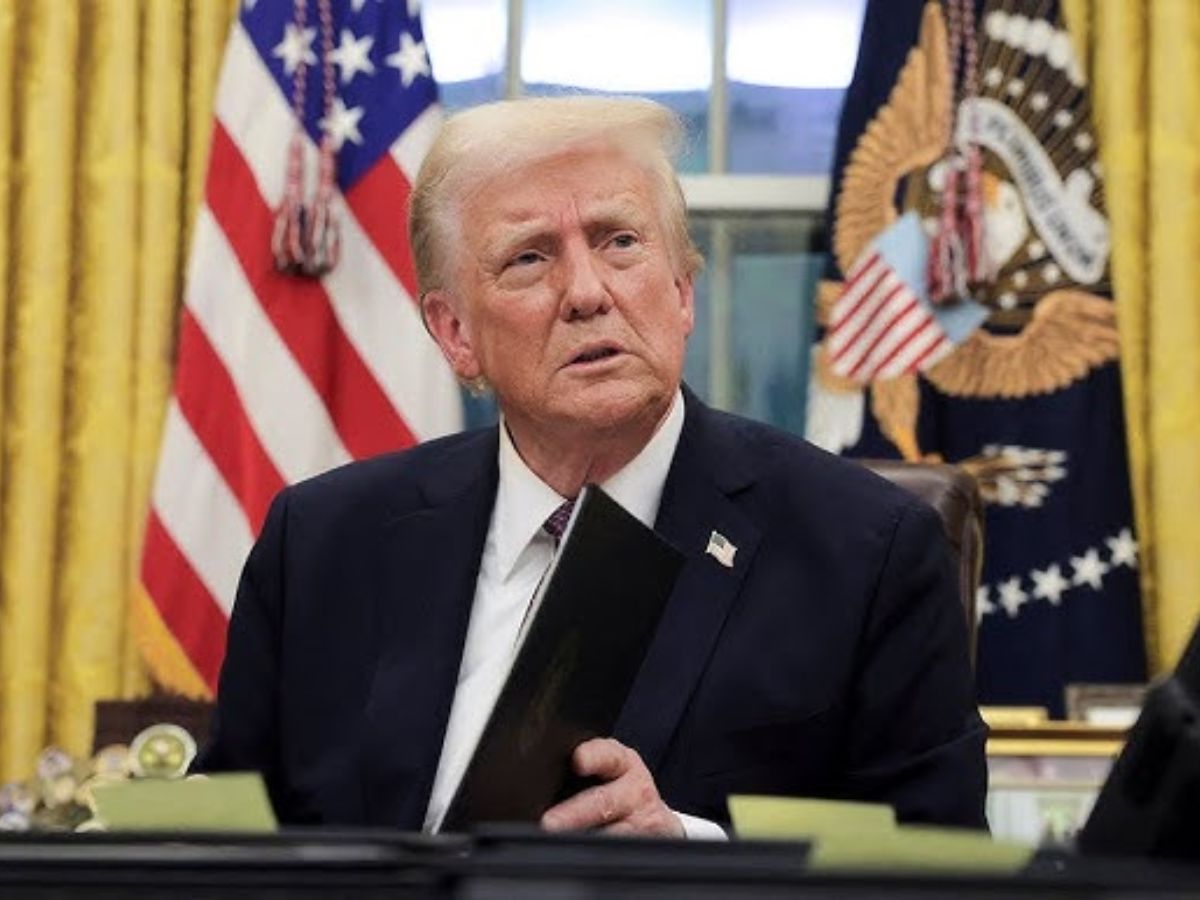
Why in News?
In a parallel to Winston Churchill’s 1921 Cairo Conference, former US President Donald Trump’s military and diplomatic push in West Asia, nicknamed “Operation Midnight Hammer” against Iran, reflects America’s continued attempts to control regional dynamics. This move renews the debate on how external interventions reshape local conflicts.
Introduction
America’s foreign policy in West Asia has historically relied on military interventions, covert support, and alignment with regional powers like Israel. Trump’s assertive approach — encouraging Israel’s actions while confronting Iran — echoes previous tactics that ignore deeper local demands for self-rule and sovereignty.
Key Issues and Background
US Policy and India’s Stance
-
The United States has long opposed nuclear weapons proliferation but selectively tolerates nuclear capabilities in allies like Israel.
-
India, despite facing pressure, has not signed the 1996 Comprehensive Test-Ban Treaty (CTBT) and maintains its “credible minimum deterrent.”
-
India’s leaders reject discriminatory nuclear standards but have closer ties with Israel, especially under PM Narendra Modi.
Operation Midnight Hammer
-
Trump’s operation was a calculated escalation against Iran, aiming to weaken its influence and strengthen Israel’s security umbrella.
-
The offensive reflected America’s repeated military actions to control regional power balances.
-
India remains cautious due to its own nuclear doctrine and historical reluctance to accept unequal global nuclear rules.
Regional Power Imbalance
-
Israel’s intrusive presence and military operations are justified by the West as necessary for security but often ignore the sovereignty aspirations of Palestinians and neighbouring Arab nations.
-
Ongoing conflicts, like the Gaza bombings and airstrikes in Syria, fuel hostility and radicalisation.
-
US backing of Israel’s expansionist policies (like the “Eretz Yisrael” vision) fuels fears of further Arab displacement and instability.
Specific Impacts or Effects
-
Escalating clashes strain global diplomacy, drawing criticism from Western politicians too, such as Marco Rubio and British Labour leader Keir Starmer.
-
Religious-nationalist rhetoric strengthens hardline positions on both sides.
-
The repeated failure to address Palestinian statehood pushes more regional actors to resist American-Israeli dominance.
Challenges and the Way Forward
Challenges
-
A peace process that ignores local demands is unlikely to succeed.
-
India faces diplomatic dilemmas in balancing ties with Israel while preserving its independent nuclear policy.
-
Constant regional upheavals threaten global oil supply routes and raise India’s energy security risks.
Steps Forward
-
Major powers, including the US, must respect sovereign independence and local self-determination.
-
India can continue its balanced approach: maintaining ties with Israel while supporting non-discriminatory nuclear norms.
-
Global leaders must push for a just solution for Palestinians to avoid perpetual conflict.
Conclusion
Trump’s aggressive tactics in West Asia may change short-term alignments but cannot resolve deep-rooted conflicts unless people’s aspirations for freedom and security are honoured. For India, maintaining strategic neutrality and safeguarding its own nuclear doctrine remain critical as the region stays volatile.
5 Questions and Answers
Q1: What was ‘Operation Midnight Hammer’?
A: A US military operation under Trump aimed at pressuring Iran to weaken its regional influence.
Q2: How does Israel benefit from US policies in West Asia?
A: Israel receives backing for its security and expansionist goals, while its nuclear status is overlooked.
Q3: Why does India reject the Comprehensive Test-Ban Treaty (CTBT)?
A: India opposes unequal nuclear standards that favour some countries while restricting others.
Q4: What challenges does India face in this context?
A: Balancing close ties with Israel while maintaining its independent nuclear position and energy security.
Q5: What is needed for lasting peace in West Asia?
A: Respect for local sovereign aspirations, guaranteed security for all, and a just resolution of the Palestinian issue.

