
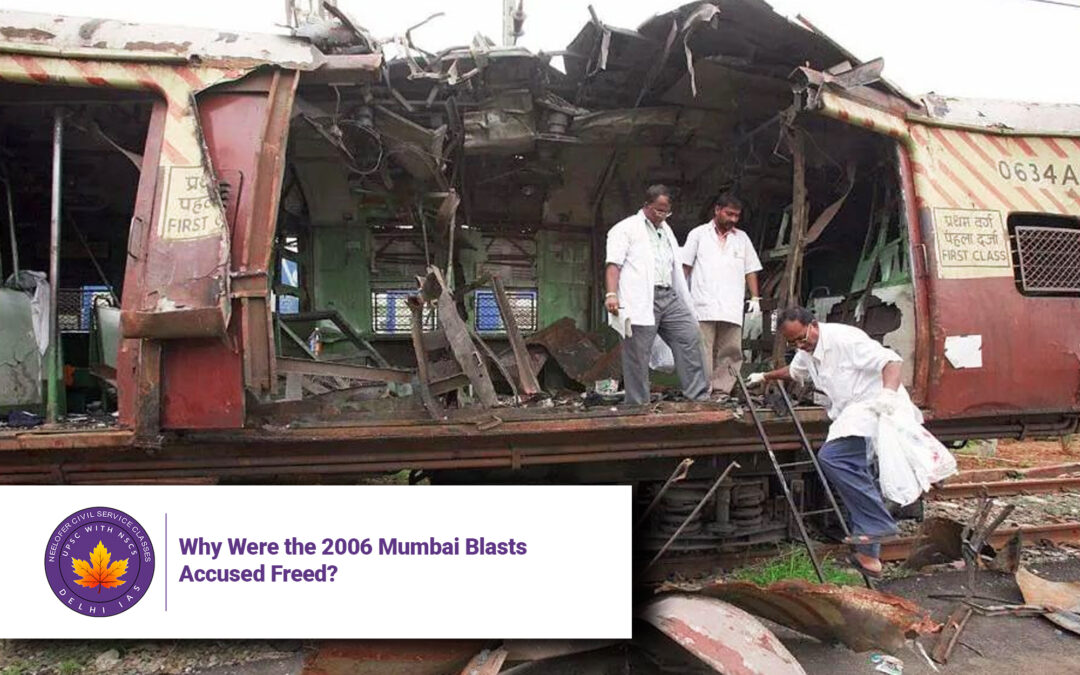
Why Were the 2006 Mumbai Blasts Accused Freed?
Why in News?
The recent release of the accused in the 2006 Mumbai train blasts has reignited debates about justice, terrorism, and the legal system in India. On July 1, 2023, the Bombay High Court overturned the convictions of the accused, citing lack of sufficient evidence and procedural lapses. This decision has raised questions about the effectiveness of the judicial process in handling cases of terrorism and the implications for victims and society at large.
Introduction
The 2006 Mumbai train blasts, which occurred on July 11, resulted in the deaths of over 200 people and injured more than 700. The coordinated attacks on the suburban rail network sent shockwaves throughout the nation, leading to a massive investigation and the subsequent arrest of several individuals. After a lengthy legal process, these individuals were convicted, but the recent ruling has brought the case back into the spotlight. The Bombay High Court’s decision to acquit the accused has sparked intense public discourse regarding the efficacy of the criminal justice system and its ability to deliver justice in cases involving terrorism.
Key Issues and Background
1. Overview of the 2006 Mumbai Blasts (Normal Bold)
The blasts were a series of seven bomb explosions that occurred during the evening rush hour on the Western line of Mumbai’s local train network. The attacks were attributed to a terrorist module operating in the region, and they were aimed at causing mass casualties and panic in one of India’s busiest cities.
- Impact: The explosions caused widespread destruction, loss of life, and significant emotional trauma for the victims’ families and the city as a whole.
- Response: In the aftermath, the government initiated an extensive investigation, leading to the arrest of over a dozen individuals suspected of involvement in the attacks.
2. The Legal Proceedings (Normal Bold)
The legal proceedings were lengthy and complex:
- Arrests and Charges: The accused were charged under various sections of the Indian Penal Code, the Unlawful Activities (Prevention) Act, and the Maharashtra Control of Organised Crime Act (MCOCA).
- Conviction: In 2015, a special MCOCA court convicted the accused based on the evidence presented, including testimonies from witnesses and forensic reports.
3. The High Court’s Ruling (Normal Bold)
The Bombay High Court’s ruling on July 1, 2023, declared that the prosecution had failed to prove its case beyond reasonable doubt. The judges highlighted several critical points:
- Insufficient Evidence: The court noted that much of the evidence presented was circumstantial and did not meet the standards required for a conviction.
- Procedural Lapses: The court pointed out significant lapses in the investigation process, including the handling of evidence and the conduct of witnesses.
Specific Impacts or Effects
The acquittal of the accused has far-reaching implications:
1. Victims and Families (Normal Bold)
- Emotional Trauma: The ruling has reignited the pain and suffering of the victims’ families, who have been seeking justice for nearly two decades.
- Public Sentiment: Many in the public feel that the judicial system has failed them, leading to a sense of betrayal and anger.
2. Legal Precedents (Normal Bold)
- Judicial Confidence: The ruling raises questions about the reliability of evidence and witness testimony in terrorism cases, potentially affecting future prosecutions.
- Policy Discussions: This case may initiate discussions on the need for reforms in the criminal justice system, particularly concerning the handling of terrorism-related cases.
3. National Security Concerns (Normal Bold)
- Terrorism and Justice: The decision may embolden terrorist groups, raising concerns about national security and the government’s ability to effectively counteract threats.
- Law Enforcement Practices: The ruling could lead to a reevaluation of investigative practices to ensure that proper procedures are followed, thereby strengthening the judicial process.
Challenges and the Way Forward
1. Challenges (Normal Bold)
- Public Trust in the Judiciary: The ruling has eroded public confidence in the judicial system, particularly in cases involving terrorism.
- Complex Nature of Terrorism Cases: The complexities involved in prosecuting terrorism-related cases require specialized procedures and training for law enforcement officials.
2. Steps Forward (Normal Bold)
- Judicial Reforms: It is crucial to implement reforms that would streamline processes and improve the quality of evidence presented in court. This may include better training for police and legal professionals handling such sensitive cases.
- Victim Support Systems: Establishing robust support systems for victims and their families can help address their needs and concerns following judicial rulings.
- Public Awareness Campaigns: Increasing awareness about the judicial process and the challenges faced in terrorism cases can help foster a more informed public sentiment.
Conclusion
The acquittal of the accused in the 2006 Mumbai blasts case poses significant questions about justice, accountability, and the efficacy of the Indian legal system. While the ruling underscores the need for robust evidence and procedural integrity, it also highlights the emotional toll on victims and their families. As India continues to grapple with the challenges of terrorism, it is imperative that the judicial system evolves to ensure justice is served while maintaining the principles of fairness and due process.
5 Questions and Answers
Q1: What was the outcome of the 2006 Mumbai blasts case as of July 1, 2023?
A: The Bombay High Court acquitted the accused, citing insufficient evidence and procedural lapses in the investigation.
Q2: What were the main reasons for the High Court’s ruling?
A: The court found that much of the evidence presented was circumstantial and did not meet the standards required for a conviction, along with significant procedural lapses.
Q3: How has this ruling affected the victims and their families?
A: The ruling has reignited emotional trauma for the victims’ families, leading to feelings of betrayal and anger at what they perceive as a failure of the judicial system.
Q4: What implications does this ruling have for future terrorism-related cases?
A: The ruling raises questions about the reliability of evidence in terrorism cases and may lead to discussions on the need for reforms in the criminal justice system.
Q5: What steps can be taken moving forward to improve the judicial process in terrorism cases?
A: Key steps include implementing judicial reforms, establishing victim support systems, and increasing public awareness about the judicial process and the complexities of terrorism prosecutions.

