
Trump Trade Access Offer and the India-Pakistan Ceasefire, A Surprising Link
Why in News?
For the first time, the U.S. government has publicly claimed in a court filing that the ceasefire between India and Pakistan, announced in February 2021, was directly influenced by a trade access offer made by then-President Donald Trump to both countries. 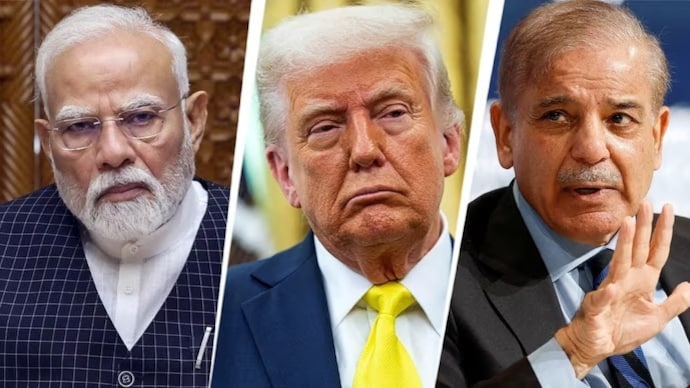
Introduction
In a striking court submission before the U.S. Court of International Trade, Commerce Secretary Howard Lutnick stated that the ceasefire along the India-Pakistan border—specifically the Line of Control (LoC)—was a result of Trump’s diplomatic intervention, tied to U.S. trade negotiations. This statement has sparked fresh debate, particularly as India has officially denied any U.S. mediation in the matter.
Key Developments and Background
-
U.S. Court Filing Revelation
-
On May 23, 2023, Secretary of Commerce Howard Lutnick submitted an affidavit stating that President Trump had offered India and Pakistan favorable trade access in exchange for a ceasefire.
-
The filing came in response to a case questioning the imposition of high tariffs (up to 10%) on aluminum and other imports, which plaintiffs argued were unrelated to national security.
-
-
Link Between Tariffs and Ceasefire
-
Lutnick defended the tariffs under Section 232, claiming they were critical to U.S. national security.
-
He stated that a “cornerstone” of the 2021 ceasefire deal was Trump’s offer to both countries for enhanced market access to the U.S.
-
-
Indian Government’s Denial
-
India’s Ministry of External Affairs (MEA) reiterated that no third-party mediation was involved in the 2021 ceasefire agreement.
-
MEA spokesperson Arindam Bagchi emphasized that India and Pakistan had engaged through direct military channels, and the agreement was a result of bilateral decisions.
-
-
Political Implications and Interpretations
-
While the Trump administration projected the ceasefire as part of its strategic achievements, Indian diplomats have largely downplayed this narrative.
-
Analysts suggest this court revelation may have more to do with justifying U.S. tariff policies than recounting diplomatic history.
-
-
Trade and Tariff Timeline
-
The revocation of India’s GSP (Generalized System of Preferences) in 2019 was followed by retaliatory tariffs.
-
Though India suspended some of these tariffs, others remained, particularly on U.S. agricultural and industrial goods.
-
The ceasefire agreement on February 25, 2021, was interpreted by the U.S. Commerce Department as being facilitated through this trade-based diplomacy.
-
Five Key Takeaways
-
The U.S. now claims its trade diplomacy influenced the 2021 India-Pakistan ceasefire.
-
The ceasefire was allegedly linked to a trade access offer by former President Trump.
-
India has strongly denied any third-party involvement in the ceasefire.
-
The court statement was part of a defense of U.S. national security tariffs.
-
This marks a rare acknowledgment of behind-the-scenes diplomacy between the U.S. and South Asia.
Challenges and the Way Forward
Challenges:
-
Contradictory narratives between U.S. and Indian governments.
-
Geopolitical sensitivity surrounding third-party intervention in South Asian conflicts.
-
Legal complexities in linking trade tariffs to national security and peace diplomacy.
Way Forward:
-
Greater transparency in diplomatic engagements involving global powers.
-
Strengthening bilateral mechanisms like Director-General of Military Operations (DGMO) talks between India and Pakistan.
-
Reevaluation of how trade policy is used as a diplomatic tool in global conflict resolution.
Conclusion
The recent U.S. court revelation adds a surprising dimension to the India-Pakistan ceasefire of 2021. Whether or not President Trump’s trade diplomacy truly influenced South Asian peace dynamics remains debated. However, the incident highlights how economics, security, and diplomacy are increasingly interconnected in the world of international relations.
Q&A Section
1. What did the U.S. court filing claim about the India-Pakistan ceasefire?
It claimed that the 2021 ceasefire was influenced by then-President Trump’s offer of enhanced U.S. trade access to both India and Pakistan.
2. Why was this claim made in a court?
The claim was part of a U.S. Department of Commerce defense in a case challenging tariffs on aluminum imports, linking tariffs to national security and diplomacy.
3. What is India’s official stance on this claim?
India has denied any third-party mediation, stating that the ceasefire was a result of bilateral military dialogue between Indian and Pakistani officials.
4. How does this relate to Trump’s trade policies?
Trump often used trade negotiations and tariff policy as strategic tools. The court filing suggests he extended this approach to influence geopolitical stability.
5. What impact could this have on India-U.S. relations?
It could cause diplomatic friction, as India prefers non-interference in its regional matters. It also raises questions about how the U.S. communicates its role in global diplomacy.

