
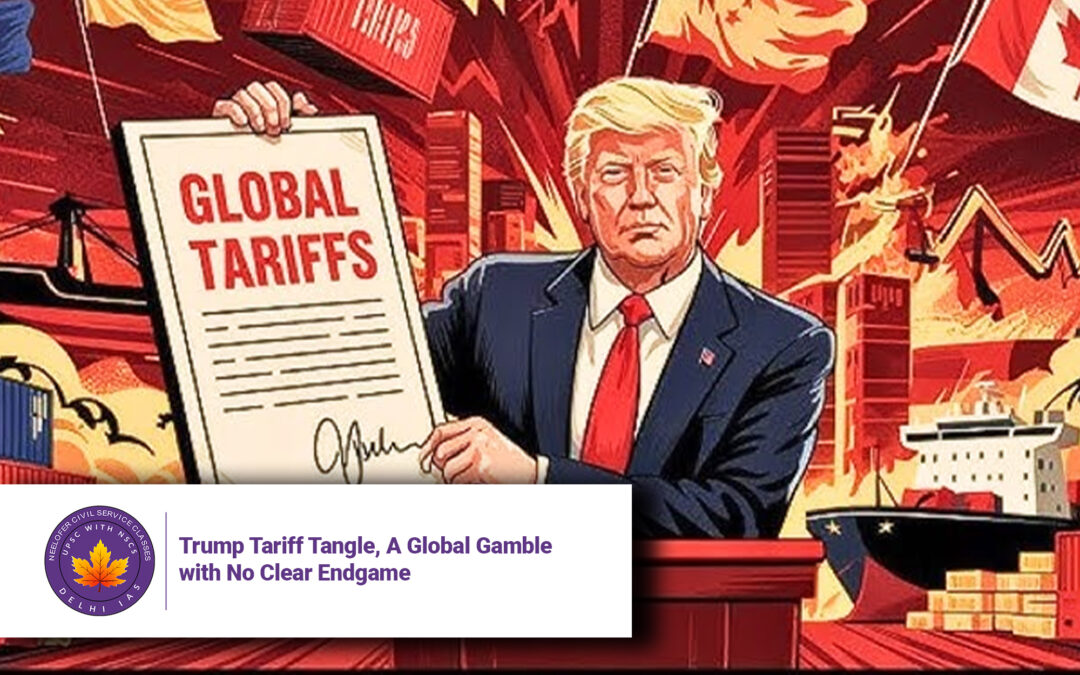
Trump Tariff Tangle, A Global Gamble with No Clear Endgame
Why in News?
Donald J. Trump’s unpredictable tariff policies—designed to pressure nations into trade concessions—have instead sparked global economic confusion. The latest reversal on tariffs with China signals both volatility in U.S. policy and uncertainty for world markets. 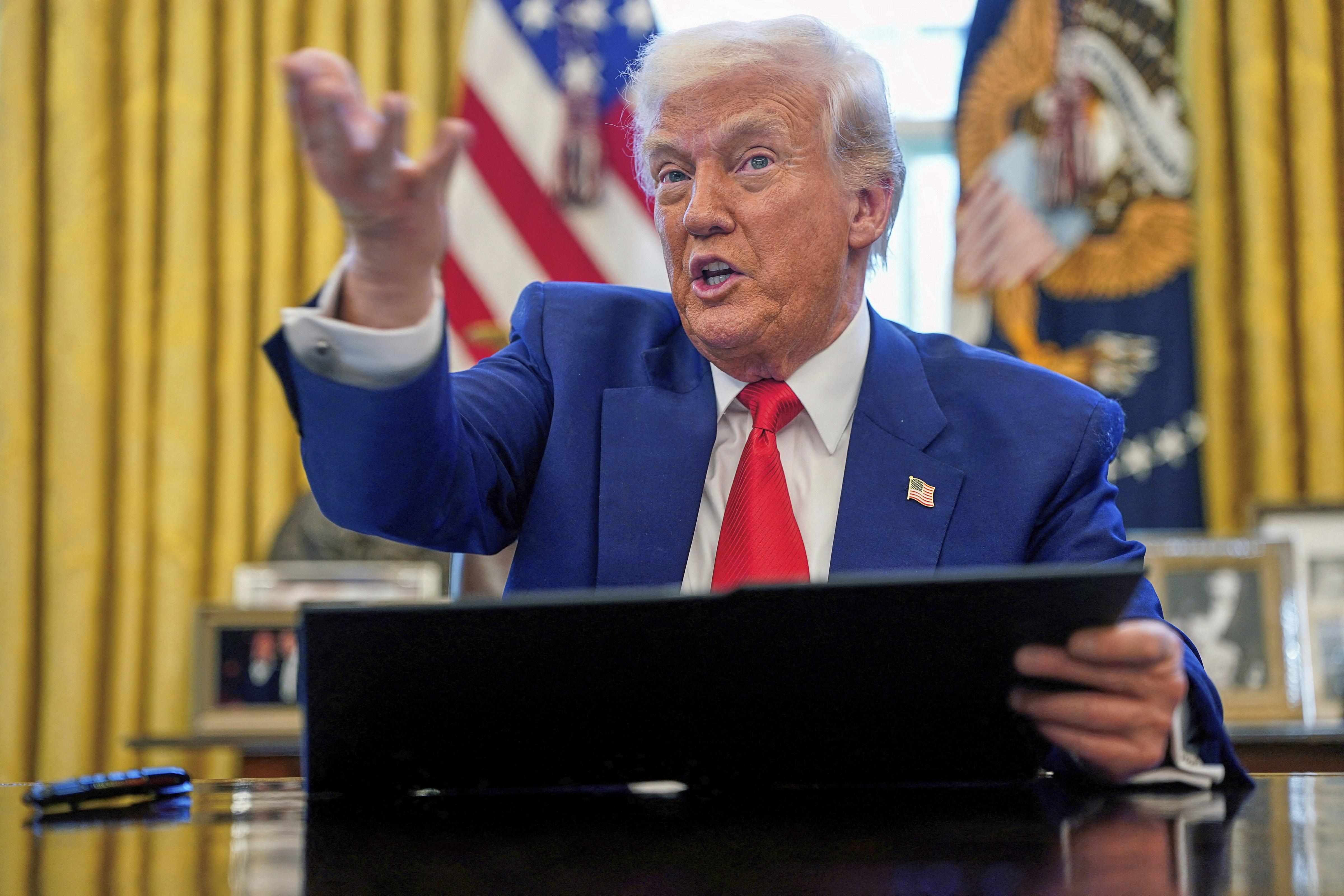
Introduction
President Trump’s tariff strategies have moved beyond structured policy to become an erratic mix of threats, rollbacks, and contradictory signals. What was once a calculated economic tactic has morphed into a high-stakes, global game of “chicken”—where no country, including India, can afford to blink.
Key Issues / Background
-
Tariff Flip-Flops with China
After imposing new tariffs on Chinese goods, the Trump administration suspended them briefly, only to reintroduce others under new categories. This unpredictability has rattled global markets and undermined trust in trade negotiations. -
The Chicken Game Metaphor
Trump’s trade policy now resembles a game of chicken—each country holds its ground, waiting for the other to swerve. The challenge is that with over 150 countries potentially reacting to U.S. tariffs, the complexity increases exponentially. -
Global Market Reaction
Markets have reflected confusion, with the U.S. dollar falling against other currencies despite strong economic fundamentals. Treasury yields have risen while inflation indicators remain weak, showing the disconnect between sentiment and economic indicators. -
India’s Limited Room for Gains
Although India could theoretically benefit from diverted global trade, its options are limited due to its “paired trade” strategy—balancing U.S. access with other global alliances. Moreover, any gains could be undermined by China’s potential retaliation, including currency devaluation or dumping goods globally. -
Investor Sentiment and Advice
The article cautions investors not to panic. In uncertain times, emotional reactions lead to poor outcomes. Instead, systematic investing based on long-term cadence is advised over reactive discretionary moves.
Five Key Takeaways
-
Trump’s tariff moves are no longer based on economic logic but emotional appeal and political optics.
-
Global trade has become volatile, with no clear winner or timeline.
-
Markets are behaving erratically, reflecting a lack of clarity from policymakers.
-
India must tread carefully—it cannot blindly benefit from the U.S.-China dispute.
-
Investors are advised to remain disciplined and systematic in their strategy, avoiding knee-jerk decisions.
Challenges and the Way Forward
Global economies need to insulate themselves from U.S. policy volatility by diversifying trade and strengthening regional cooperation. India, with its historical trade diplomacy, must act swiftly to secure energy deals, new markets, and alternative alliances. As nations play geopolitical poker, passive strategies will lead to missed opportunities.
Conclusion
Trump’s tariff tactics, initially aimed at making countries blink first, now appear confused and counterproductive. The world is witnessing a chaotic realignment of trade dynamics, where uncertainty rules. For India, this is both a warning and an opportunity—to act with agility and assert its trade interests on a global stage.
Q&A Section
Q1. What is meant by Trump’s “Game of Chicken” in trade policy?
It refers to a high-risk strategy where countries refuse to back down from imposing tariffs, hoping others will concede first—mirroring the game where drivers speed towards each other waiting for the other to swerve.
Q2. Why have Trump’s tariff policies confused global markets?
Frequent U-turns, conflicting messages, and lack of clarity have created uncertainty, leading to erratic market movements and investor anxiety.
Q3. How is India positioned in the current trade war scenario?
India faces a dilemma. It can’t solely rely on the U.S. due to strategic balance with other powers. Its chances of gaining from the U.S.-China conflict are limited unless it actively reforms and seizes new trade opportunities.
Q4. What should investors do in such an uncertain environment?
Avoid making emotional decisions. Stick to a long-term strategy with disciplined, systematic investments rather than reacting to daily news cycles.
Q5. What is the article’s advice for the Indian government?
India must adopt a trader’s mindset—being swift and proactive. The time is ripe for it to secure trade deals and assert its position while others remain indecisive.

