
Trump-Proofing India-US Relations
Why in News?
With the possibility of Donald Trump returning to the White House, there are growing concerns in India over the potential disruption of carefully built diplomatic understandings, particularly on issues like Kashmir, Pakistan, and regional security. The article discusses why India need not be overly rattled and how it can safeguard its long-term strategic ties with the U.S. 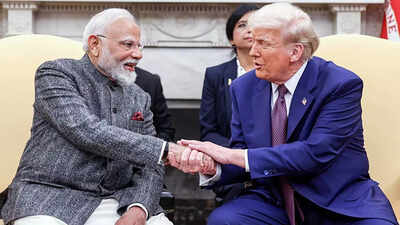
Introduction
Trump’s unpredictable foreign policy in his first term had disrupted global diplomatic norms. For India, this meant challenges on Kashmir, trade, and relations with Pakistan. Now, with discussions of a possible second Trump term, India must prepare to “Trump-proof” its diplomacy while focusing on deeper engagement with broader U.S. institutions beyond the presidency.
Key Issues and Background
Trump’s Disruptions in the First Term
-
After the Pulwama attack (2019), India expected the U.S. to back it fully. However, the Trump administration simultaneously pressured Pakistan and demanded India roll back actions in Kashmir.
-
Trump also offered to mediate on Kashmir, undermining India’s stance on bilateralism.
Geopolitical Shifts and Strategic Concerns
-
Trump’s approach to China, Russia, and global alliances was erratic.
-
He sidelined traditional multilateral frameworks and reoriented U.S. foreign policy toward personal deals, hurting India’s expectations of consistent diplomacy.
Weakening U.S. Institutional Memory
-
Many experienced U.S. diplomats were sidelined. With key senior staff positions unfilled, diplomacy became ad hoc.
-
Trump ran foreign policy through personal whims, rather than stable institutional mechanisms.
The Core of the Concern
Fear of Renewed Disruptions
-
A second Trump term could again hurt Indian interests by:
-
Reopening talks on Kashmir and Pakistan.
-
Distrusting multilateral institutions.
-
Shifting U.S. focus away from India and Indo-Pacific stability.
-
Shifting U.S. Priorities
-
Trump’s tilt toward transactional diplomacy—favoring short-term deals over long-term strategy—puts India’s stable diplomatic relations at risk.
Key Observations
-
India has developed deep ties not only with the U.S. President, but also with Congress, businesses, civil society, and strategic think tanks.
-
These non-executive actors in the U.S. system are likely to uphold continuity in Indo-U.S. relations, regardless of Trump’s return.
-
India has also shown the ability to engage with power centers beyond the White House, thereby insulating itself from erratic leadership shifts.
-
Many European and Asian nations are also exploring “Trump-proof” strategies to preserve their relations with the U.S.
Conclusion
Trump may dominate the political scene, but he is not America. India must rely on its broad-based engagement with American institutions—Congress, civil society, businesses, and think tanks—to stabilize long-term partnerships. Rather than fearing policy shifts, India must double down on institutional diplomacy to safeguard strategic goals.
5 Questions and Answers
Q1: Why is the idea of ‘Trump-proofing’ relevant to India?
Because Trump’s foreign policy is unpredictable and can undermine long-standing diplomatic understandings on critical issues like Kashmir and Pakistan.
Q2: What happened during Trump’s first term that alarmed Indian policymakers?
He questioned India’s Kashmir actions, offered to mediate on Kashmir, and maintained ambiguous ties with Pakistan despite Indian expectations of support.
Q3: How is India preparing for a potential second Trump term?
By strengthening ties beyond the White House—engaging with U.S. Congress, civil society, think tanks, and American corporations.
Q4: Is the U.S. government structure resilient to leadership changes like Trump’s return?
Yes, the U.S. has multiple powerful actors apart from the President, such as Congress and civil society, which help maintain policy continuity.
Q5: What lesson can other countries learn from India’s approach?
To avoid over-reliance on a single leader and instead build long-term relationships with broader institutions in the U.S. system.

