
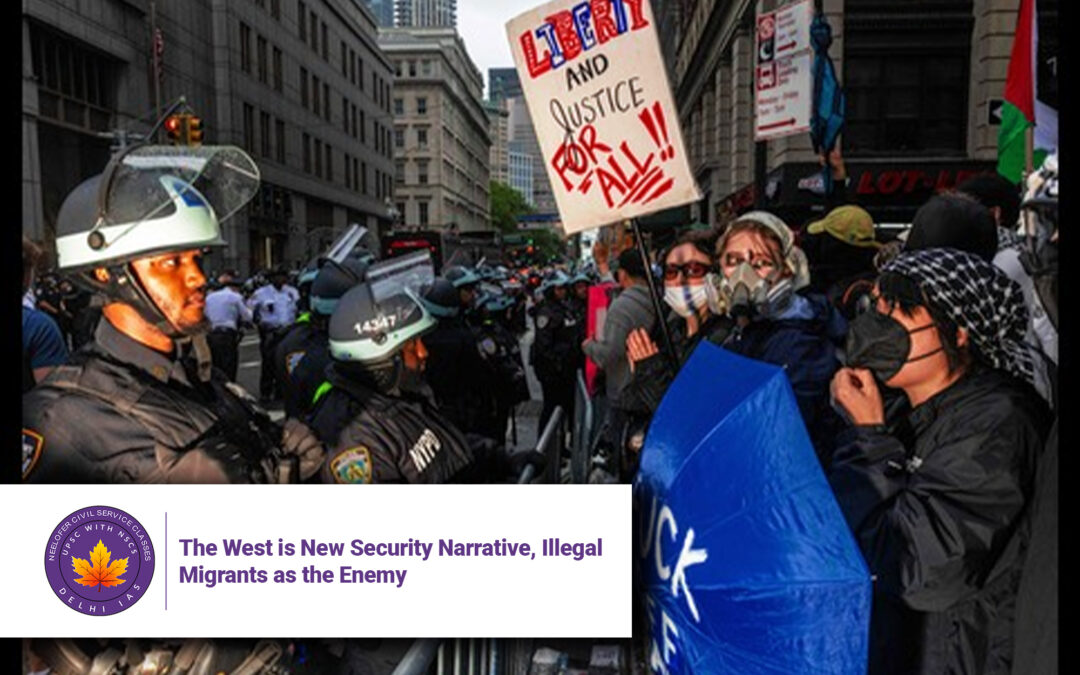
The West is New Security Narrative, Illegal Migrants as the Enemy
Why in News?
In light of recent political developments across Western democracies, the concept of national security is undergoing a significant shift. Instead of focusing on conventional military threats, several Western nations are increasingly identifying illegal immigration as the central security concern. This strategic pivot has far-reaching consequences for global migration policies, human rights, and multicultural integration. 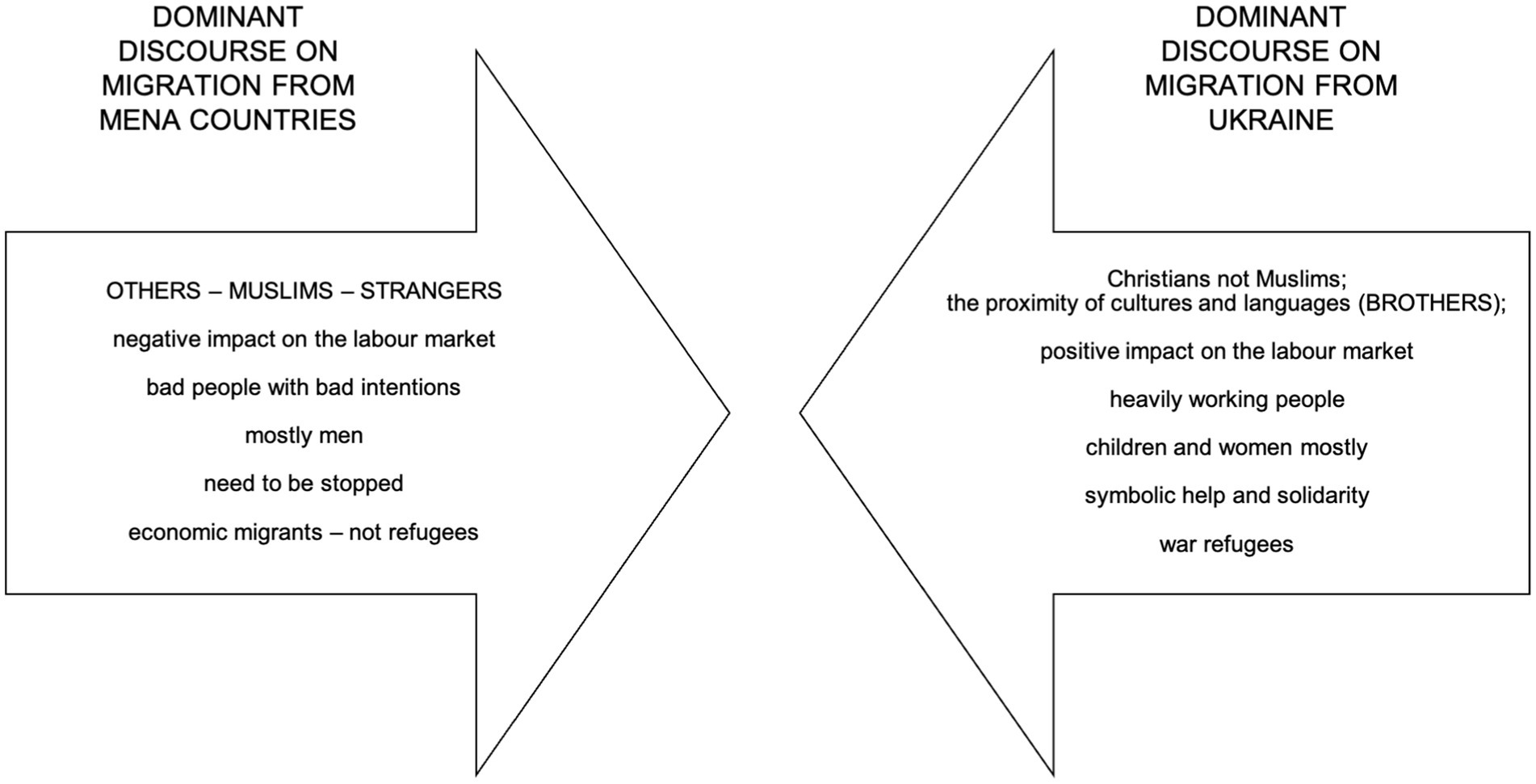
Introduction
With increasing economic anxieties, cultural insecurities, and political polarisation, illegal immigration is now being framed as the “new enemy” in the West. The phenomenon is not confined to one country—it spans across the U.S., Europe, and other high-income nations experiencing demographic and social transformations.
Key Highlights and Background
-
Redefining National Security: The term “national security” is now more often applied to illegal migration than to military threats from rival nations like Russia or China.
-
Political Weaponization in the U.S.:
-
Donald Trump’s rise and re-election campaign are heavily based on anti-immigration rhetoric.
-
In states like California, state-level battles have intensified between law enforcement and sanctuary communities.
-
Trump’s call to use military troops against illegal immigrants is touted as a ‘rebellion’ against federal inaction.
-
-
Global Spillover:
-
Countries such as Brazil, Turkey, and South Africa show rising anti-immigrant sentiments.
-
In the EU, especially in France, Germany, and Italy, far-right political parties exploit immigration to gain electoral ground.
-
The Core of the Concern
-
Rise in Illegal Migration:
-
As per IOM data, over 281 million migrants exist globally, up from 128 million in 1990.
-
India alone reportedly has over 20 million illegal migrants.
-
-
Immigration vs. Economy:
-
Economists argue that migrants serve essential roles in aging societies by filling labour gaps.
-
However, populist politics frames them as threats to native employment and cultural identity.
-
-
Social Fabric & Polarisation:
-
Governments now tie migration to crime, terrorism, and cultural erosion.
-
This creates a sharp ‘us vs. them’ binary in political discourse.
-
Key Observations
-
Anti-immigrant rhetoric now defines the political narrative across the West, with high emotional resonance.
-
Democracies are shifting their multicultural ideals to enforce border security and regulate population flows.
-
Despite evidence supporting economic utility of migrants, political leaders capitalise on fear and cultural unease.
Conclusion
Illegal migration has become the new axis around which Western political identity, national security, and societal anxieties revolve. As the migration crisis grows, solutions will require global cooperation, human rights protection, and evidence-based policymaking. Without these, nationalism and xenophobia will only deepen the divide between the Global North and South.
Q&A Section
Q1. Why is illegal immigration being termed a national security threat in the West?
A1. It combines fears of economic insecurity, cultural change, and weakened border controls, leading to political weaponization.
Q2. How has the U.S. responded politically to illegal immigration?
A2. Political leaders like Donald Trump have intensified deportations, supported border walls, and militarized immigration enforcement.
Q3. What is the impact of illegal migration on Western economies?
A3. Despite political claims, many migrants fill labour shortages in aging societies, contributing to economic sustainability.
Q4. What role do far-right movements play in this issue?
A4. Far-right parties leverage anti-immigrant rhetoric to mobilize voter support and challenge liberal multicultural values.
Q5. What is the global trend concerning immigration policies?
A5. There is increasing resistance to open borders and legal pathways, leading to restrictive laws and public resentment toward migrants.

