
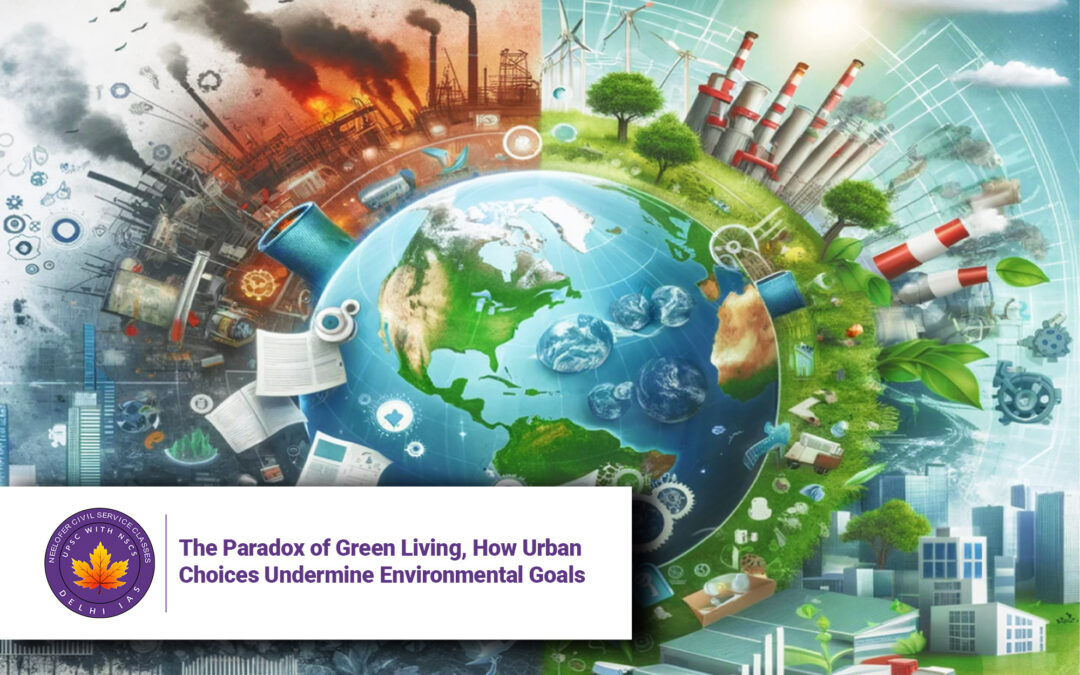
The Paradox of Green Living, How Urban Choices Undermine Environmental Goals
Introduction
In Delhi, where schools now close due to hazardous air pollution levels, residents express deep concern about their children’s health while simultaneously engaging in practices that worsen environmental degradation. This contradiction—cutting mature trees for aesthetic reasons while spending thousands on indoor plants—exposes a troubling hypocrisy in urban environmentalism.
This article explores:
-
The ecological cost of reckless tree pruning in urban areas
-
Why potted plants cannot replace mature trees
-
Government failures in enforcing tree protection laws
-
Social media’s role in promoting superficial green living
-
5 Key Q&A on sustainable urban greenery
By examining these issues, we uncover how well-intentioned urban dwellers inadvertently contribute to the environmental crises they fear.
The Great Tree Massacre: Aesthetic Preferences Over Ecological Needs
1. Why Are Urban Trees Disappearing?
Residents and municipal workers alike engage in excessive tree pruning due to:
-
Aversion to fallen leaves (“messiness”)
-
Desire for unobstructed views
-
Misguided aesthetic preferences (neatness over natural growth)
-
Lack of proper pruning knowledge
2. The Devastating Impact
-
Carbon Sequestration Loss: One mature tree absorbs 48+ pounds of CO₂ annually (USDA); a potted plant absorbs just 1–3 pounds.
-
Temperature Rise: Trees reduce local temperatures by 0.4°C (The Lancet). Their loss increases reliance on ACs, worsening energy consumption.
-
Biodiversity Decline: Birds, insects, and small mammals lose habitats.
3. Government Complicity
-
Weak Enforcement: Delhi’s tree protection laws are poorly implemented.
-
Untrained Workers: Pruning crews often lack expertise, leading to over-cutting.
The Indoor Plant Paradox: Greenwashing Urban Living
1. The Rise of “Instagram Green”
-
Market Growth: The global indoor plant market is booming, driven by social media trends.
-
Aesthetic Appeal: Minimalist homes feature curated plants as decor, not ecological solutions.
2. Why Potted Plants Fall Short
| Factor | Mature Tree | 10 Potted Plants |
|---|---|---|
| CO₂ Absorption | 48+ lbs/year | 10–30 lbs/year |
| Cooling Effect | Reduces local temperature | Negligible impact |
| Habitat Value | Supports biodiversity | Minimal ecological contribution |
3. Cognitive Dissonance in Urban Environmentalism
People:
-
Pay premium prices for homes in green neighborhoods.
-
Cut down trees after moving in for “convenience.”
-
Buy potted plants to feel eco-friendly.
Case Study: Delhi’s Self-Sabotaging Green Policies
1. Air Pollution Crisis
-
Winter AQI regularly exceeds 400 (hazardous levels).
-
School closures due to pollution are now routine.
2. Failed Solutions
-
Odd-Even Schemes: Temporary fixes that ignore root causes (like tree loss).
-
Smog Towers: Expensive, ineffective compared to natural air filtration by trees.
3. What Works?
-
Urban Forests: Delhi’s Neeli Jheel project shows rewilding can cut pollution.
-
Strict Tree Laws: Mumbai’s high penalties for illegal cutting deter over-pruning.
5 Key Q&A on Sustainable Urban Greenery
Q1: Why are mature trees better than potted plants for fighting pollution?
A: A single tree absorbs 20x more CO₂ than a room full of plants and provides shade, lowering urban heat.
Q2: What’s wrong with pruning trees heavily?
A: Over-pruning stunts growth, reduces CO₂ absorption, and kills trees slowly. Proper pruning requires expertise.
Q3: How can cities enforce tree protection better?
A:
-
Mandatory permits for pruning.
-
Fines for illegal cutting (like Mumbai’s ₹10,000–50,000 penalties).
-
Community monitoring programs.
Q4: Can indoor plants improve air quality significantly?
A: No. NASA’s clean-air study found you’d need 10–1,000 plants per sq. meter to match outdoor air quality.
Q5: What’s the biggest barrier to urban tree conservation?
A: Short-term thinking—prioritizing neatness, views, or convenience over long-term ecological health.
Conclusion: From Hypocrisy to Harmony
The path to truly sustainable cities requires:
Stopping reckless tree cutting through stricter laws and education.
Investing in urban forests over symbolic potted plants.
Aligning lifestyle choices with environmental values.
Until then, urbanites will keep buying plants to soothe guilt while destroying the very ecosystems that could save them.
Author
VISHWARUPA BHATTACHARYA
Additional Director, Research Division, Rajya Sabha Secretariat

