
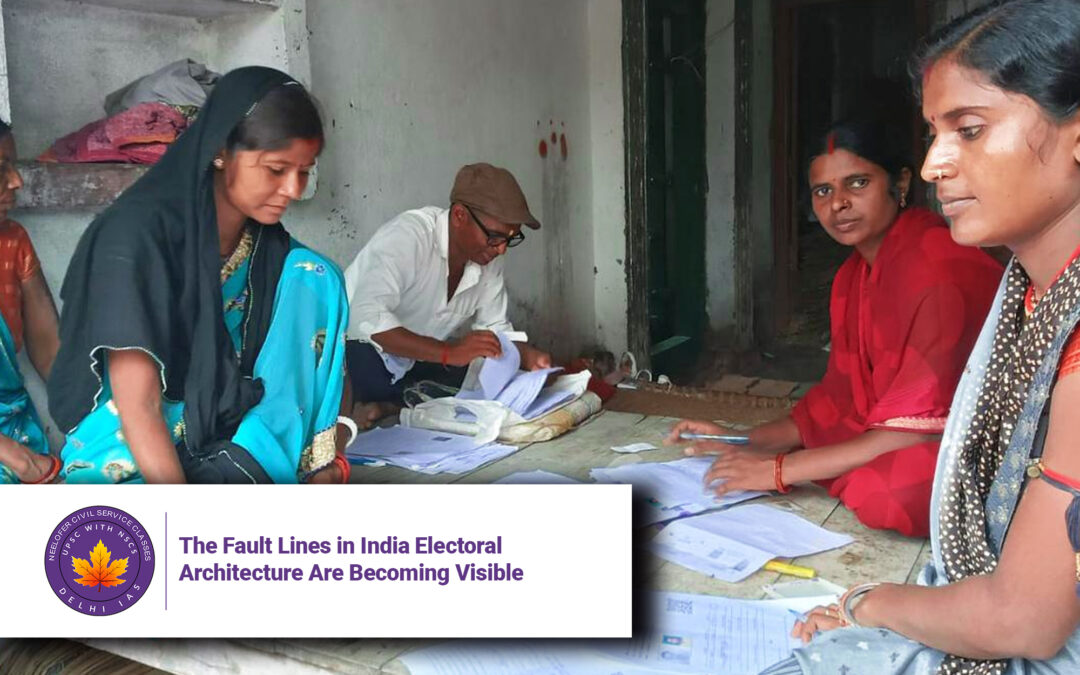
The Fault Lines in India Electoral Architecture Are Becoming Visible
Why in News?
The Election Commission of India (ECI) is currently undertaking a Special Intensive Revision of electoral rolls in Bihar, which began its first phase on August 1, 2025. This revision exercise has sparked widespread political debate and criticism. Opposition leaders have raised concerns over disenfranchisement, especially of migrants, minorities, and the poor. Allegations are being made about the partisan nature of the ECI’s methodology, while the Commission’s actions have also been defended as necessary to maintain electoral sanctity. This controversy brings to light deep-rooted structural problems in India’s electoral system and the urgent need for reform. 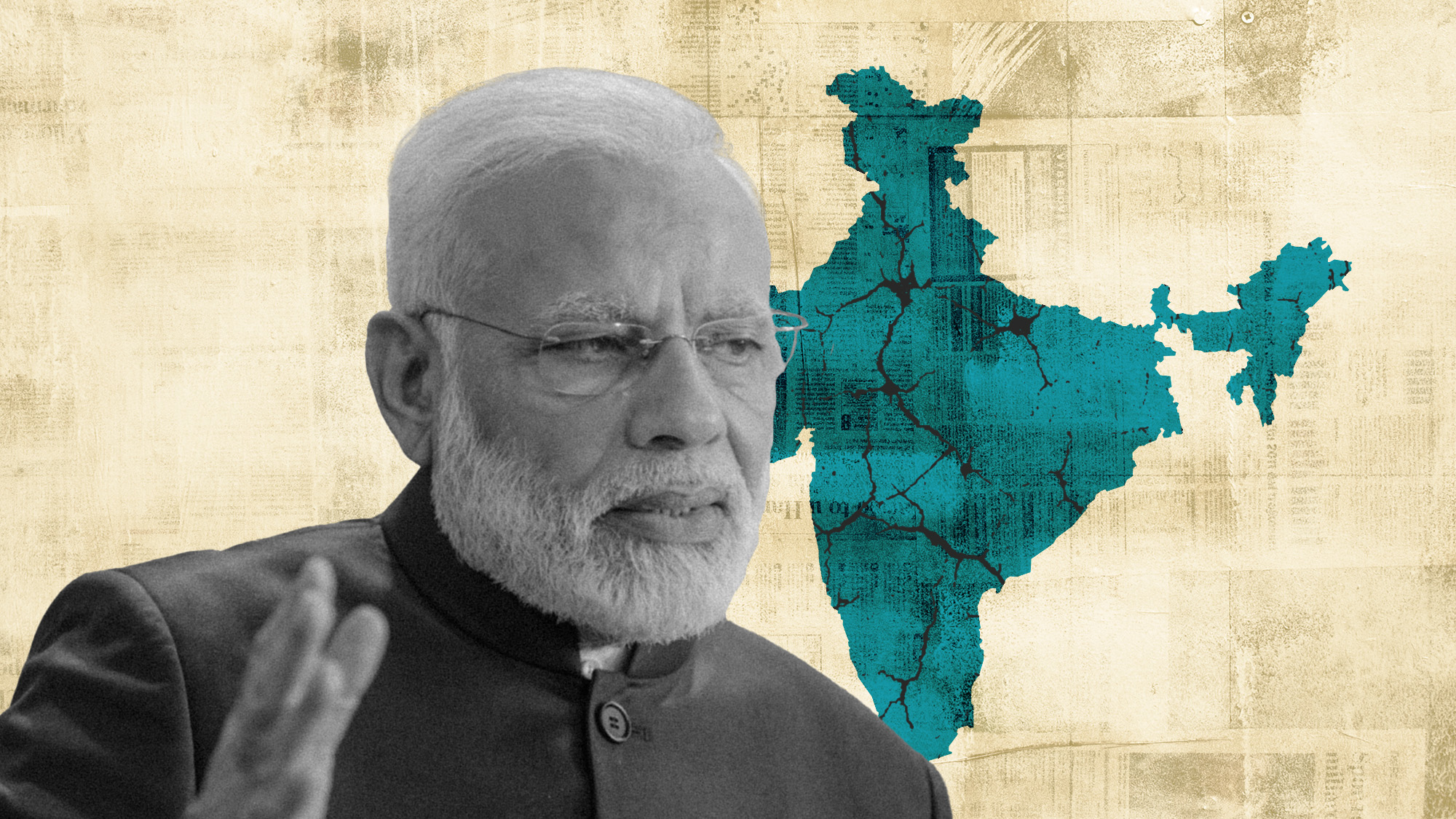
Introduction
India’s electoral structure, the bedrock of the world’s largest democracy, is once again under scrutiny. With over 950 million eligible voters, the integrity and inclusiveness of the voter enrollment process is critical to ensuring fair elections. However, the ongoing revision of electoral rolls in Bihar has exposed glaring inconsistencies and shortcomings within the electoral framework. The fault lines lie in outdated assumptions embedded in law, rigid procedural norms, and a failure to adapt to modern realities, particularly internal migration. This article explores the historical, legal, and socio-political roots of these challenges, and offers insights into alternative pathways for reform.
Historical Context
The Representation of the People Act (1950) was drafted in a post-colonial context, where India was largely rural and sedentary. At that time, over 82% of the population lived in villages, and less than 8% migrated. This context shaped the law’s assumptions: that most citizens lived, worked, and voted in the same place. As a result, residency—rather than citizenship—became the basis for determining voter eligibility in a particular constituency.
However, India has since undergone massive internal migration. According to the 2011 Census, over 450 million Indians (approximately 37% of the population) were internal migrants. In Bihar, this number is significantly higher. Nearly 36% of Biharis reported having migrated at some point in their lives, with more than 20% of the working-age population living outside the state.
Yet, the legal framework has not evolved to accommodate this shift. The assumption of a sedentary electorate persists, and this mismatch has profound implications. Voters who have migrated for work or economic reasons are often unable to vote in their home constituencies and may not be enrolled in their place of residence due to documentation or procedural issues.
Current Crisis in Bihar’s Electoral Revision
The recent Special Revision exercise in Bihar has brought this crisis to the fore. According to Bihar’s Chief Electoral Office, over 1.2 million names were deleted from the state’s electoral rolls in 2025 alone. The majority of these deletions were due to “non-residency,” with no provision for their inclusion in a different constituency where they may now reside.
In districts like Gopalganj and Sitamarhi, which have high rates of out-migration, deletions reached up to 5%-7% of enrolled voters. These figures are not marginal. They represent a substantial chunk of the electorate being excluded from the democratic process simply due to their mobility.
Such deletions disproportionately affect poor and working-class citizens, whose economic conditions compel them to migrate. These citizens are not just bureaucratically excluded but are also sent a subtle message: that their mobility renders them invisible in the political process.
Citizenship vs Residency: A Structural Dilemma
One of the core conceptual confusions fueling this crisis lies in the conflation of two different legal concepts—citizenship and residency.
-
Citizenship, as per the Constitution and the Citizenship Act, is a juridical status. You are either a citizen of India or you are not.
-
Residency, on the other hand, is a contingent, contextual condition that determines where a person is registered to vote.
The Representation of the People Act requires voters to be residents in a particular constituency. This may have made sense in a static society but is problematic in a country with large-scale migration. Millions of workers live in a liminal space—between their native villages and industrial zones in other states. For these migrant workers, disenfranchisement is not just a bureaucratic inconvenience but a lived political reality.
This distinction has critical implications. If a person is a citizen but cannot vote because they are not a “resident,” then the law is failing in its basic function—to enfranchise all eligible citizens.
Examples from Abroad
Other democracies have faced similar issues but responded with innovative solutions to ensure inclusion:
-
United States: Around 30 to 35 million voters live in states other than where they are registered. Absentee and mail-in ballots allow these citizens to vote from their place of residence.
-
Philippines: Facilitates absentee voting for its 1.8 million overseas workers, achieving over 60% turnout.
-
Australia: Deploys mobile polling stations in remote and transient communities, with over 90% voter participation.
These examples illustrate that logistical innovation, not legal rigidity, is the key to voter inclusion. They demonstrate that structural reform is not just possible but necessary for an inclusive democracy.
The Role of the Election Commission of India
While the ECI does not make laws, it plays a critical role in implementing and advocating for reforms. In migrant-heavy states like Bihar, the ECI’s experience administering electoral rolls provides an opportunity to lead change. At a minimum, the ECI should:
-
Propose alternative models of enrollment.
-
Push for outreach efforts to enhance public awareness.
-
Lobby for legislative amendments that allow dual enrollment or portable voter registration.
The ECI’s current emphasis on procedural correctness often comes at the cost of substantive inclusion. A rigid adherence to outdated rules undermines the very purpose of electoral democracy. Justice cannot be served if entire communities are erased from voter rolls due to their mobility or lack of documentation.
Political Apathy and Voter Disempowerment
Political actors often exploit, rather than resolve, these structural issues. Voter disenfranchisement is used as a tool for political mobilization. Instead of helping voters correct their enrollment status, politicians often focus on blame games and accusations, deepening voter alienation.
Data from Bihar illustrates this apathy:
-
Over 60% of voters are unaware of the claims and objections process.
-
Among migrant voters, awareness drops below 25%.
-
Surveys show that poor communication, lack of outreach, and difficult documentation procedures deter participation.
This results in a form of “silent exclusion,” where the most marginalized citizens are the least likely to be heard at the ballot box.
Challenges and the Way Forward
The present crisis reveals several key challenges:
-
Outdated Legal Framework: Laws based on the assumption of a sedentary population must be revised.
-
Administrative Minimalism: The ECI’s rigid approach to rules must evolve to reflect social realities.
-
Low Voter Awareness: A massive voter education campaign is needed, especially for migrants.
-
Technological Gaps: India must explore technology-driven models for portable voting and real-time enrollment.
-
Political Will: Reform is impossible without political commitment. Electoral inclusion must be treated as a democratic imperative, not a partisan issue.
Way Forward:
-
Amend the Representation of the People Act to separate citizenship from residency for voter eligibility.
-
Develop centralized voter databases with location-based updating features.
-
Introduce absentee or proxy voting mechanisms for internal migrants.
-
Conduct regular awareness drives in migrant-heavy districts.
-
Empower civil society and non-profits to assist with voter enrollment.
Conclusion
The current developments in Bihar are not an isolated incident but a symptom of a larger systemic issue. As India moves towards the next general elections, it must confront the structural flaws in its electoral architecture. Without urgent reforms, millions of Indians—especially migrants, the poor, and marginalized—will remain voiceless in the world’s largest democracy.
The time for change is now. India must build an electoral system that reflects its dynamic, mobile, and diverse society—one where every citizen counts, and every vote matters.
Five Questions and Answers
Q1. Why is the current electoral roll revision in Bihar controversial?
A: It has resulted in the deletion of over 1.2 million names, primarily due to non-residency. This disproportionately affects migrants, leading to concerns over disenfranchisement.
Q2. What is the legal flaw in India’s electoral enrollment system?
A: The system conflates residency with citizenship, excluding many migrant citizens who cannot register where they currently reside.
Q3. How does the ECI’s current approach fall short?
A: The ECI adheres strictly to procedure, with little flexibility to accommodate the realities of migration and mobility.
Q4. What can India learn from other countries?
A: Countries like the US, Philippines, and Australia use absentee ballots, mobile voting units, and flexible enrollment systems to include transient populations.
Q5. What reforms are necessary to ensure electoral inclusion?
A: Reforms include legal amendments, mobile and absentee voting, enhanced outreach, centralized voter databases, and greater political commitment.

