
The Dynamics of Modern Relationships, Balancing Intimacy and Independence in the Digital Age
Why in News?
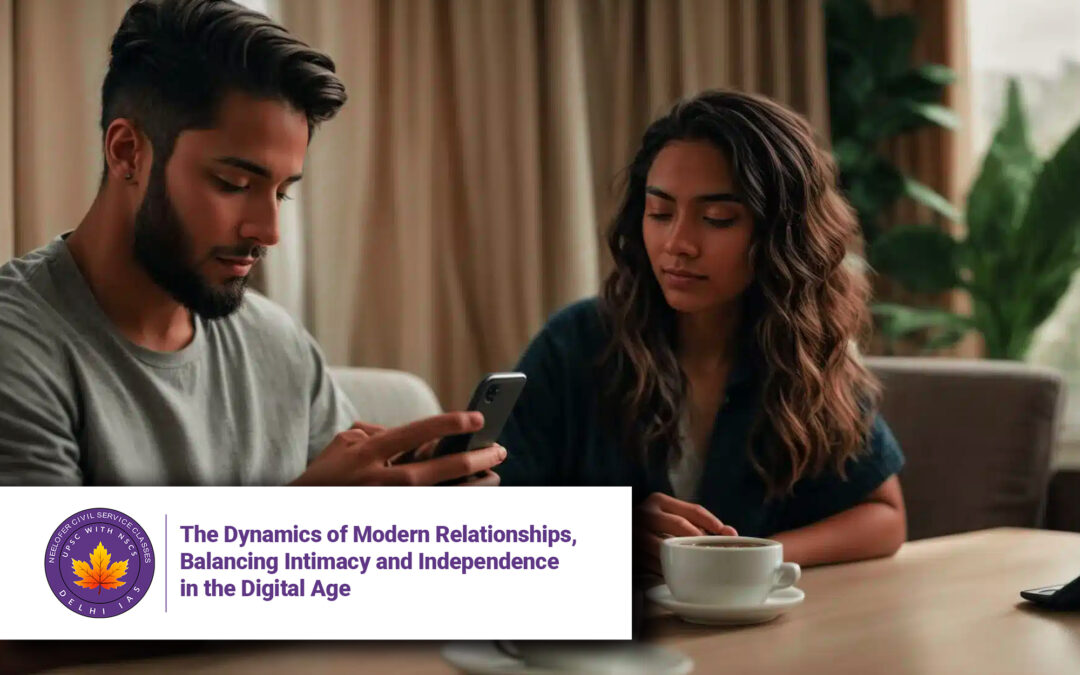
The evolving nature of romantic relationships in contemporary society, particularly in the context of urbanization, digital communication, and changing gender roles, has become a subject of intense scrutiny and discussion. The narrative of Anant and Maya, a fictional couple from Chennai, encapsulates the broader challenges faced by many modern couples: the struggle to balance the need for intimacy with the desire for personal space. Their story highlights issues such as emotional dependency, communication gaps, and the impact of cultural expectations on relationships. This analysis explores the psychological, sociological, and technological factors influencing modern relationships, offering insights into how couples can foster healthier dynamics in an increasingly complex world.
Introduction
In an era defined by rapid technological advancement and shifting social norms, the traditional paradigms of love and partnership are being redefined. The story of Anant and Maya—a couple seemingly perfect on paper but fraught with underlying tensions—serves as a microcosm of the struggles faced by many urban professionals in India and beyond. While Anant values solitude and independence, Maya equates constant connection with love and validation. Their conflict, exacerbated by digital communication tools like WhatsApp, reflects broader themes of emotional addiction, the quest for balance, and the cultural specificities of relationships in a South Asian context. This analysis delves into the intricacies of modern relationships, examining the psychological underpinnings of dependency, the role of technology, and the pathways to sustainable love.
Key Issues
1. The Psychology of Emotional Dependency
-
Attachment Theories: Psychological frameworks such as attachment theory (Bowlby, Ainsworth) explain how early childhood experiences shape adult relationships. Anant’s need for solitude may stem from an avoidant attachment style, while Maya’s clinginess could indicate an anxious attachment style.
-
Addiction Analogies: The comparison of emotional dependency to addiction—where one partner craves constant validation like a “filter coffee fix”—highlights the neurochemical aspects of love, including dopamine rushes during connection and withdrawal symptoms during absence.
-
Self-Worth and Validation: Maya’s reliance on Anant’s presence for self-esteem mirrors broader societal issues where women, in particular, are socialized to derive identity from relationships.
2. The Impact of Technology on Relationships
-
Digital Communication Gaps: WhatsApp messages left unanswered for hours can trigger anxiety and misinterpretation, as seen in Maya’s assumption of betrayal. The immediacy of digital platforms creates expectations of constant availability.
-
Social Media and Comparison: Platforms like Instagram and Facebook expose couples to curated images of “perfect” relationships, exacerbating insecurities and unrealistic expectations.
-
Technology as a Double-Edged Sword: While technology facilitates connection across distances, it can also invade personal space and amplify conflicts.
3. Cultural and Societal Expectations
-
South Asian Context: In cultures like India, family obligations and traditional roles often pressure couples to prioritize togetherness over individuality. Events like weddings, thread ceremonies, and family gatherings become arenas for performing relationship legitimacy.
-
Gender Roles: Anant’s career-driven solitude is more socially acceptable for men, while Maya’s desire for involvement aligns with expectations of women as nurturers and relationship custodians.
-
Urbanization and Stress: The pressures of urban life—long work hours, commute, and social demands—strain relationships, leaving little room for quality time or introspection.
4. The Struggle for Balance: Intimacy vs. Independence
-
The Myth of Compatibility: Compatibility on paper (shared interests, values) does not guarantee harmony if fundamental needs for space and connection are mismatched.
-
The Role of Communication: Effective communication—expressing needs without accusation—is crucial. Anant and Maya’s failure to articulate their needs led to resentment and misunderstanding.
-
Personal Boundaries: Healthy relationships require respect for boundaries. Anant’s need for solitude is not rejection but a means of self-preservation, while Maya’s need for connection is not suffocation but a expression of love.
5. Mental Health Implications
-
Anxiety and Depression: Unresolved relationship conflicts can lead to mental health issues, as seen in Maya’s migraines and insomnia and Anant’s anticipatory defense mechanisms.
-
Couples Therapy and Counseling: Professional intervention can help couples develop coping strategies, though stigma often prevents seeking help in many cultures.
-
Self-Care and Individuality: Maintaining individual hobbies, friendships, and self-care routines is essential for relationship sustainability.
6. Societal Shifts and Modern Solutions
-
Rise of Conscious Coupling: Modern couples are increasingly prioritizing emotional intelligence, mutual growth, and shared responsibilities over traditional roles.
-
Digital Detoxes: Setting boundaries around technology use, such as designated phone-free times, can reduce conflict.
-
Workshops and Resources: Relationship workshops, apps like Gottman Institute resources, and books on attachment theory are gaining popularity.
Alternative Approaches
-
Attachment-Based Therapy:
-
Couples can undergo therapy to understand their attachment styles and develop healthier interaction patterns.
-
-
Mindfulness and Meditation:
-
Practices like mindfulness can help individuals manage anxiety and reduce dependency on external validation.
-
-
Negotiating Space and Connection:
-
Couples can create explicit agreements about alone time and together time, ensuring both partners feel respected.
-
-
Cultural Reinterpretation:
-
Challenging traditional norms that equate love with constant proximity, and embracing diverse expressions of care.
-
-
Leveraging Technology Positively:
-
Using apps for shared calendars, love languages, or even couples therapy can enhance communication.
-
Challenges and the Way Forward
-
Deep-Seated Insecurities: Overcoming ingrained patterns requires self-awareness and often professional help.
-
Social Stigma: Mental health and relationship counseling remain taboo in many communities.
-
Time Constraints: Urban lifestyles leave little room for introspection and relationship work.
The Way Forward:
-
Education and Awareness: Integrating relationship education into school curricula and public discourse.
-
Community Support: Creating safe spaces for couples to share experiences and seek advice without judgment.
-
Policy Support: Employers offering mental health days and couples counseling as part of employee wellness programs.
Conclusion
The story of Anant and Maya is a poignant reminder that love, in its truest form, is not about fusion or isolation but about finding a rhythm that honors both togetherness and individuality. In a world where digital connectivity and cultural expectations often distort our understanding of love, it is imperative to cultivate relationships based on mutual respect, empathy, and clear communication. The filter coffee of love may be addictive, but sustainability requires a blend of independence and intimacy, understanding without suspicion, and empathy without invasion. As society continues to evolve, so must our approaches to love and partnership, ensuring that they are not only passionate but also enduring and nourishing for both individuals involved.
5 MCQs Based on the Article
Q1. What psychological theory explains Anant’s need for solitude and Maya’s need for constant connection?
A) Cognitive Dissonance Theory
B) Attachment Theory
C) Social Learning Theory
D) Maslow’s Hierarchy of Needs
Answer: B) Attachment Theory
Q2. How does technology exacerbate relationship conflicts, as seen in Anant and Maya’s case?
A) By facilitating constant communication and creating expectations of immediate responses
B) By reducing opportunities for face-to-face interaction
C) By promoting infidelity through social media
D) By increasing financial burdens through expensive devices
Answer: A) By facilitating constant communication and creating expectations of immediate responses
Q3. What cultural factor intensifies Maya’s desire to be involved in all aspects of Anant’s life?
A) The influence of Western individualism
B) Traditional expectations of women as nurturers and relationship custodians
C) The decline of joint family systems
D) The rise of feminist movements
Answer: B) Traditional expectations of women as nurturers and relationship custodians
Q4. What are the two underrated virtues that lasting relationships require, according to the article?
A) Wealth and social status
B) Understanding without suspicion and empathy without invasion
C) Constant presence and lavish gifts
D) Shared hobbies and identical careers
Answer: B) Understanding without suspicion and empathy without invasion
Q5. What is the proposed solution for couples struggling with mismatched needs for space and connection?
A) Ignoring the issue until it resolves itself
B) Creating explicit agreements about alone time and together time
C) Ending the relationship immediately
D) Relying solely on family advice
Answer: B) Creating explicit agreements about alone time and together time

