
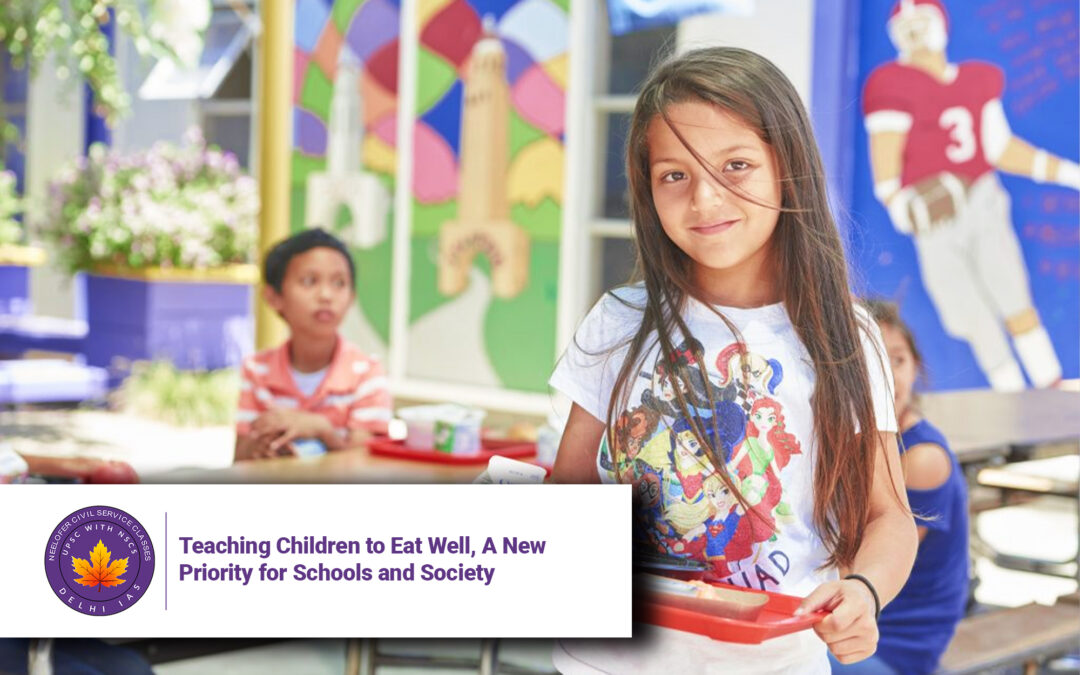
Teaching Children to Eat Well, A New Priority for Schools and Society
Why in News?
At the recent Paris summit for the Nutrition for Growth (N4G) and the United Nations General Assembly announcement extending the UN Decade of Action on Nutrition to 2030, a global shift was emphasized: nutrition is not just about food access but about teaching how and why people, especially children, eat. The focus is now on integrating food literacy into everyday school education. 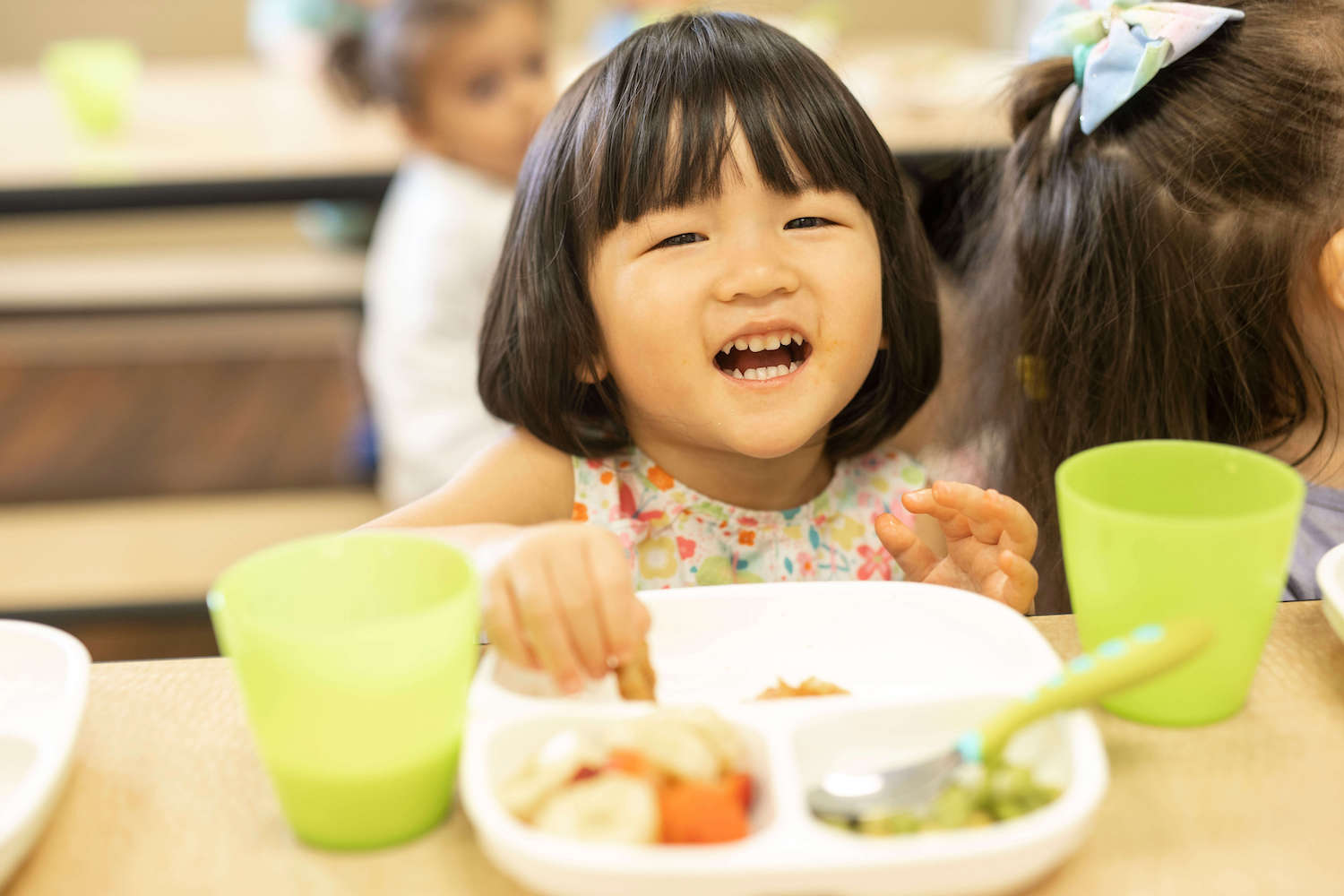
Introduction
Global nutrition efforts have mostly focused on the critical first 1,000 days of life. However, adolescence — the next 4,000 days — is equally crucial for development and long-term health. Helping children establish healthy eating habits during this phase can prevent malnutrition, chronic illnesses, and diet-related diseases.
Key Issues
1. Importance of Food Literacy
Children today live in a fast-paced, highly processed food environment. Many lack the knowledge and skills to make healthy food choices, leading to poor diets dominated by unhealthy, ultra-processed foods.
2. Lack of Structured Food Education
The education system often ignores nutrition, treating it as an occasional awareness session rather than a core part of the curriculum. Without structured, age-appropriate education, children struggle to build lasting healthy eating habits.
3. Dietary Diversity Crisis
Minimum Dietary Diversity, a key global nutrition indicator, shows that many children do not consume a variety of foods necessary for balanced nutrition. This reflects broader issues within global food systems.
4. The Need for Practical Learning
Hands-on learning such as cooking simple meals, visiting farms, or reading food labels, is vital. Practical experiences create real understanding and better food habits compared to traditional classroom-based approaches.
Alternative Approaches
-
Integrated Curriculum: Schools must include food literacy as a regular part of learning, not just special occasions.
-
Practical Exposure: Encourage kitchen gardens, healthy cooking classes, farm visits, and food label reading activities.
-
Support from Parents and Community: Children can become influencers at home, encouraging better eating habits in their families.
-
Focus on Local, Seasonal Diets: Promote diverse, local, and culturally rooted foods to strengthen health and sustainability.
Challenges and the Way Forward
-
Curriculum Restructuring: Existing school frameworks must evolve to include nutrition as a core life skill.
-
Teacher Training: Teachers need proper training to teach food literacy effectively.
-
Behavioral Change: Shifting children’s eating habits requires a cultural change, persistence, and a supportive environment at both school and home.
In India, programmes like the School Health and Wellness Programme are steps in the right direction. However, dedicated, year-long learning and systemic reforms are essential to make nutrition education truly effective.
Conclusion
Eating well is not just about individual health but about the planet’s future too. Teaching children the importance of good nutrition from an early age can create a healthier, more compassionate, and sustainable generation. Food literacy must no longer be seen as a luxury but as a vital part of basic education.
5 Q&A Based on the Article
Q1. Why is nutrition education important during adolescence?
A: Adolescence is a critical period of growth and development. Teaching good nutrition during this phase can help overcome early childhood deficits and build lifelong healthy habits.
Q2. What is ‘Minimum Dietary Diversity’?
A: It is a global nutrition indicator that measures if a child eats at least five out of ten essential food groups daily, ensuring nutritional balance.
Q3. How should food literacy be taught in schools?
A: Through integrated, year-long curricula with hands-on experiences like cooking meals, growing vegetables, reading food labels, and learning about diverse diets.
Q4. What role can children play outside of school in promoting better eating habits?
A: Children can act as influencers, encouraging their families and communities to adopt healthier eating habits and sustainable food choices.
Q5. What are the broader impacts of teaching children to eat well?
A: It promotes personal health, environmental sustainability, reduces malnutrition, and helps fight global challenges like climate change and food insecurity.

