
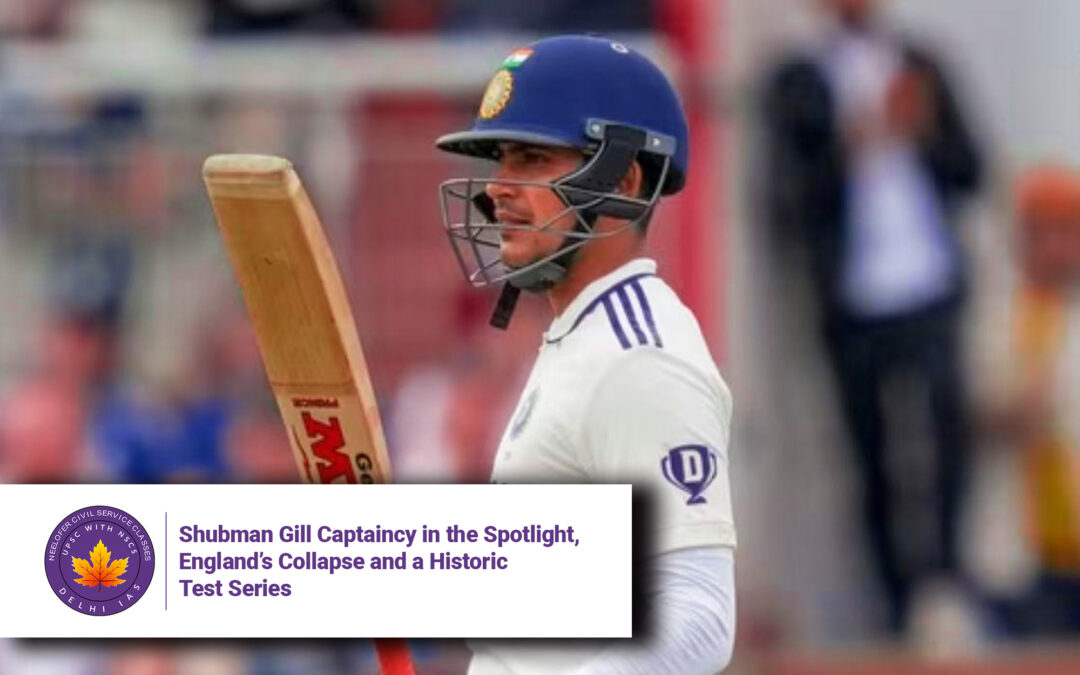
Shubman Gill Captaincy in the Spotlight, England’s Collapse and a Historic Test Series
Why in News
India managed to draw the fourth Test match at Manchester under the leadership of Shubman Gill, marking a significant moment in Indian cricket. The match saw England dominating the first innings but faltering in the second, leading to heated exchanges and controversies, including Ben Stokes’ failed attempt to ‘declare’ India’s innings without consent—sparking widespread media and public debate. 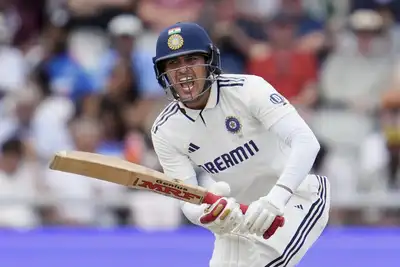
Introduction
The fourth Test at Old Trafford, Manchester, was no ordinary game. It had all the ingredients of a cricketing epic—comebacks, controversies, and captains under the microscope. England, who had steamrolled India in the previous match, were expected to clinch the series. But India, under a young and composed Shubman Gill, turned the tide when it mattered most.
Despite England posting a first-innings lead of 259 runs, their aggressive “Bazball” approach in the second innings collapsed like a house of cards. India’s Kohli-Pant partnership, followed by Rohit’s solid resistance, helped weather the storm and ensured a draw. What started as a match in England’s favor turned into a psychological win for India.
Key Issues and Background
The match was surrounded by several key developments:
-
Shubman Gill’s Captaincy: With Rohit Sharma missing, all eyes were on Gill. His field placements, use of bowlers, and calm demeanor impressed both fans and analysts.
-
England’s Collapse: After dominating the first half, England’s second innings saw them crumble for a paltry 145, unable to decode Kuldeep’s spin or Bumrah’s sharp spells.
-
The Controversy: As India began their second innings on the final day, Ben Stokes, frustrated by weather delays and England’s fading chances, reportedly asked umpires to end the match by declaring India’s innings—an act not permitted under ICC Rule 12.7.6, unless mutually agreed upon by both captains or acting batsmen.
-
Crowd Reaction: England’s fans booed, India’s fans cheered, and the internet exploded, with debates around sportsmanship, cricket laws, and emotional behavior in high-stakes games.
Specific Impacts or Effects
-
Gill’s Captaincy Emerges: Shubman Gill has now positioned himself as a potential future leader. His cool-headed tactics under pressure drew comparisons to a young Dhoni.
-
England Lose Moral Ground: Stokes’ act of trying to “declare” the opposition’s innings came across as arrogant and misinformed, overshadowing their earlier dominance.
-
India’s Middle Order Shines: Virat Kohli and Rishabh Pant stitched a crucial partnership that frustrated the English bowlers and steadied the innings.
-
Momentum Shift in the Series: With the fifth Test coming up, India now carries the psychological edge despite trailing 2-1.
Challenges and the Way Forward
-
For England: They must balance their aggression with strategy. The “Bazball” method is effective only when combined with smart game reading.
-
For India: Questions remain about their opening partnerships and bowling depth in certain conditions. However, Gill’s leadership could be a long-term solution.
-
For the ICC: This match exposed how lesser-known rules can be misunderstood or misused. Greater clarity and umpire enforcement are needed.
Conclusion
The fourth Test at Manchester will be remembered not just for the draw, but for a turning point in India’s Test journey. A young captain stood tall, senior players delivered when it mattered, and cricket lovers witnessed the game’s true unpredictability.
As both teams head into the final match, the real contest is no longer just about skills—it’s about temperament, clarity of thought, and who wants it more.
5 Questions and Answers
1. What made the Manchester Test match historic?
India drew the game after trailing by 259 runs, under the fresh captaincy of Shubman Gill.
2. What rule did Ben Stokes allegedly try to violate?
ICC Rule 12.7.6, which allows match ending only by mutual agreement between captains or batting players.
3. Who were India’s key performers in the second innings?
Virat Kohli and Rishabh Pant forged a crucial partnership, while Rohit Sharma anchored the tail end.
4. How did England lose control of the match?
After a strong first innings, they collapsed in the second innings due to poor shot selection and effective Indian bowling.
5. What does this mean for Shubman Gill?
This match showcased his leadership qualities and strategic thinking, suggesting he could be a long-term captaincy candidate.

