
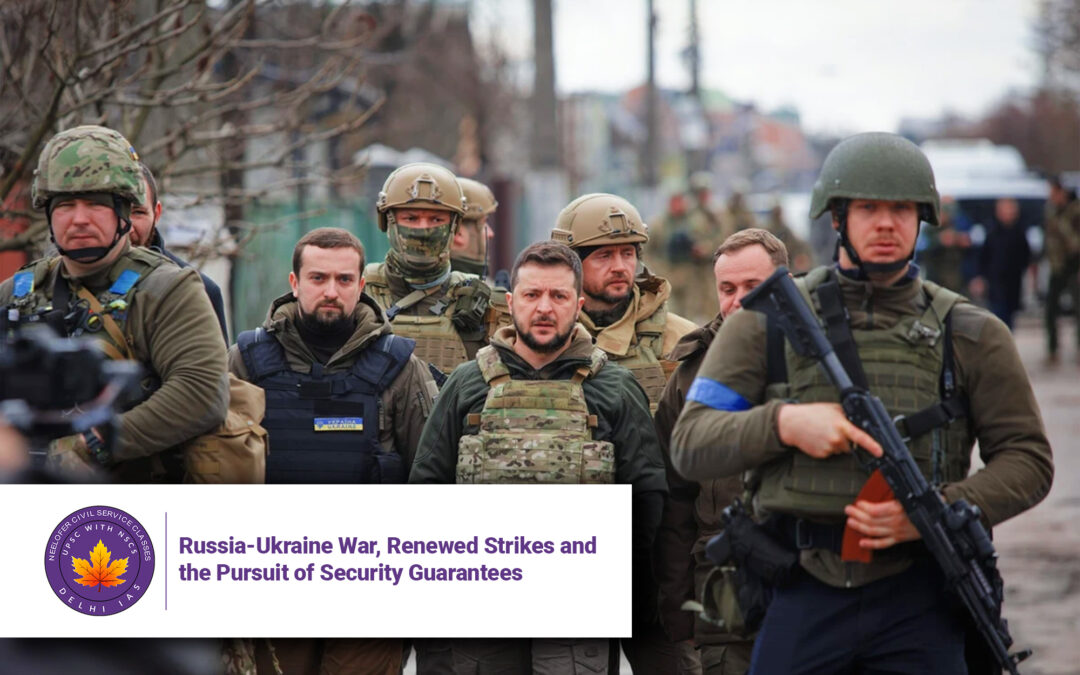
Russia-Ukraine War, Renewed Strikes and the Pursuit of Security Guarantees
Why in News?
The Russia-Ukraine conflict has entered a new and intensified phase, marked by increased missile strikes, drone attacks, and resumed diplomatic negotiations. As both countries seek security assurances, the geopolitical implications continue to escalate. 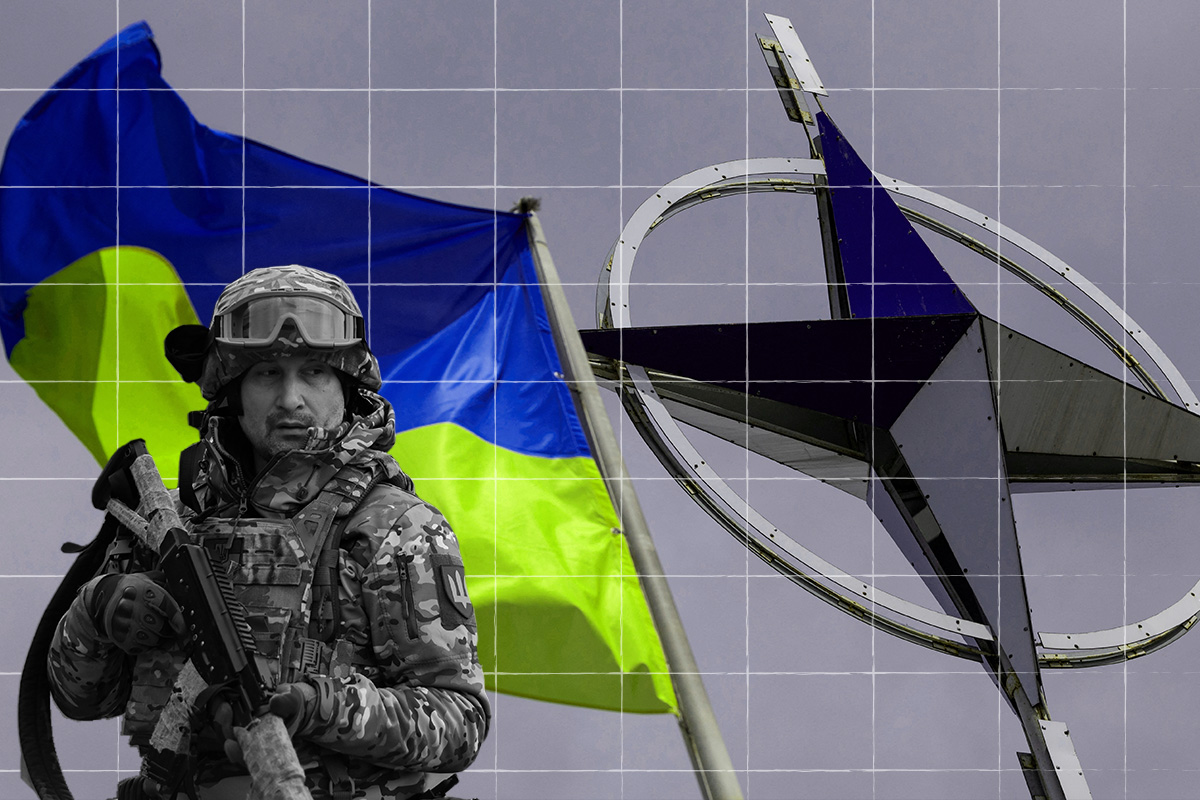
Introduction
On the eve of the second round of peace talks, Ukraine launched a drone attack deep inside Russian territory, reportedly damaging military airfields and strategic locations. This attack signifies a shift in Ukraine’s strategy as it attempts to push back Russian forces and regain momentum in the ongoing war.
Key Developments
1. Ukrainian Counter-Offensive
-
Ukraine claimed a long-range drone attack on Russian targets, including two military airfields—one near the Norwegian border and another in Siberia.
-
This strike was described as a “tactical setback” for Russia and a morale booster for Ukrainian forces.
2. Russia’s Missile and Drone Barrage
-
In retaliation, Russia launched airstrikes involving drones and missiles across Ukraine, targeting military and civilian areas.
-
A missile hit a military training base, reportedly killing 12 Ukrainian soldiers.
3. Ground Battles and Tactical Shifts
-
Russia’s ground offensive has made gains, especially around Avdiivka and the Kherson region.
-
Ukraine, using drones and advanced battlefield tactics, is attempting to offset its territorial losses and strike deep into Russian soil.
4. Diplomatic Talks Resume
-
Peace negotiations have resumed, with both sides participating in talks in Istanbul.
-
Despite continuing hostilities, there is mutual agreement on the need to discuss security guarantees.
Strategic Concerns
-
Ukraine has lost about 5,000 sq. km of territory since 2022 and is seeking security guarantees that include protection from future Russian invasions.
-
Russia, on the other hand, demands assurances that Ukraine will not join NATO, and that its territorial gains be recognized.
-
The U.S. has provided support to Ukraine but remains cautious about escalating tensions with Russia.
Conclusion
The war has now moved beyond a battlefield conflict into a geopolitical tug-of-war involving long-range strikes, diplomatic overtures, and strategic bargaining. With both Russia and Ukraine seeking security guarantees, the path to peace remains uncertain, but the resumption of dialogue suggests diplomatic options are still open.
Q&A Section
Q1. What marked the new phase of the Russia-Ukraine conflict?
Increased military strikes and resumed diplomatic talks, including Ukraine’s deep drone attacks on Russian airfields.
Q2. How did Russia respond to Ukraine’s drone strike?
By launching a series of air and drone attacks across Ukraine, hitting military installations and causing significant damage.
Q3. What are Ukraine’s main strategic goals at this stage?
To retake lost territories, increase battlefield innovations, and obtain security guarantees from global powers.
Q4. What is Russia demanding in the current negotiations?
That Ukraine not join NATO and that Russia’s territorial control over captured areas be formally acknowledged.
Q5. Why is the U.S. role crucial in this conflict?
The U.S. provides military aid and diplomatic support to Ukraine and is viewed as a potential mediator in future security guarantees.

