
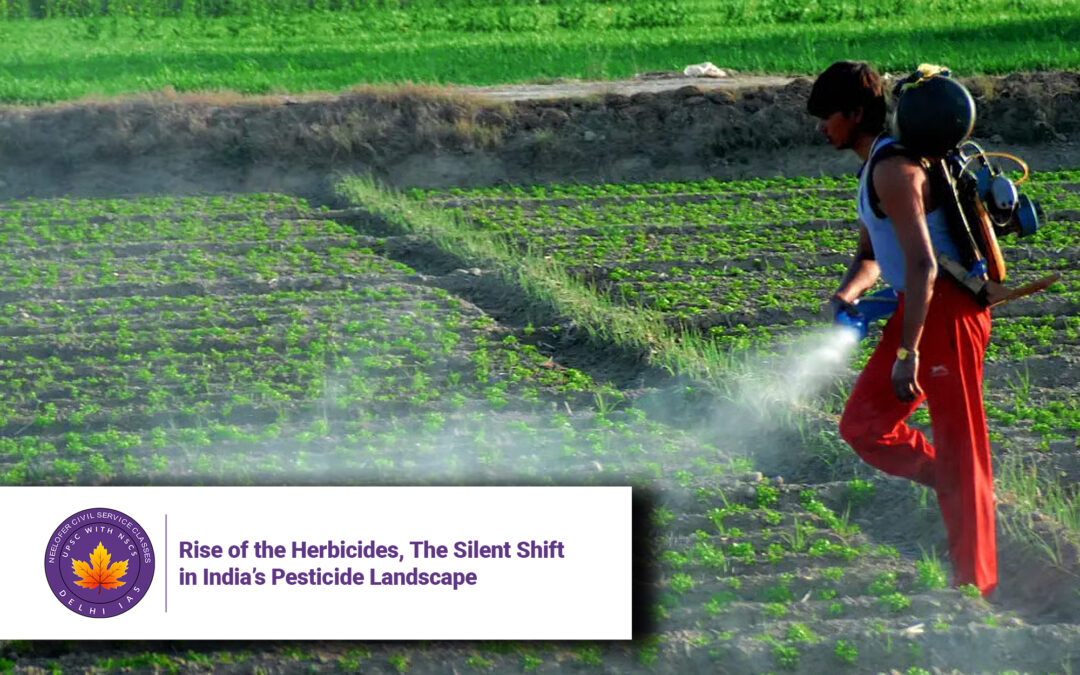
Rise of the Herbicides, The Silent Shift in India’s Pesticide Landscape
Introduction
India’s crop protection landscape is witnessing a subtle but transformative shift. While insecticides and fungicides have traditionally dominated the market, it is now herbicides—chemicals used to control or eliminate weeds—that are registering the fastest growth in demand. This surge is being driven by a combination of labour shortages, rising input costs, and farmers’ growing inclination towards time- and cost-efficient farming practices.
According to the latest industry estimates, the domestic crop protection chemicals market in India is valued at approximately ₹24,500 crore, with insecticides comprising the largest share at ₹10,706 crore, followed by herbicides (₹8,209 crore) and fungicides (₹5,571 crore). But it is the herbicide segment, growing at 10% to 11% annually, that is catching the industry’s eye—surpassing the growth rate of both insecticides (5.3%–5.5%) and fungicides (5.5%–6%).
This article explores the emerging dominance of herbicides in India’s agricultural ecosystem, what factors are fueling this shift, the impact on farmers and manufacturers, and how this trend is reshaping agribusiness in the country.
Understanding the Herbicide Market
Who controls it?
A significant portion of the herbicide market in India is controlled by multinational corporations. These include:
-
Bayer AG (Germany): The market leader, with a 15% share.
-
Syngenta (Switzerland, Chinese-owned): 12%
-
ADAMA (Israel): 10%
-
Corteva Agriscience (USA): 7%
-
Sumitomo (Japan): 6%
These companies are joined by major Indian players like:
-
Dhanuka Agritech
-
Crystal Crop Protection Ltd (CCPL)
-
PI Industries
-
Insecticides India Ltd
-
Rallis India
In 2023, CCPL notably expanded its herbicide portfolio by acquiring rights to the Ethoxysulfuron molecule from Bayer. This chemical is particularly effective against broad-leaved weeds and is widely used in paddy and sugarcane cultivation.
Other companies are also innovating with cocktail formulations—mixtures that combine more than one herbicide. For instance, Bayer’s Sundria is a premix of multiple actives for better weed control.
Market Size and Growth
The herbicide segment has grown from ₹7,460 crore in FY24 to ₹8,209 crore in FY25, a jump of over 10%. In comparison, the insecticide and fungicide markets grew at less than 6%.
Ankur Aggarwal, managing director of a Delhi-based agrochemical firm, confirmed that his company alone recorded over 47% of its ₹2,201 crore turnover from herbicide sales.
Why the Shift? Labour Shortages and Cost Pressures
At the heart of the herbicide boom lies a fundamental problem: the acute shortage of manual farm labour. The days when large groups of workers were available at relatively low wages to weed fields by hand are fast disappearing.
According to Labour Bureau data:
-
The daily wage for plant protection workers averaged ₹452 in December 2024.
-
This marks a sharp rise from ₹326 in 2019.
-
Weeding a single acre manually can take 8 to 10 hours, while regrowth of weeds often necessitates repeating the process multiple times per crop cycle.
-
Labour availability is highly erratic, especially during peak agricultural seasons.
Farmers also face input cost pressures. High labour costs, rising prices for fertilizers, and unpredictable rainfall patterns are forcing many to look for chemical alternatives that reduce dependency on human labour.
Types of Herbicide Use
Herbicides are broadly classified into:
-
Post-emergent herbicides: Applied after the weeds have appeared. This is the more common practice among farmers in India.
-
Pre-emergent herbicides: Sprayed on the soil either before or just after sowing, preventing weeds from germinating. This form is preventive, not reactive.
Farmers are increasingly moving toward pre-emergent herbicide use, especially in commercial crops like rice, sugarcane, and soybeans. These crops face intense weed competition in the early stages, making pre-emptive control economically worthwhile.
In terms of value, the pre-emergent segment is worth about ₹5,500 crore, and it’s growing fast. This sub-segment alone has the potential to become a ₹10,000 crore market in the near future.
Changing Farmer Mindsets
Until a few years ago, Indian farmers predominantly relied on insecticides and fungicides because these products offered visible, immediate results. A pest attack or fungal disease left clear signs of damage, prompting quick action. In contrast, weed control was less prioritized, even though it impacts yield significantly.
Now, the tide is turning. Farmers are recognizing that:
-
Weeds compete for nutrients, water, and sunlight.
-
Herbicide use can increase yields by maintaining cleaner fields.
-
Timely application improves crop quality and lowers post-harvest contamination.
Aggarwal explained, “Farmers generally spray insecticides and fungicides when they see the insect or disease. But with herbicides, the impact on yield and quality is often only visible later in the season.”
The Economics of Herbicide Use
From a cost-benefit perspective, herbicide usage has become increasingly attractive. The cost of spraying herbicides varies by product:
-
Most herbicides cost around ₹850–₹900 per acre.
-
Premium pre-emergent products can reach up to ₹2,000 per acre.
Still, this is often cheaper than hiring labour for manual weeding, which may cost ₹500–₹1,000 per day per worker.
Farmers also benefit from the precision and consistency of chemical application. Modern herbicides are formulated to target specific weed species while sparing the crop—minimizing the risk of unintended crop damage.
Regulatory Landscape and Monopoly Concerns
Unlike seeds and fertilizers, which are price-regulated by the government, pesticides (including herbicides) operate in a free market environment. This has attracted heavy participation from both foreign multinationals and Indian private players.
However, there are concerns about monopolistic practices, as some global companies hold exclusive patents on key herbicide molecules.
For example:
-
Corteva markets ‘Fulvic Herbicide’, based on a patented formulation.
-
BASF sells ‘Heat Herbicide’, a premium product targeting broad-leaved weeds.
-
PI Industries and Dhanuka also have exclusive distribution deals with international players.
There’s a growing demand for policy oversight in this space, especially in terms of pricing and farmer awareness. While branded herbicides offer superior performance, they also cost more, potentially marginalizing smallholder farmers who can’t afford them.
How the Market Will Evolve
The Indian herbicide market is expected to undergo rapid expansion, particularly in:
-
Eastern and central states like West Bengal, Odisha, Chhattisgarh, and Madhya Pradesh—where labour scarcity is acute.
-
Commercial crop zones such as Punjab, Haryana, Andhra Pradesh, and Maharashtra.
Furthermore, the adoption of mechanized spraying, use of GPS-based equipment, and integration with AI-powered farm tech will improve the precision and safety of herbicide use.
As India’s agriculture gears up for modernization, herbicides are no longer an option but a necessity. The sector is well on its way to becoming a ₹15,000 crore industry by the end of the decade.
Conclusion: A Silent Revolution in Weed Control
The rise of herbicides in India marks more than just a market trend—it signals a paradigm shift in farm management. With shrinking rural workforces, rising labour costs, and the urgent need to boost productivity, farmers are embracing herbicides not merely as weed killers but as enablers of resilient, cost-effective agriculture.
As government policies, private players, and farmers continue to align, the herbicide segment will likely play a pivotal role in shaping India’s food security and rural economy.
The current wave of growth is not without challenges—regulatory gaps, affordability issues, and environmental concerns remain. Yet, there is little doubt that herbicides are here to stay, and their footprint will only deepen in the years to come.
Key Questions & Answers
Q1: What are herbicides, and how do they differ from insecticides and fungicides?
Answer: Herbicides are crop protection chemicals used to eliminate or control weeds. Unlike insecticides (which kill pests) and fungicides (which control fungal diseases), herbicides target unwanted plant growth that competes with crops for nutrients, sunlight, and water.
Q2: Why is the demand for herbicides growing faster than other pesticide types?
Answer: The demand is growing primarily due to labour shortages and rising weeding costs. Manual weeding is time-consuming and expensive, especially during peak seasons. Herbicides offer a faster, more economical alternative and also increase crop yields by reducing competition from weeds.
Q3: Who are the key players in India’s herbicide market?
Answer: Global players like Bayer AG, Syngenta, ADAMA, Corteva, and Sumitomo dominate the market. Indian firms such as Dhanuka Agritech, Crystal Crop Protection, PI Industries, and Rallis India are also major contributors. Bayer leads the market with a 15% share.
Q4: What are the risks or concerns associated with increased herbicide use?
Answer: Risks include potential monopolistic pricing by global MNCs, overuse of chemicals leading to resistant weed species, and environmental degradation. Small farmers may also find branded herbicides unaffordable without subsidies or awareness programs.
Q5: How is the herbicide market expected to evolve in the future?
Answer: The market is likely to expand rapidly into labour-deficient regions and commercial farming zones. Innovation in formulations, pre-emergent herbicides, and integration with precision agriculture technologies will drive adoption. The herbicide segment could reach ₹15,000 crore by 2030.

