
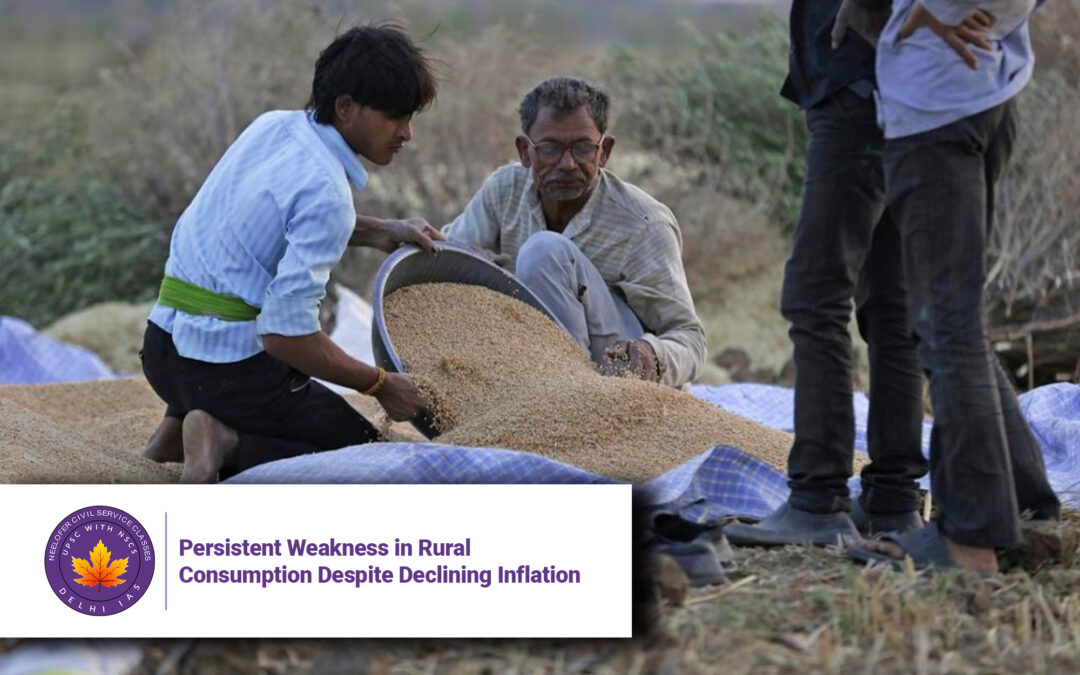
Persistent Weakness in Rural Consumption Despite Declining Inflation
Why in News?
Recent data reveals a concerning trend: rural consumption in India continues to remain sluggish despite a noticeable decline in inflation rates. This paradox highlights deeper structural issues in the rural economy that demand immediate policy attention. 
Key Observations
-
Inflation Trends:
-
Inflation has shown a consistent downward trajectory, with rates falling from 1.9% to 1.1% in recent periods.
-
Despite this, rural demand for goods and services has failed to rebound as expected.
-
-
Rural Consumption Slump:
-
Weak purchasing power persists due to:
-
Low income growth: Farm incomes remain stagnant amid rising input costs.
-
Debt burdens: Many rural households are still recovering from pandemic-era financial stress.
-
Job market fragility: Limited non-farm employment opportunities constrain spending capacity.
-
-
-
Sectoral Impact:
-
FMCG sector: Reports flat or negative volume growth in rural markets.
-
Automobile & Durables: Sales remain below pre-pandemic levels.
-
Underlying Causes
-
Incomplete Transmission of Inflation Relief: Lower wholesale prices have not fully translated to retail-level benefits.
-
Monsoon Dependence: Uneven rainfall patterns continue to affect agricultural output and rural cash flows.
-
Policy Gaps: Existing welfare schemes (e.g., PM-KISAN) may be insufficient to stimulate broad-based demand.
Way Forward
-
Boost Rural Incomes:
-
Expand MGNREGA workdays and wage rates.
-
Promote agro-processing industries to create non-farm jobs.
-
-
Improve Credit Access:
-
Enhance penetration of Kisan Credit Cards for small farmers.
-
Restructure existing farm loans to reduce debt stress.
-
-
Strengthen Market Linkages:
-
Upgrade rural infrastructure (cold storage, roads) to reduce post-harvest losses.
-
Expand e-NAM platform to ensure better price realization.
-
-
Targeted Fiscal Support:
-
Direct cash transfers or vouchers for specific consumption categories (e.g., fertilizers, appliances).
-
Conclusion
The disconnect between moderating inflation and stagnant rural consumption underscores the need for multi-dimensional interventions. While inflation control is necessary, reviving rural demand requires addressing income stagnation, employment deficits, and systemic vulnerabilities. As the backbone of India’s economy, rural revival must be prioritized to ensure equitable growth.
5 Key Questions
Q1: Why hasn’t rural consumption improved despite falling inflation?
A1: Due to stagnant incomes, high debt, and weak job creation, limiting households’ purchasing power.
Q2: Which sectors are most affected by weak rural demand?
A2: FMCG, automobiles, and consumer durables report sluggish sales.
Q3: How does monsoon variability impact rural consumption?
A3: Erratic rainfall reduces farm output and incomes, curbing spending capacity.
Q4: What policy measures can stimulate rural demand?
*A4: Expanding MGNREGA, improving credit access, and strengthening farm-market linkages.*
Q5: Why is inflation relief not reaching rural consumers effectively?
*A5: Wholesale price benefits often fail to translate to retail levels due to supply-chain inefficiencies.*

