
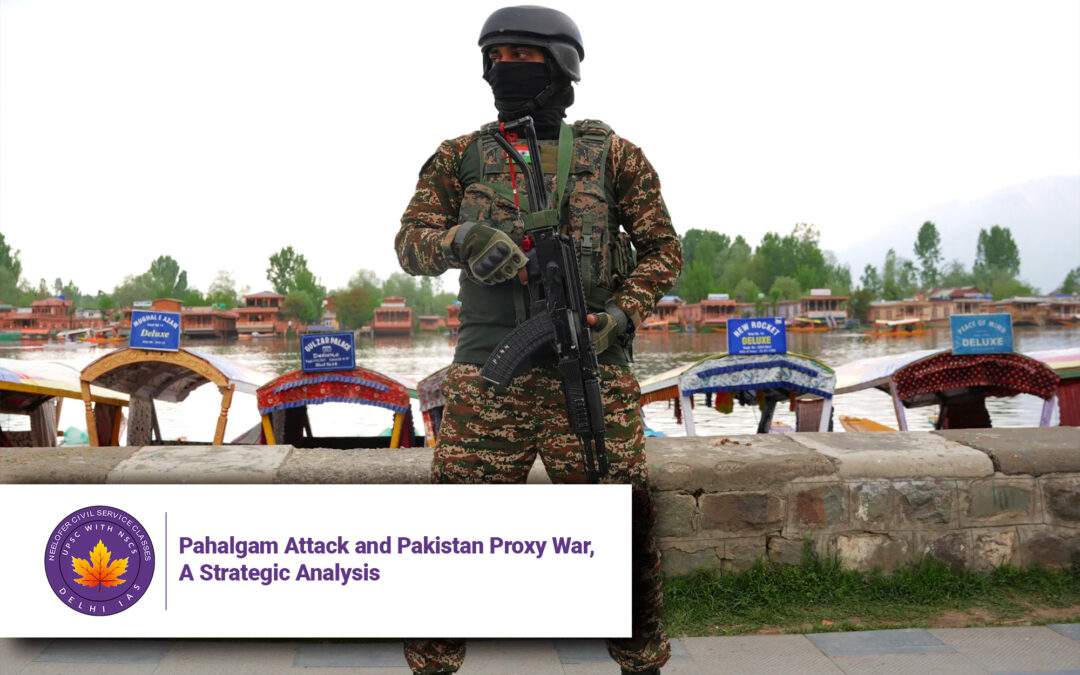
Pahalgam Attack and Pakistan Proxy War, A Strategic Analysis
Introduction
The recent terror attack in Pahalgam, Kashmir, highlights the continuation of Pakistan’s proxy war strategy against India. With an increase in hybrid terror actions, the incident underlines the complexity of cross-border terror challenges and how India can strategically respond to them. 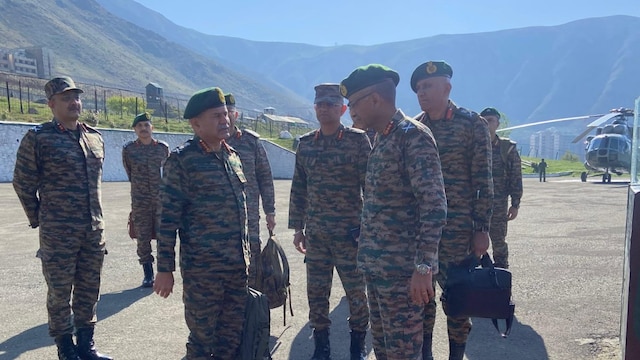
What Happened in Pahalgam?
-
A deadly terror attack targeted minority Sikh civilians in South Kashmir’s Pahalgam area.
-
The attack coincided with the upcoming Amarnath Yatra, signaling an intent to disrupt religious harmony.
-
Terrorists deliberately targeted tourists and pilgrims, attempting to harm India’s economy, unity, and international image.
-
Lashkar-e-Taiba (LeT) was reportedly involved, with messages aimed at stirring communal tensions.
Strategic Background
-
Pakistan’s strategy has long involved using terrorism to destabilize Kashmir and wider India, especially during the “tourist season” to scare away visitors and affect India’s economic revival.
-
Over the years, attacks during pilgrimage periods, like the Amarnath Yatra, have been used as psychological weapons.
-
Past incidents like the Chittisinghpora massacre and Mumbai attacks have shown a clear pattern of targeting civilians.
India’s Response Strategy
-
The government is focusing on hybrid deterrence measures — combining diplomatic, economic, and covert actions.
-
Proposed measures include reviving the Indus Waters Treaty pressure, accelerating military deployment, and using global platforms to expose Pakistan’s terror network.
-
India’s successful management of the 2019 Pulwama-Balakot episode showed the importance of quick, decisive responses.
Ideological and Political Context
-
Hilal Ahmed’s analysis highlights that speeches from Pakistani leaders continue to project a violent version of Islam, used politically to justify hatred against India.
-
The ideological construction of Pakistan as a nation rooted in religious antagonism fuels continued hostilities.
Conclusion
The Pahalgam attack is not just a tragic event but part of a long-standing strategy by Pakistan to destabilize India through hybrid warfare. India must remain vigilant and use a mix of diplomatic, military, and socio-political strategies to counter these threats, ensuring that development and unity in Kashmir continue unshaken.
5 Important Q&A
Q1: What happened recently in Pahalgam, Kashmir?
A: A terror attack targeted Sikh civilians and was intended to disrupt religious harmony and scare away tourists.
Q2: Who is believed to be behind the Pahalgam attack?
A: The Lashkar-e-Taiba (LeT) terror group is reportedly involved.
Q3: How does Pakistan use hybrid warfare against India?
A: By combining terrorism, propaganda, diplomatic moves, and psychological warfare to destabilize India.
Q4: How has India responded to past terror challenges?
A: Through a mix of diplomatic pressure, military actions like Balakot strikes, and internal security strengthening.
Q5: What ideological theme supports Pakistan’s continued hostility towards India?
A: The use of a politicized and violent version of Islam that fosters hatred and justifies terrorism against India.

