
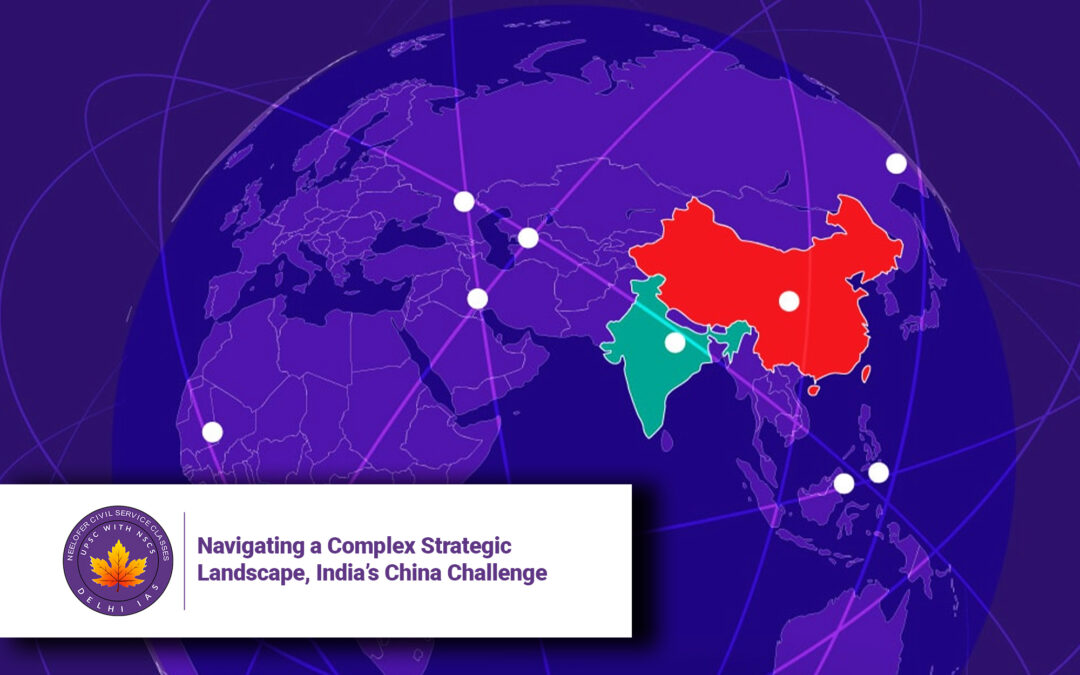
Navigating a Complex Strategic Landscape, India’s China Challenge
Why in News?
India’s evolving relationship with China, marked by persistent border tensions and strategic mistrust, continues to shape its foreign and defence policies. With Beijing ramping up military expenditure and diplomatic outreach, New Delhi faces a multifaceted challenge that demands caution, preparedness, and strategic depth. 
Introduction
China, under President Xi Jinping, has moved decisively away from Deng Xiaoping’s moderate approach. The current regime has embraced nationalism and a revivalist vision tied to restoring ancient frontiers. In this new era of assertive diplomacy and military buildup, India must carefully navigate the terrain.
Key Issues
1. Skirmishes and Strategic Signals
Repeated border incidents—from Depsang (2013) to Galwan (2020)—highlight a pattern of provocation. The brief thaw in late 2024, marked by talk of de-escalation and patrol arrangements, was welcomed but lacked depth. A 2014 China-India Border Patrolling Agreement aimed at managing tensions was later undermined by aggressive Chinese interpretations.
2. Diplomatic and Tactical Ambiguities
While joint statements have spoken of cooperation and global peace, the reality on ground reflects mistrust. India’s push for clarity on “patrolling norms” is essential, yet China’s strategic ambiguity—such as its “4-degree standoff” policy—limits meaningful progress.
3. Military Buildup and Power Projection
China’s military expenditure, increasing by 7.2% in 2025 (almost four times India’s hike), signals its assertive posture. With significant investments in missiles, cyber warfare, AI, and space, China’s People’s Liberation Army is prepared for hybrid warfare. India must remain alert to these advancements.
4. Regional and Global Dimensions
China’s increasing influence in South Asia, Africa, and the Middle East, coupled with recent diplomatic outreach (e.g., Muhammad Yunus’s visit to Beijing), complicates India’s neighbourhood strategy. Simultaneously, India must manage its partnerships with the U.S., Russia, and the EU, balancing strategic autonomy and cooperation.
Challenges and the Way Forward
India’s strategic challenge lies in managing relations with a belligerent neighbour while safeguarding national interests. Clear protocols, robust defence preparedness, and diplomatic clarity are essential. Delhi must also account for possible escalations, and invest in strategic alliances and indigenous capabilities in cyber, space, and AI domains.
Conclusion
China’s assertiveness demands that India remain vigilant, pragmatic, and prepared. While talks and treaties offer avenues for peace, India must not be blindsided by symbolic overtures. Strategic foresight and internal cohesion are essential to confront the China challenge.
5 Q&A: Decoding India’s China Strategy
Q1: Why is India concerned about China’s actions along the border?
India has experienced repeated border skirmishes and aggressive patrolling by China, particularly in regions like Ladakh. These actions violate earlier agreements and signal growing Chinese assertiveness.
Q2: What recent steps has China taken that affect India’s strategic calculations?
In 2025, China increased its defence budget by 7.2%, enhancing its military presence and capabilities across all domains, including space and cyber warfare.
Q3: Has there been any diplomatic engagement to reduce tensions?
Yes, both sides have discussed “patrolling arrangements,” and there has been talk of reviving Special Representatives-level talks. However, these lack robust progress or binding agreements.
Q4: How does China’s global engagement impact India?
China’s growing influence in Africa, West Asia, and South Asia—including outreach to India’s neighbours—can isolate India regionally and complicate its strategic environment.
Q5: What should India do going forward?
India must prepare for all scenarios—through enhanced defence readiness, technological self-reliance, strong alliances, and a nuanced foreign policy that balances assertiveness with strategic restraint.

