
Iran Nuclear Programme, The Illusion of a Surgical Strike
Why in News?
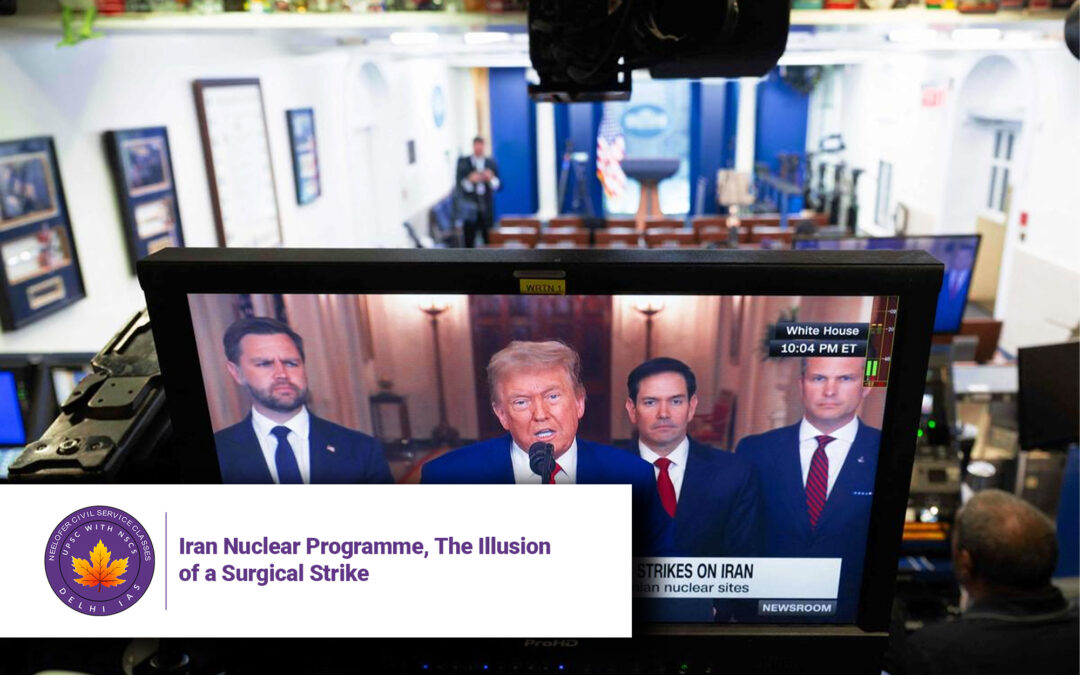
Renewed tensions in West Asia have reignited global focus on Iran’s nuclear infrastructure. Recent airstrikes by Israel and the United States targeting Iran’s nuclear facilities and top scientists have raised concerns over the feasibility, effectiveness, and risks of a “surgical strike” on Iran’s nuclear programme. 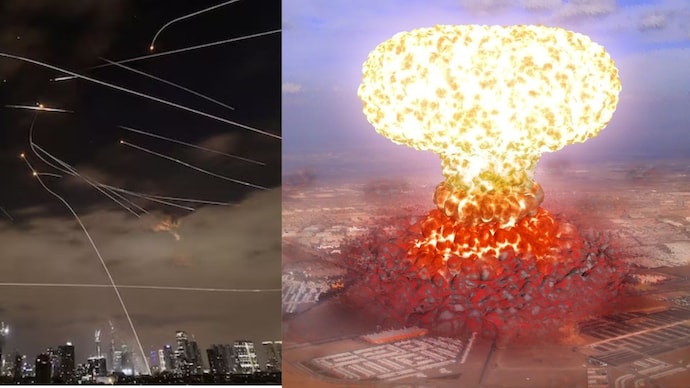
Introduction
Iran’s nuclear ambitions remain deeply contentious. Despite periodic sabotage operations and military threats, experts argue that a so-called “surgical strike” is unlikely to dismantle Iran’s nuclear programme completely. Instead, it could escalate regional tensions and further destabilize West Asia.
Inside Iran’s Nuclear Complex
Iran’s nuclear infrastructure is widely dispersed and strategically hardened. Facilities like Fordow and Natanz are built deep underground beneath reinforced mountain bunkers, making them difficult to target. Over 30,000 centrifuges are currently believed to be operational. These are protected by state-of-the-art air defense systems and require sustained attacks to be neutralized.
-
Fordow: Located inside a mountain near Qom, heavily fortified.
-
Natanz: Also underground, previously targeted but later repaired and expanded.
-
Other Sites: Spread across the country, including potential clandestine facilities.
Why a Surgical Strike Is Unlikely to Succeed
-
Technological Resilience: Iran has heavily fortified and duplicated its nuclear infrastructure.
-
Military Complexity: Even with advanced bunker-busting bombs and air superiority, a single coordinated strike may not cripple all sites.
-
Historical Precedents: Past strikes, like the sabotage of Natanz in 2010 and 2021, only delayed progress temporarily.
According to Sabine Ameer, an expert from the University of Glasgow, Iran’s nuclear programme has been structured to endure attacks, withstand sabotage, and recover swiftly. It’s a system designed more to deter than to invite war.
Strategic Implications
-
Diplomatic Fallout: A strike could derail ongoing diplomatic negotiations and provoke Iranian retaliation.
-
Regional Escalation: Tehran has signaled that any attack would prompt missile strikes on U.S. and Israeli targets in the Gulf, Iraq, and Syria.
-
Global Tensions: Involving Iran’s allies such as Hezbollah or Russia could widen the conflict.
Alternative Approach: Diplomacy
The article argues that the Joint Comprehensive Plan of Action (JCPOA) remains the most viable path to limit Iran’s nuclear ambitions. While imperfect, it offers verifiable constraints on uranium enrichment and provides diplomatic engagement channels.
Conclusion
The illusion of a clean and effective “surgical strike” on Iran’s nuclear programme is far from reality. Experts suggest that sustained diplomacy—not military confrontation—remains the only feasible strategy to prevent Iran from developing nuclear weapons and ensuring regional stability in West Asia.

