
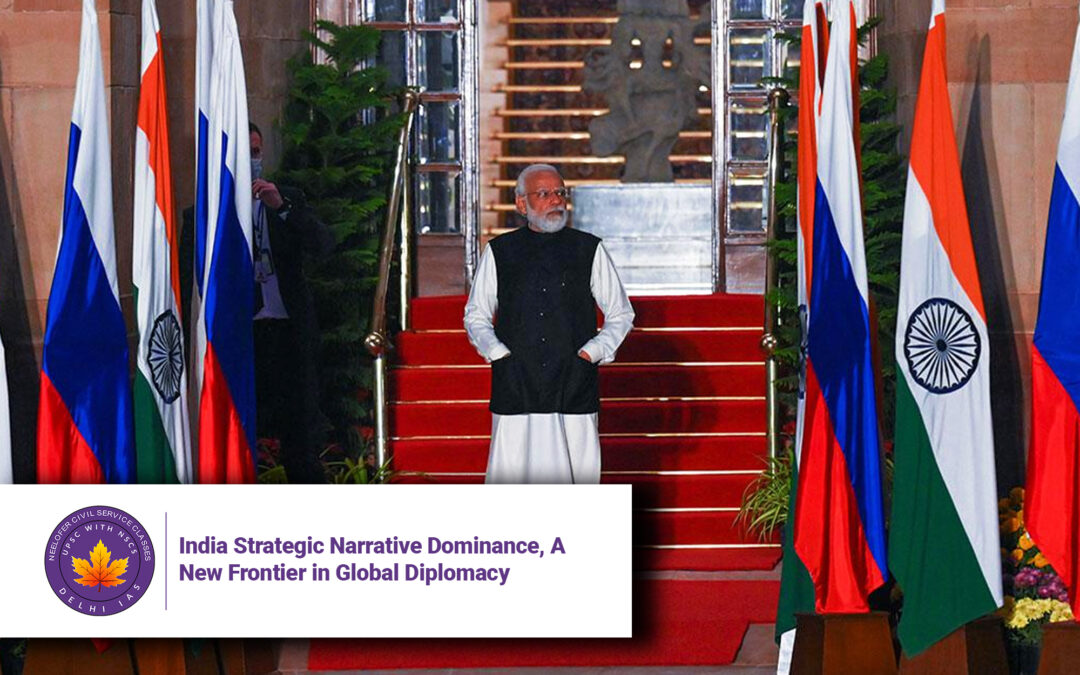
India Strategic Narrative Dominance, A New Frontier in Global Diplomacy
Why in News?
India’s assertive response to the Pulwama terror attack and its larger diplomatic posture, particularly post-Operation Shandar, have reshaped its position in the battle for narrative dominance globally. This strategic communication shift is essential as New Delhi seeks to shape international perception rather than just respond to it. .webp)
Introduction
Narratives shape global politics as much as military strength does. The article argues that India is now better placed to win the narrative war, especially in the South Asian region, by proactively crafting its image and diplomacy in response to both terrorism and global crises.
Key Issues and Background
Pulwama and Operation Shandar
-
India’s retaliation after the Pulwama attack was not just military but also narrative-focused.
-
Operation Shandar was crafted to convey resolve, precision, and restraint, helping India counter Pakistan’s “two-nation theory” rhetoric on global platforms.
India’s Shift from Reactive to Proactive Diplomacy
-
India traditionally responded with restraint and victimhood, but now actively frames the discourse.
-
New Delhi is no longer just defending its stance but shaping the global opinion, especially in conflicts involving Pakistan or major powers like China.
Narrative as a Diplomatic Tool
-
India now uses narrative dominance as a strategic instrument, similar to military, economic, and cyber tools.
-
It leverages its democratic values, historical legitimacy, and cultural ethos to gain diplomatic advantage.
The Core of the Concern
-
Pakistan has used narratives effectively to project India as an aggressor.
-
India’s current challenge is to avoid falling into reactionary patterns and instead shape perceptions proactively, especially on global platforms like the UN and G20.
-
Failure to dominate the narrative could undermine diplomatic successes despite operational wins on the ground.
Key Observations
-
Washington and Western powers were quick to comment on Pulwama, highlighting the need for India to preempt external voices.
-
India’s new diplomacy combines military action with controlled communication, especially by not inflaming rhetoric.
-
There is now an increasing global understanding of India’s restraint as strength, not weakness.
Conclusion
India is gradually mastering the art of narrative control. With tools like Operation Shandar, calibrated responses to Pakistan, and an increased role in global forums, India is becoming a leading voice in global geopolitics. To win future diplomatic battles, New Delhi must continue to frame the questions before others can control the answers.
5 Questions and Answers
Q1: What is meant by narrative dominance in diplomacy?
It refers to a country’s ability to shape global perceptions and discourse to favor its strategic interests.
Q2: How has India’s approach changed post-Pulwama?
India shifted from a reactive victimhood posture to proactive narrative framing with operations like Shandar.
Q3: What is the “two-nation theory” and how does it relate to the issue?
It is Pakistan’s ideological narrative used against India. India counters it by projecting secularism and democracy.
Q4: Why is narrative control important globally?
It influences how international actors respond to conflicts and how media portrays nations on global issues.
Q5: What role does strategic communication play in India’s foreign policy now?
It helps India assert its stance confidently, counter propaganda, and shape international policy discussions.

