
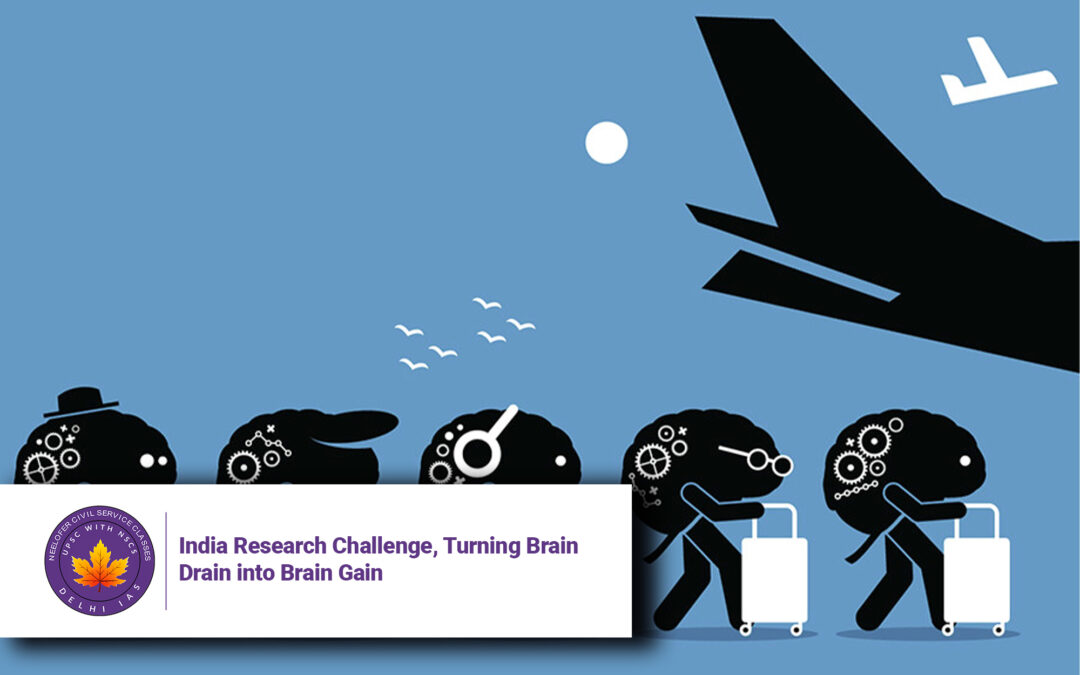
India Research Challenge, Turning Brain Drain into Brain Gain
Why in News?
Recent U.S. immigration policy changes, particularly those affecting foreign students, have sparked a global conversation on student mobility and academic freedom. As the U.S. becomes less attractive for international students, countries like India have an opportunity—but also a responsibility—to upgrade their research ecosystem and retain homegrown talent.

Introduction
The Trump-era wave of xenophobia continues to cast its shadow on U.S. academic institutions. Visa revocations and defunding of research have not only discouraged foreign students but have tarnished the global image of American academia. Amid this shift, India finds itself at a crossroads: Can it offer a viable alternative for students and researchers seeking academic excellence?
Key Issues
1. Declining Interest in U.S. Education
Indian students have long favored the U.S. for higher education. However, policy hostility and uncertainty around programmes like the Optional Practical Training (OPT) have driven a downward trend in enrollment. Countries like Germany, with lower costs and self-funding flexibility, are emerging as better options.
2. Defunding and Loss of Academic Freedom
The U.S. defunding research and pressuring universities is seen as a threat to academic freedom. Indian students and researchers are watching closely, and some are reconsidering U.S. as a destination for higher studies and work opportunities.
3. Returnee Struggles in India
Indian researchers returning from abroad often find local conditions stifling. The daily grind, bureaucratic hurdles, and hierarchical workplace culture discourage long-term engagement. Collaboration within or across institutions is rare, and social rigidities act as further deterrents.
4. Weak Research Infrastructure
Although India has made strides by opening up new research avenues and supporting private institutions, these efforts are insufficient. Structural issues in funding, freedom, and institutional flexibility still persist.
Challenges and the Way Forward
-
Loosen Government Purse Strings: More funding must be allocated for research across public and private institutions.
-
Improve Institutional Collaboration: Incentivizing inter-department and inter-institution cooperation is critical for innovation.
-
Reform Workplace and Social Norms: India’s rigid workplace hierarchies must evolve to match the global work culture.
-
Restore Academic Freedom: A shift toward liberal, globally acceptable academic norms will help retain and attract top minds.
-
Embrace Foreign Talent: A welcoming policy toward foreign students and researchers will enrich India’s academic ecosystem.
Conclusion
India stands at a pivotal moment in its educational history. The global academic shift, especially from the U.S., offers India a chance to emerge as a hub for research and innovation. However, achieving this demands not just funding but a cultural shift—one that values freedom, openness, and meritocracy. If India truly wants to serve its students, it must not only build better labs but also break old barriers.
5 Q&A on India’s Research and Education Outlook
Q1: Why are Indian students turning away from U.S. universities?
Because of restrictive visa policies, the possible cancellation of OPT, and a growing perception that the U.S. is becoming less welcoming to foreign students.
Q2: What alternatives are Indian students exploring?
Countries like Germany are gaining popularity due to affordable education, easier self-funding options, and open immigration policies.
Q3: Why is India not yet an ideal destination for research?
Despite some progress, India still faces issues such as limited research funding, rigid social/workplace norms, and poor academic freedom.
Q4: What discourages Indian returnees from staying?
Returnees often struggle with daily bureaucracy, lack of institutional collaboration, and a stifling academic environment.
Q5: What steps can India take to improve its research environment?
India must invest more in research, promote academic freedom, modernize workplace structures, and open up to international collaborations and talent.

