
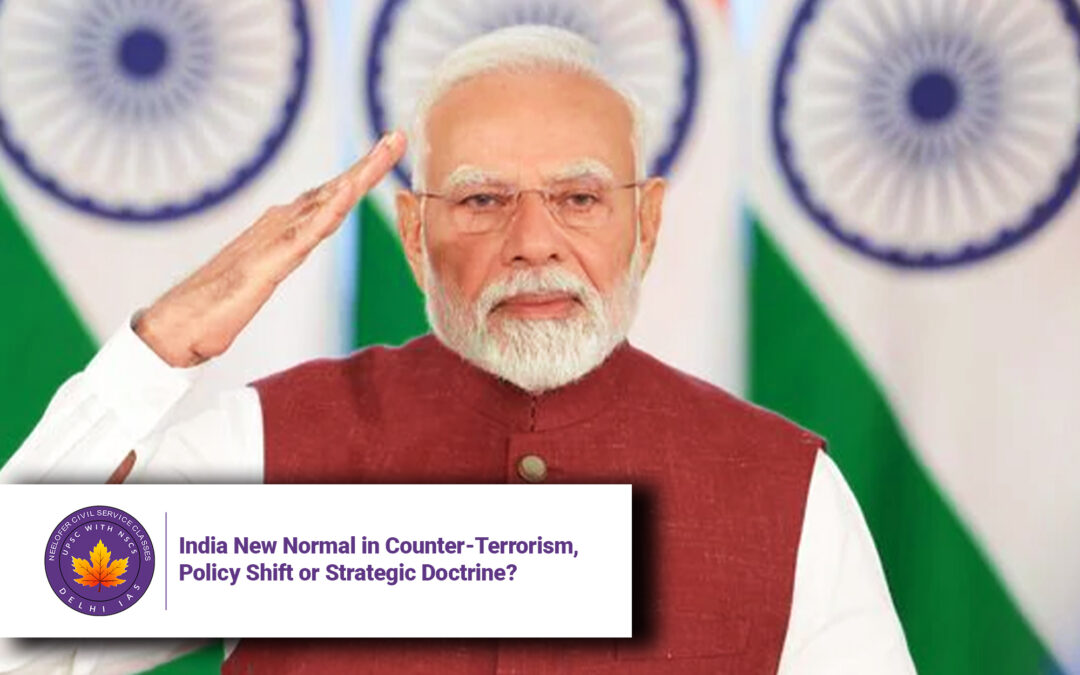
India New Normal in Counter-Terrorism, Policy Shift or Strategic Doctrine?
Why in News?
Prime Minister Narendra Modi, in a recent speech in Bihar on April 24, declared that India will “identify, track and punish every terrorist and their backers” — a continuation of India’s assertive stance on cross-border terrorism, particularly from Pakistan. His words come amidst a broader doctrinal shift in India’s counter-terrorism response known as the “New Normal”, especially after major attacks like Pulwama and Uri. 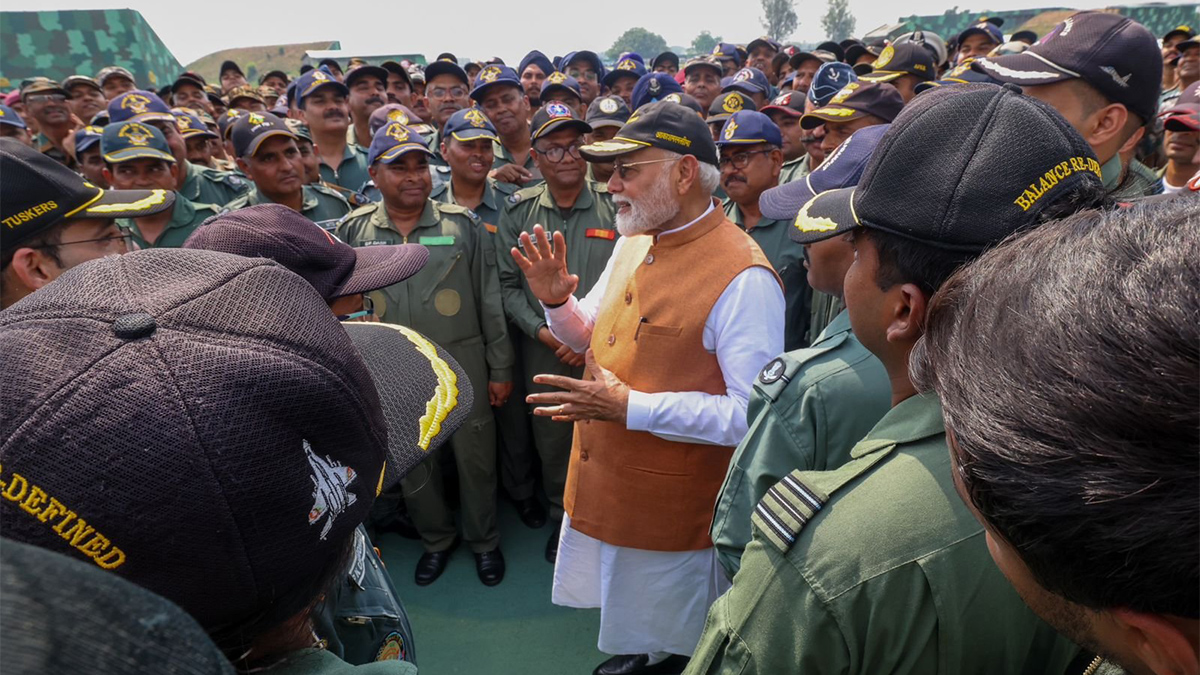)
Introduction
India’s counter-terrorism policy has evolved significantly over the past decade. Moving away from diplomatic restraint, India now signals a willingness to use military force in retaliation to terrorist attacks, irrespective of international approval. This strategic posture, known as the “New Normal”, aims to deter future attacks by imposing clear costs on both terrorist groups and the states that support them — particularly Pakistan.
Key Issues and Background
1. From Restraint to Retaliation
India traditionally responded to terrorism with diplomatic démarches, international pressure, and limited cross-border action. However, attacks like Uri (2016) and Pulwama (2019) forced a paradigm shift.
2. Operation Shodoor: A Landmark Change
After the Pulwama attack, India launched Operation Shodoor, targeting terror camps in Pakistan-occupied Kashmir (PoK). India struck military bases and launchpads across the LoC, signaling a new doctrine of preemptive and retaliatory strikes.
3. Pakistan’s Denial and India’s Resolve
Despite Pakistan’s denial of hosting terror camps, India’s retaliation — including surgical strikes and airstrikes — conveyed that support to terrorism would invite consequences. These actions were executed even without explicit global support.
Specific Impacts or Effects
-
India’s Message: It will act unilaterally if provoked by terrorism.
-
Pakistan’s Reaction: Ceasefire proposals followed after India’s precise military retaliation.
-
Global Perception: India emerged as a nation willing to bear diplomatic risks to uphold its national security.
-
Cost Imposition: Pakistan now faces economic, diplomatic, and strategic costs for sheltering terror groups.
-
India’s Military Doctrine: Re-defined to include surgical responses to terrorism as a regular tool, not an exception.
Challenges and the Way Forward
Challenges
-
International Criticism: Risk of global censure if civilian casualties occur.
-
Escalation Potential: Any miscalculation could lead to full-scale conflict.
-
Proxy Warfare: Pakistan may intensify covert operations or hybrid warfare.
-
Strategic Ambiguity: The lack of clarity on red lines may complicate deterrence.
Steps Forward
-
Develop precise, intelligence-driven strike capabilities.
-
Strengthen diplomatic messaging to counter Pakistan’s narrative globally.
-
Invest in ISR (Intelligence, Surveillance & Reconnaissance) capabilities.
-
Create a credible doctrine that combines military response with diplomatic agility.
-
Build internal consensus and political unity to support bold foreign policy decisions.
Conclusion
India’s “New Normal” signals a decisive break from decades of strategic restraint. The willingness to use military force in response to terrorism — even in the absence of international backing — represents a maturing of Indian strategic thinking. As the article notes, this doctrine is not about revenge but about shaping future behavior. It reflects a country that will protect its people and sovereignty with all instruments of power — diplomatic, military, and political. At a time of rising global disorder and asymmetric threats, India’s approach aims to deter, deny, and dominate — if necessary.
5 Questions and Answers
Q1: What is India’s ‘New Normal’ doctrine in counter-terrorism?
A: It is India’s evolved policy of using military force against terrorist threats, particularly from Pakistan, with or without global support.
Q2: What incidents shaped this shift in policy?
A: The 2016 Uri attack and 2019 Pulwama attack were key turning points, prompting surgical and air strikes in response.
Q3: How has Pakistan reacted to India’s military responses?
A: Often with denial or counter-accusations, but also with ceasefire proposals when faced with international pressure and Indian resolve.
Q4: What are the risks associated with this doctrine?
A: The potential for conflict escalation, international backlash, and intensification of proxy warfare.
Q5: What strategic goals does India aim to achieve with this approach?
A: To deter future attacks, impose costs on sponsors of terrorism, and signal India’s resolve to act decisively in defense of national security.

