
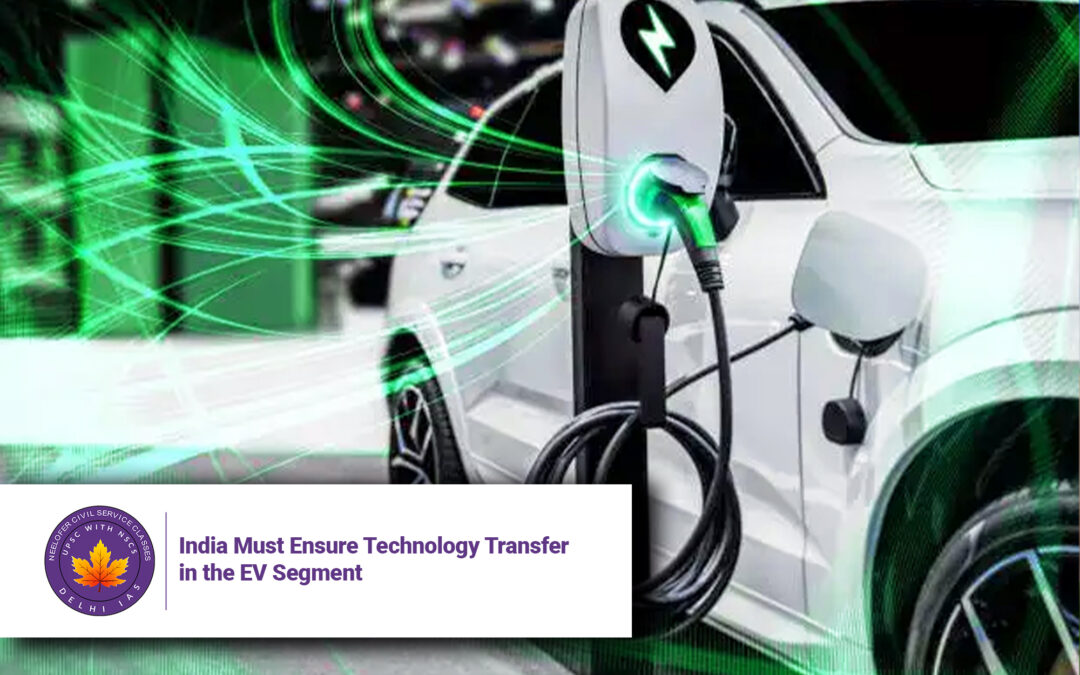
India Must Ensure Technology Transfer in the EV Segment
Why in News?
On June 2, 2024, India made a major policy move to accelerate its electric vehicle (EV) transformation journey by offering a 15% concessional import duty on completely built-up electric cars. This benefit is conditional—EV manufacturers must invest a minimum of ₹4,150 crore and begin local manufacturing within three years, eventually sourcing 50% of components from India. 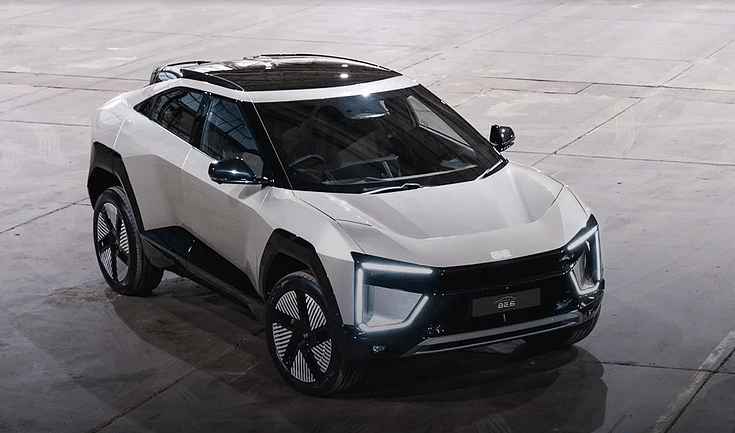
Introduction
India’s path to electric mobility is gaining momentum. The government is pushing hard to make India not just a large market but also a competitive manufacturing hub for EVs. However, without proper technology transfer, this growth could remain shallow. The current incentive scheme—while promising—requires parallel efforts to ensure India doesn’t remain just an assembler of foreign EVs, but becomes a global EV technology leader.
Key Issues and Background
1. New EV Policy Incentives
The latest policy under the Scheme for Promotion of Manufacturing of Electric Passenger Cars in India (SPMEPCI) allows a maximum annual import of 8,000 EVs per manufacturer for five years. It aims to attract global manufacturers to set up shop in India with significant investments and promises of local sourcing.
2. India’s EV Push: Late but Ambitious
India’s EV adoption began seriously only in 2015, nearly a decade behind global leaders. The FAME scheme supported early growth, along with other government initiatives like the New Energy Vehicle subsidy program.
3. Global Context: Lessons from China
China began supporting EVs in 2010, and with strategic planning, has become:
-
The largest EV market in the world
-
A global leader in battery manufacturing and charging tech
-
Capable of EV exports, with 8.1 million units expected by 2024 (out of 17 million global EV sales)
4. Technology Transfer is Key
The U.S. invested early in innovation, but China succeeded by demanding local R&D and technology transfer from foreign manufacturers. India, if it wants long-term benefits, must also insist on technology transfer, not just local assembly.
5. Risk of Becoming Just an Assembler
While concessional duties can increase EV imports, without local manufacturing of key components like batteries, motors, and software, India risks becoming dependent on imports, losing out on economic and strategic gains.
Key Takeaways
-
India’s new EV import policy offers a strategic opportunity to attract foreign investment.
-
The focus must shift from just import and assembly to domestic manufacturing and R&D.
-
Technology transfer is crucial for India to become self-reliant in the EV sector.
-
The example of China’s dominance in EVs shows the power of integrating policy with long-term tech vision.
-
India’s late start in EV adoption must now be balanced with smart, future-proof industrial policies.
Challenges and the Way Forward
Challenges
-
Lack of clear technology-sharing mandates
-
Limited domestic EV component ecosystem
-
Dependence on foreign software, batteries, and motors
-
Weak charging infrastructure in semi-urban and rural areas
Steps Forward
-
Tie import benefits with mandatory R&D and tech transfer agreements
-
Expand the domestic supply chain for batteries, charging stations, and power electronics
-
Promote public-private partnerships for EV innovation
-
Encourage local startups to build core EV tech
-
Invest in skilling the workforce in next-gen automobile tech
Conclusion
India’s new EV policy is a step in the right direction, but just importing EVs at low tax rates won’t make the country a global leader. Technology transfer must be prioritized to truly transform India into an EV manufacturing powerhouse. With smart policy, domestic capability, and sustained investment, India can move from being a latecomer to becoming a game-changer in the global EV revolution.
5 Questions and Answers
Q1: What was the key announcement made by India on June 2 regarding EVs?
A: India offered a 15% concessional import duty on EVs, provided the manufacturer invests ₹4,150 crore and starts local production with 50% localization within three to five years.
Q2: What is the SPMEPCI scheme?
A: It stands for Scheme for Promotion of Manufacturing of Electric Passenger Cars in India, allowing up to 8,000 fully built EV imports annually per manufacturer for five years.
Q3: Why is technology transfer important in India’s EV policy?
A: Without tech transfer, India risks becoming just an assembler. To build a competitive EV industry, India needs to locally manufacture batteries, motors, and software.
Q4: How did China achieve global EV dominance?
A: By combining strong policy support with mandatory local manufacturing, tech transfer, and heavy investment in charging infrastructure and R&D.
Q5: What must India do to become a global EV leader?
A: Insist on tech transfer, build local component supply chains, invest in R&D, and expand charging infrastructure while supporting local innovation.

