

India Income Tax Law Revision, A Bold Step with Miles to Go
Why in News?
The Indian government introduced the Income Tax Bill, 2025 in Parliament on 21 July 2025, a much-anticipated legislative effort aimed at simplifying the country’s complex income tax law. This move follows the establishment of a committee in October 2021, dedicated to reviewing and simplifying the Income Tax Act of 1961. While the tabling of the new bill is being hailed as a significant initiative, experts argue that the reforms still fall short of addressing key substantive issues, making it a case of “well begun is only half done.” 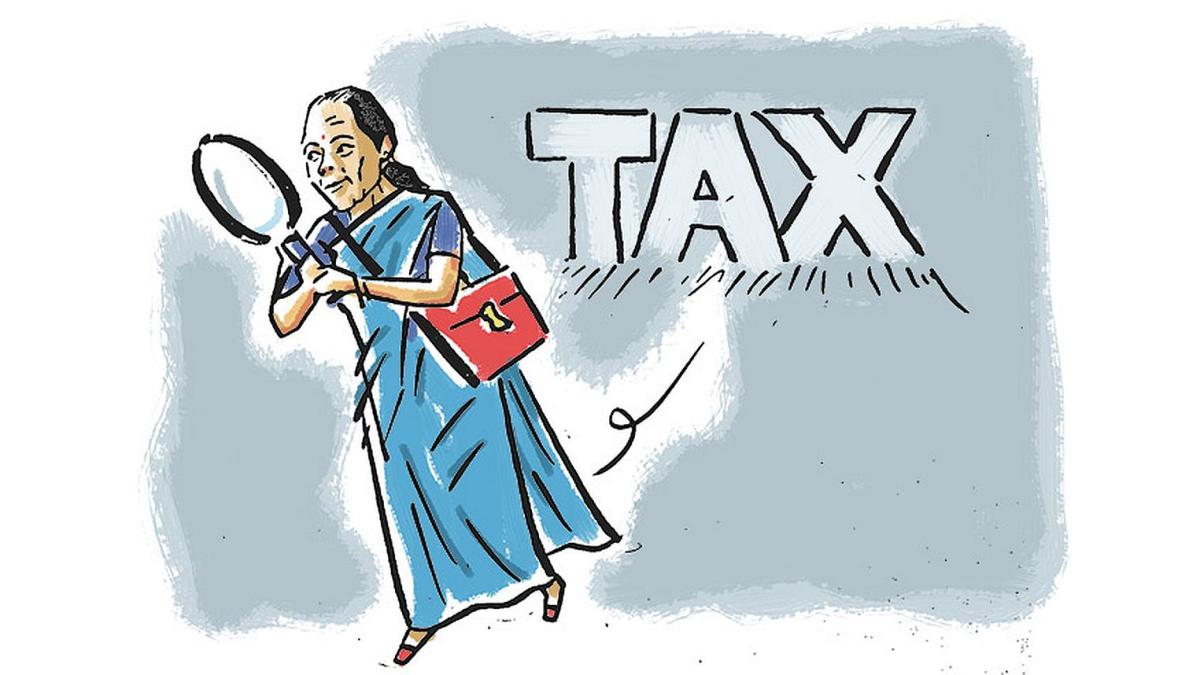
Introduction
The Income Tax Act of 1961 has undergone thousands of amendments over the decades, making it one of the most complex pieces of legislation in India’s legal framework. From 819 sections and over 4,000 amendments, it has become a maze for even seasoned professionals. Recognizing this challenge, the government set up a Simplification Committee in 2021 with a narrow mandate to reduce litigation, remove outdated provisions, and simplify the law’s language.
The draft Income Tax Bill, 2025, although a positive first step in streamlining the legal language and improving accessibility, has not gone far enough in resolving core policy challenges. The bill, in many ways, is an improvement in terms of form but lacks depth in substance.
Key Issues Highlighted
1. Limited Mandate of the Simplification Committee
The committee’s powers were ring-fenced. It was not empowered to recommend structural reforms in the tax system or suggest deep policy shifts. Instead, it was expected to revise the language, reduce litigation, and streamline the law for clarity. This narrow scope has limited the effectiveness of the resulting bill.
Out of the 258 recommendations submitted by the committee, most were accepted, but key conceptual issues were either left untouched or vaguely addressed.
2. Ambiguity in Important Definitions
One of the serious problems that continues in the draft bill is the lack of clarity in certain legal definitions, which could have far-reaching consequences.
-
For example, the definition of ‘relative’ for tax exemptions under section 56(2)(x) remains ambiguous. It is unclear whether the term includes relationships where the gifting relationship is mutual or one-sided, or whether there must be specific documentation to prove the nature of the relationship.
-
Definitions like “deemed owner” and “deemed income” also continue to create confusion. Even seasoned tax professionals and corporate accountants struggle to interpret these definitions uniformly.
3. Delegation of Rule-Making Powers
The draft bill continues to empower the Central Board of Direct Taxes (CBDT) to make significant rules, often without Parliamentary oversight. This can lead to inconsistency and unpredictability in how the law is implemented.
For instance:
-
In tax assessments, the CBDT will gain even broader powers to define the scope and type of documentation required.
-
This could potentially tilt the balance too heavily in favour of the assessing officers, leading to subjective interpretations and increased litigation.
Core Areas Where Substantive Reform is Needed
1. Individual Taxation Reform
There are serious concerns in the domain of individual income taxation, particularly:
-
The current maximum income tax rate of 30% kicks in at a low annual income of ₹15 lakh, which seems disproportionate considering inflation, increased cost of living, and current salary structures. This threshold urgently needs revision.
-
Rising medical and education costs are becoming unaffordable even for middle-class households. The bill lacks additional deductions or exemptions to cushion these rising costs.
-
There’s no adequate provision for:
-
Higher deduction on health insurance premiums
-
Deductions for elderly care expenses
-
More generous exemptions for house rent or home loan interest, especially in metros
-
2. Corporate Taxation
India’s corporate tax rate has already been revised to 25%, which is competitive globally. However, structural challenges persist:
-
The bill fails to address ambiguities in mergers and acquisitions (M&A) taxation. This has real-world implications for companies planning cross-border mergers or internal restructuring.
-
Issues such as:
-
The definition of “demerger”
-
The treatment of deferred assets
-
Lack of clarity on capital gains in share swaps
-
These unresolved areas contribute to tax uncertainty and hamper investment decisions.
3. Treatment of Losses and Asset Acquisitions
-
India’s problem of non-performing assets (NPAs) has reduced in recent years but remains a challenge.
-
In cases where a company is acquired under the bankruptcy resolution process, Section 28 of the draft bill introduces risks by not allowing appropriate write-offs and tax benefits for the acquirer.
-
This discourages investors from reviving insolvent companies and slows down the process of job creation and economic recovery.
4. Tax Deductions and Exemptions
The deduction limits for various individual and corporate expenses remain outdated, and the new bill does not attempt to:
-
Adjust deductions for inflation
-
Introduce new exemptions for digital education, remote work infrastructure, or mental health expenses
-
Provide targeted reliefs for sectors hit hard by the pandemic or economic slowdown
5. Administrative and Procedural Gaps
-
The draft bill proposes the integration of TCS (Tax Collected at Source) and TDS (Tax Deducted at Source) platforms. While this is a good step in principle, the lack of infrastructure preparedness is a concern.
-
The drafting of rules and implementation details remain vague.
-
There’s a need to ensure efficient data reconciliation across departments to avoid mismatch notices and harassment of taxpayers.
Challenges and the Way Forward
The government has undoubtedly taken a progressive step by attempting to modernize the Income Tax Act. However, the lack of bold policy changes and half-hearted attempt at simplification risks making this a cosmetic exercise rather than a structural reform.
Key Challenges:
-
Ambiguous definitions leading to confusion and litigation
-
Over-centralization of rule-making with CBDT
-
Missed opportunity to reform tax rates and exemptions
-
Insufficient support for MSMEs, startups, and industries needing revival
-
Outdated tax slabs not aligned with economic realities
Way Forward:
-
Widen the scope of the bill beyond language simplification
-
Introduce a progressive and inflation-adjusted tax structure
-
Clearly define all key terms and remove subjectivity
-
Strengthen Parliamentary oversight over rule-making
-
Provide targeted tax incentives for education, healthcare, job creation, and digital transformation
-
Involve industry experts and public stakeholders in future drafts
Conclusion
The Income Tax Bill, 2025 is undoubtedly a welcome move, especially for its attempt to use plain language and reduce legalese. However, it largely fails to address core policy issues, many of which have plagued India’s taxation system for decades.
The new law may make compliance easier, but ease of paying taxes is only part of the challenge. For India to truly build a modern, fair, and efficient tax system, structural reforms—not just semantic ones—are essential.
As of now, well begun is still only half done.
Five Questions and Answers
Q1. What is the main objective of the Income Tax Bill, 2025?
A: To simplify the language of the current Income Tax Act, reduce litigation, and remove outdated provisions.
Q2. What are the main criticisms of the bill?
A: Lack of substantive reforms, vague definitions, continued complexity, and missed opportunities to update tax thresholds and exemptions.
Q3. How does the bill address individual taxation?
A: It does not significantly revise tax slabs or provide sufficient relief for medical or education expenses, making it inadequate for present economic conditions.
Q4. Why is the treatment of corporate taxation considered incomplete?
A: The bill does not address key issues in mergers, acquisitions, or asset acquisition under insolvency, which can discourage corporate restructuring.
Q5. What is the way forward for meaningful tax reform?
A: The government must expand the scope of the bill to include policy changes, introduce inflation-indexed tax thresholds, clarify definitions, and improve administrative efficiency.

