
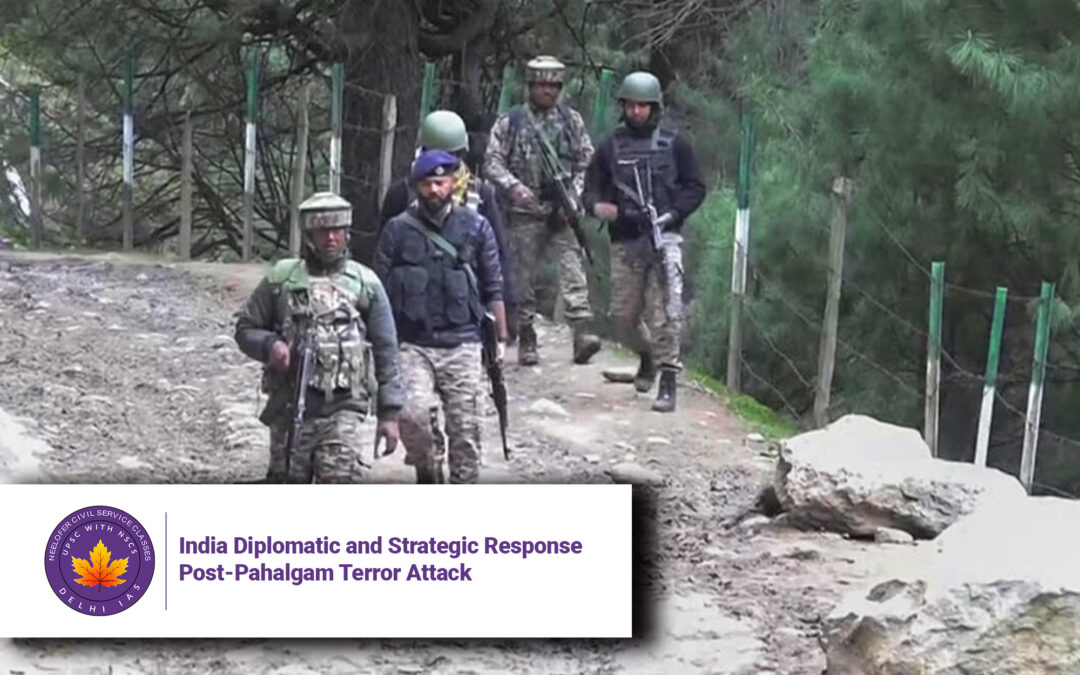
India Diplomatic and Strategic Response Post-Pahalgam Terror Attack
Why in News?
In response to the Pahalgam terror attack, India’s Cabinet Committee on Security has taken measured but strong diplomatic actions against Pakistan, aiming to signal a tougher stance against terrorism emanating from its soil. These steps could pave the way for further escalations if Pakistan does not act against terror groups. 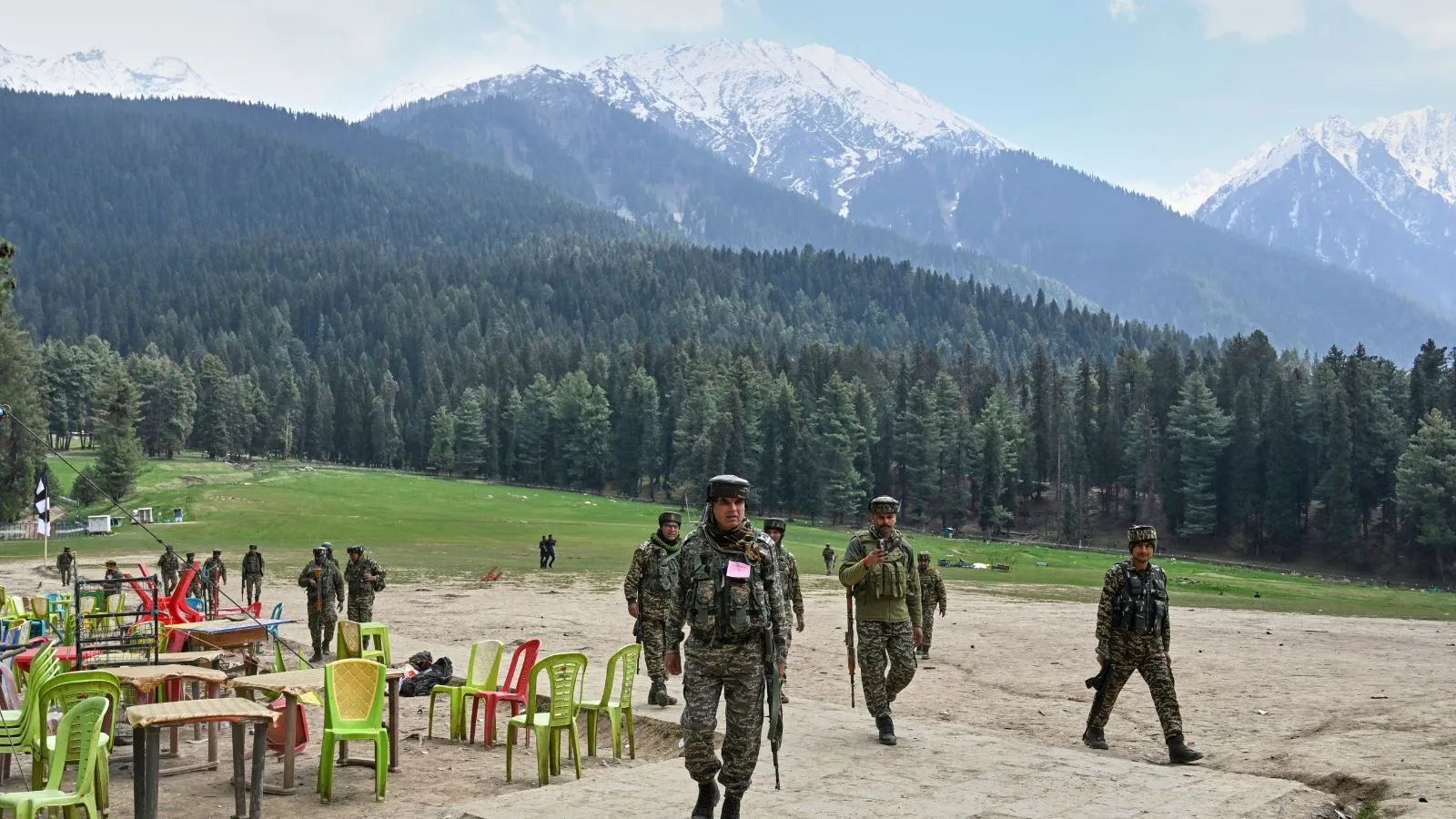
Introduction
The recent terror attack in Pahalgam has reignited tensions between India and Pakistan. India’s diplomatic and operational steps reflect its unwillingness to maintain regular engagement with Pakistan unless the latter acts “credibly” against terror outfits operating from its territory.
Key Issues
1. Diplomatic Measures Taken by India
-
Suspension of visas for Pakistani nationals.
-
Suspension of consular operations.
-
Reducing operations at the Attari border Integrated Check Post (ICP).
2. Revisiting the Indus Waters Treaty (IWT)
-
India has decided to pause cooperation under the IWT until Pakistan acts against terror groups.
-
Further measures like building hydropower projects and desilting projects on tributaries have been initiated.
3. Pakistan’s Response
-
Islamabad has also canceled visas for Indians and suspended bilateral trade.
-
Pakistan has threatened to consider India’s steps regarding the IWT as an “Act of War” and has warned against potential Indian airstrikes.
Alternative Approaches
-
Global Diplomacy: India is seeking broader international support by briefing key countries and organizations.
-
Focused Pressure: India’s message emphasizes “punishment beyond imagination,” signaling readiness for stronger actions if needed.
-
Internal Consolidation: India is working with stakeholders, especially in Jammu and Kashmir, to ensure internal stability and counter radicalization.
Challenges and the Way Forward
-
Managing Escalation: Further escalation risks military confrontation; thus, India needs calibrated pressure without provoking uncontrolled conflict.
-
Building Global Consensus: While countries like the U.S. may restrain from aggressive posturing, India must keep rallying global support on the issue of terrorism.
-
Maintaining Domestic Unity: India’s government must ensure continued unity and resilience internally, especially in sensitive regions like Jammu and Kashmir.
Conclusion
India’s actions show a clear shift toward a zero-tolerance policy for terror groups operating from across its borders. Diplomacy, internal resilience, and international collaboration will be crucial to sustaining pressure on Pakistan, preventing future attacks, and averting a broader military conflict.
5 Q&A Based on the Article
Q1. What diplomatic actions has India taken against Pakistan after the Pahalgam attack?
A: India has suspended visas for Pakistani nationals, stopped consular operations, and reduced engagement at the Attari border ICP.
Q2. What is the significance of India’s move regarding the Indus Waters Treaty (IWT)?
A: India’s decision to pause cooperation under the IWT signals a serious diplomatic step and is intended to pressure Pakistan without directly engaging in military action.
Q3. How has Pakistan responded to India’s measures?
A: Pakistan canceled visas for Indians, suspended bilateral trade, and threatened to consider Indian moves under IWT as an “Act of War.”
Q4. What is India’s broader diplomatic strategy post-attack?
A: India is briefing foreign leaders globally, building international understanding about its stand against cross-border terrorism.
Q5. What are the main challenges India faces in this situation?
A: Managing escalation without direct military conflict, maintaining global support, and ensuring internal stability in regions like Jammu and Kashmir.

