
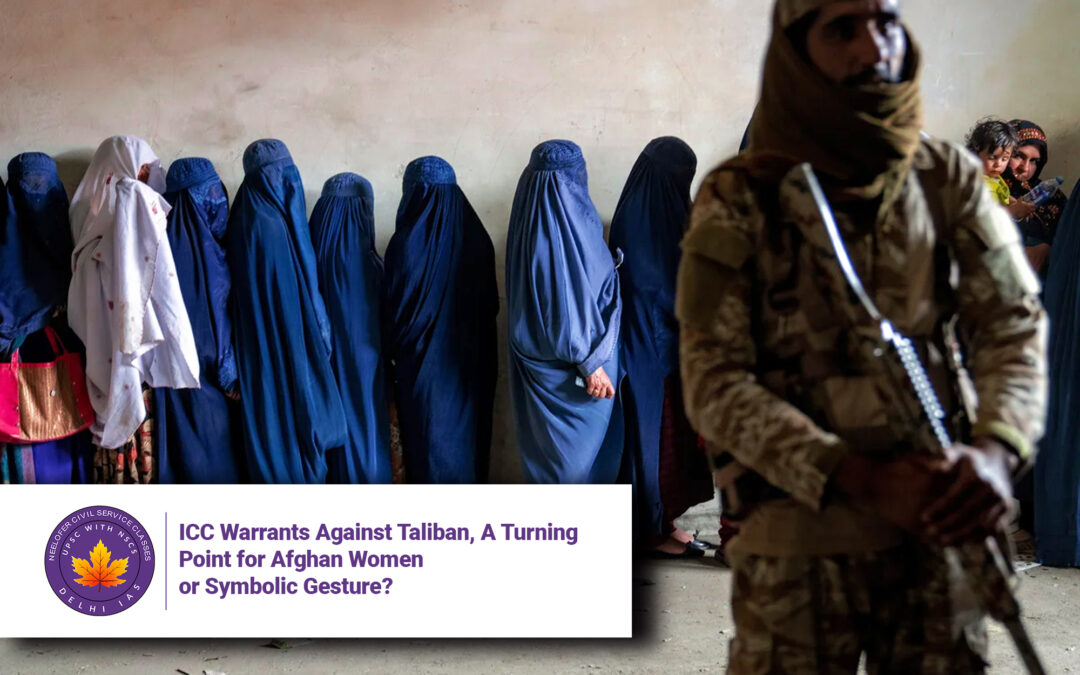
ICC Warrants Against Taliban, A Turning Point for Afghan Women or Symbolic Gesture?
Why in News?
In a landmark decision, the International Criminal Court (ICC) has issued arrest warrants for top Taliban leaders over alleged crimes against humanity, specifically targeting the systemic persecution of women and girls in Afghanistan. This is the first time the ICC has acted on gender persecution charges, marking a significant moment in the global fight for women’s rights under international law. 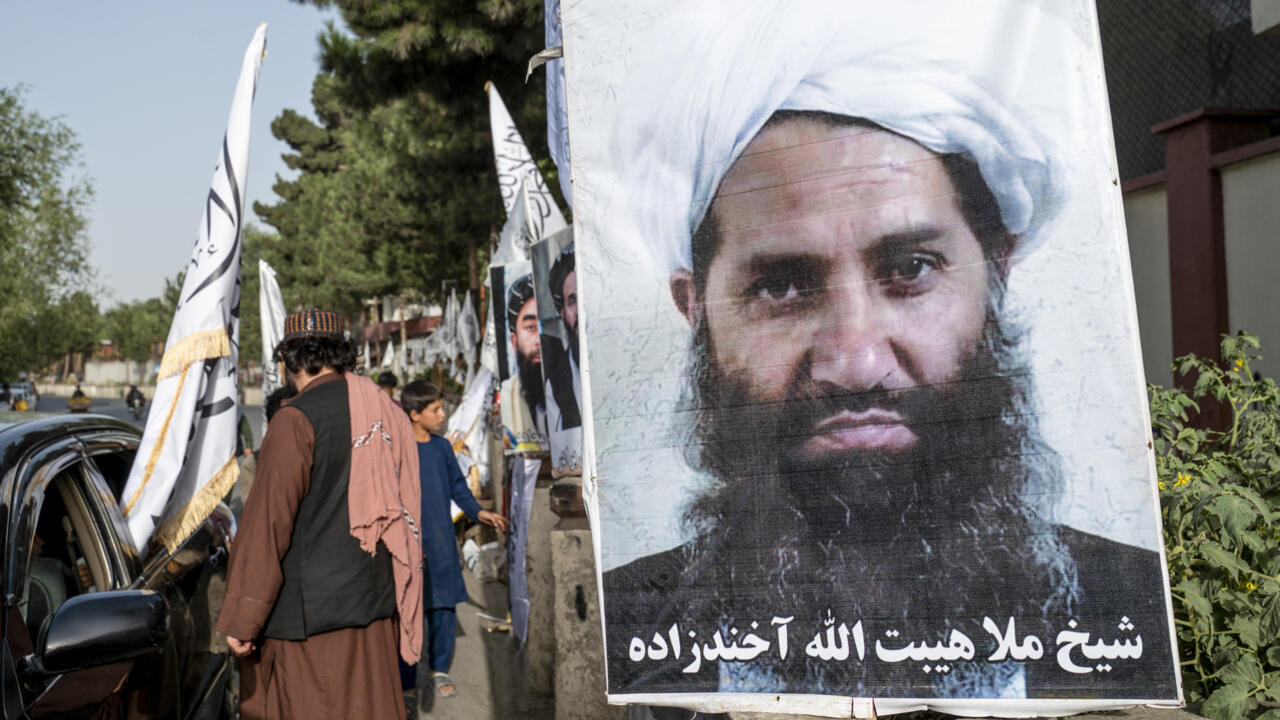
Introduction
Earlier this month, the International Criminal Court (ICC) shook the global conscience by issuing arrest warrants for two of the most powerful figures in the Taliban regime: Supreme Leader Hibatullah Akhundzada and Chief Justice Abdul Hakim Haqqani. The court’s Pre-Trial Chamber II found “reasonable grounds” to believe these leaders were guilty of “ordering, inducing, or soliciting the crime against humanity of persecution on gender grounds.”
These warrants are groundbreaking—they represent the first ever ICC action against gender persecution—and are being hailed as a milestone in international law, affirming the rights of women and girls in Afghanistan. But serious concerns remain: will these warrants translate into real change for Afghan women living under one of the most repressive regimes in the modern world?
The Context: A Nation in Regression
Since retaking control of Afghanistan in August 2021, the Taliban have imposed draconian laws and ideological edicts targeting women. Girls have been systematically banned from secondary and higher education, prohibited from public spaces such as gyms and parks, and stripped of fundamental freedoms of movement, thought, expression, privacy, and bodily autonomy.
These measures are not isolated or temporary. They are part of a wider discriminatory ideology and a religious-political vision that seeks to erase the public presence of women from Afghan society. Zahra Nader, Editor-in-Chief of Zan Times—a publication dedicated to human rights reporting in Afghanistan—calls this a “discriminatory system of control of women and girls”, which is precisely what lies at the heart of the ICC’s case.
What the Warrants Actually Say
According to the ICC’s ruling, Taliban leaders have “severely deprived” Afghan women and girls of their rights through official decrees and edicts. The court’s reference is Article 7(1)(h) of the Rome Statute, which outlines the crime of “persecution against any identifiable group or collectivity” based on gender and other grounds universally recognized under international law.
Importantly, the ICC stresses that physical violence is not a prerequisite for establishing crimes of persecution. The systemic imposition of discriminatory societal norms, institutional restrictions, and ideological indoctrination are sufficient to meet the legal standard.
The court also accuses the Taliban of targeting those who do not conform to their ideological gender expectations, which includes punishing dissenters or those perceived as allies of women’s rights.
A First in Legal History
This marks the first time in the ICC’s history that gender-based persecution has been formally recognized as a standalone crime. It also marks the first ICC action on LGBTQIA+ rights under international law and may pave the way for prosecuting sexual minorities in future human rights cases.
In terms of international justice, this milestone parallels the ICC’s earlier warrant against former Philippine President Rodrigo Duterte over human rights violations under his “war on drugs.”
Afghanistan’s ICC Status: A Complication
While the ICC has legal grounds to issue the warrants (Afghanistan signed the Rome Statute in 2003), practical enforcement remains unclear. The Taliban, which does not recognize the ICC’s jurisdiction, has already condemned the move as “an insult to Islamic beliefs” and a “clear act of hostility.”
Unless the Taliban government cooperates—which appears unlikely—the ICC will need support from other states or global institutions to enforce arrests and pursue judicial proceedings in The Hague.
This legal and logistical gap raises important questions about accountability without compliance.
The Role of the Purple Saturdays Movement
The Purple Saturdays Movement, an Afghan women-led protest group operating in exile, welcomed the ICC’s warrants but warned against symbolic justice. They emphasized that if the international community does not follow through with arrests and trials, the move could backfire—leading to an even harsher crackdown on Afghan women by a defiant Taliban.
The movement has demanded the creation of an independent international judicial committee to accelerate the legal process and monitor Taliban compliance. Without these mechanisms, they argue, the ICC risks being toothless.
Why This Matters: A Beacon of Hope or Empty Gesture?
Despite the skepticism, many see the ICC’s action as a hopeful signal to the global community and a morale boost for Afghan women who have been stripped of virtually every basic right.
The action reaffirms the principle that crimes against women’s rights are not internal matters but international violations of fundamental human rights. The world has watched in horror as Afghan women have been forced into domestic imprisonment. The ICC warrants say: “We see you, and this is not acceptable.”
Even though enforcement remains uncertain, international recognition and legal framing of gender persecution is a crucial first step toward eventual justice.
The Path Forward: Challenges and Possibilities
-
Enforcement Dilemma: Unless the Taliban leaders travel abroad to jurisdictions that honor ICC arrest warrants, actual prosecution may not occur soon.
-
Symbolism vs. Action: Critics fear the warrants may remain purely symbolic if not backed by concerted diplomatic and political pressure.
-
Repercussions on Afghan Women: Any escalation or backlash by the Taliban could worsen conditions for women and girls.
-
International Unity Needed: The global community must come together to demand accountability, provide protection to Afghan activists, and support exiled Afghan women’s groups.
Conclusion
The ICC’s warrants against the Taliban’s top leadership represent a bold legal stand against gender-based oppression and the institutionalized persecution of women. While enforcement remains a significant hurdle, this marks a historic turning point in international criminal law.
The effectiveness of these actions will ultimately depend on global political will. Will the world sit back and let justice remain symbolic? Or will it unite to ensure that violence against women—especially state-sanctioned violence—is never normalized?
For Afghan women who’ve endured unspeakable suffering under Taliban rule, these warrants are a flicker of hope in a landscape of darkness. Whether that hope turns into lasting change is a test not just for the ICC, but for humanity itself.
Q&A Section
Q1: What is the significance of the ICC warrants against the Taliban?
A: The warrants mark the first time the International Criminal Court has acted on charges of gender persecution. It acknowledges that the Taliban’s systemic oppression of women and girls constitutes a crime against humanity under international law.
Q2: Who are the Taliban leaders named in the ICC warrants?
A: The ICC issued arrest warrants for Supreme Leader Hibatullah Akhundzada and Chief Justice Abdul Hakim Haqqani, accusing them of ordering, inducing, or soliciting crimes of gender persecution.
Q3: How have women’s rights been affected under Taliban rule?
A: Since August 2021, Afghan women have been banned from education beyond age 12, restricted from public spaces, and denied freedoms related to movement, expression, thought, and privacy. These are systemic and institutionalized violations enforced through Taliban edicts.
Q4: Will these warrants lead to actual arrests or change in Taliban policies?
A: Enforcement is uncertain as the Taliban do not recognize ICC jurisdiction. Without international pressure or cooperation from other states, the warrants could remain symbolic. However, they set a crucial precedent in international law.
Q5: What are women’s rights groups demanding in response to these warrants?
A: Groups like the Purple Saturdays Movement are calling for an independent international judicial committee to monitor and accelerate the legal process. They also emphasize the need for more than symbolic action to prevent worsening repression.

