
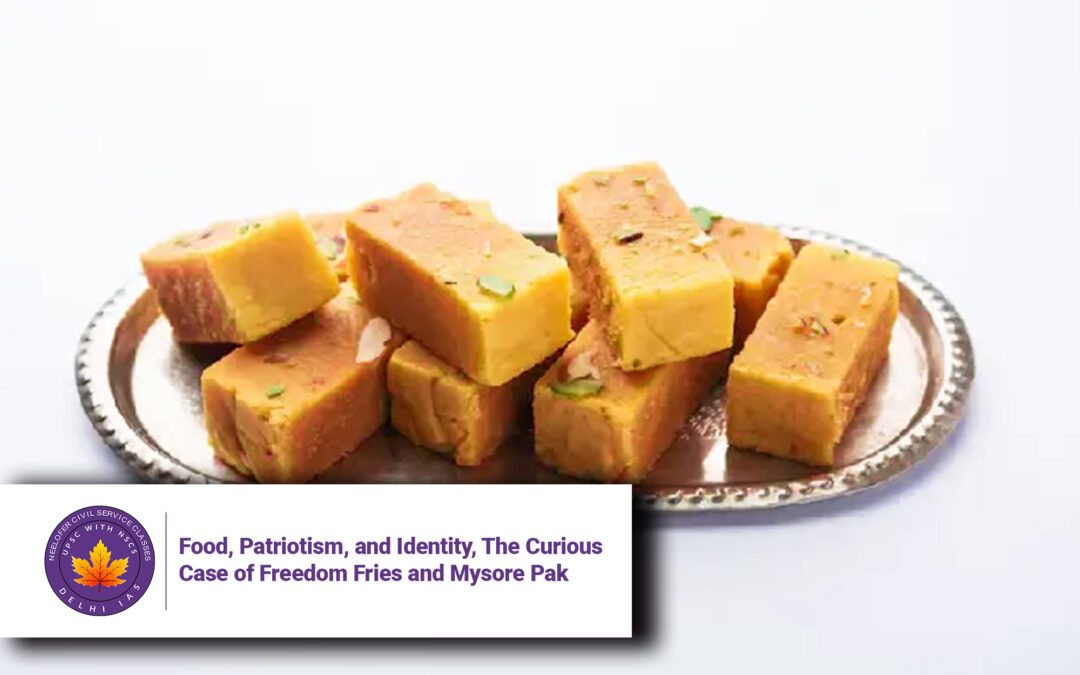
Food, Patriotism, and Identity, The Curious Case of Freedom Fries and Mysore Pak
Why in News?
A new debate over renaming Indian sweets such as Mysore Pak and Moti Pak has triggered public discussion on food nationalism and cultural identity, reminiscent of similar trends globally like “Freedom Fries” in the US after 9/11. 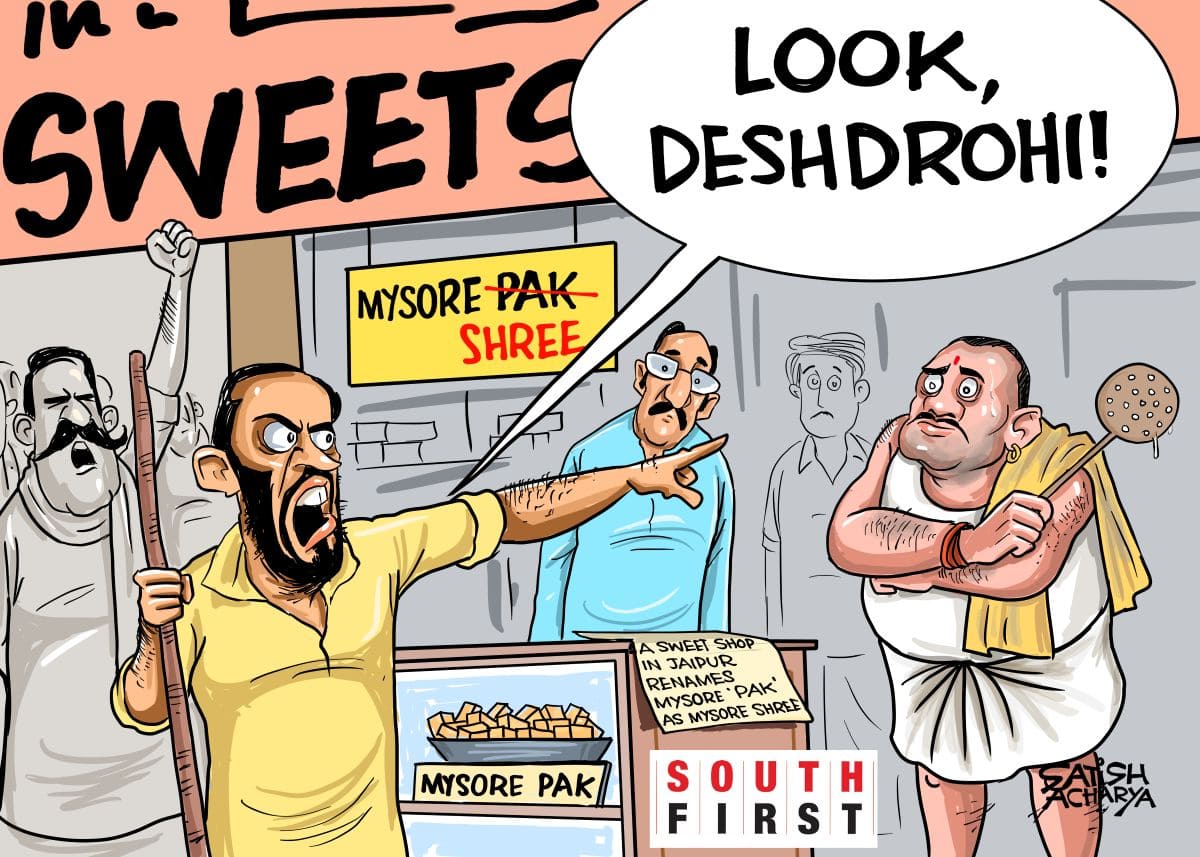
Introduction
When food becomes a tool for patriotism, the lines between culinary tradition and national identity can blur. The current row in India regarding the renaming of sweets like Mysore Pak and Moti Pak, in an attempt to “de-link” from the term ‘Pak’ (mistakenly interpreted as a reference to Pakistan), echoes past instances like America’s temporary rebranding of French fries to “Freedom Fries.” This bizarre culinary patriotism raises questions about language, culture, and the direction of nationalistic sentiments.
Key Issues
1. The Renaming Debate
A new wave of symbolic nationalism is evident in the suggestion to rename Mysore Pak and Moti Pak due to the presence of the word “Pak” — misunderstood by some as a link to Pakistan. This misinterpretation stems from a shallow understanding of the linguistic and cultural roots of the term.
2. Historical and Linguistic Misunderstanding
In reality, “Pak” in Indian culinary terms has nothing to do with Pakistan. The word comes from the Sanskrit root meaning to cook or boil. In Mysore Pak, “Pak” refers to the sugar syrup used in making the sweet, common across Indian languages and culinary traditions like Kannada, Hindi, and Bengali.
3. Global Examples of Food Nationalism
-
After the US-France fallout over the Iraq invasion, American cafeterias famously renamed French Fries as “Freedom Fries.”
-
Similarly, during World War I, the US renamed sauerkraut “liberty cabbage” to protest German ties.
-
In Iran, Coca-Cola was dubbed as “Islamic Cola,” and even in Israel, foreign foods have sometimes been replaced with local nationalist alternatives.
4. Indian Context and Irony
The demand to rename sweets like Mysore Pak is not only misplaced but ironic — given the shared heritage of food across the Indian subcontinent. Notably, even Karachi Bakery, founded by a Partition refugee, faced backlash for its name and had to clarify its Indian identity.
Challenges and the Way Forward
Challenges
-
Rising food nationalism can further polarize societies and deepen misinformation.
-
Language and cultural identity are complex and should not be reduced to superficial symbols.
-
Misunderstanding culinary roots may dilute the rich and diverse traditions of India.
Way Forward
-
Promote food literacy and awareness about India’s cultural and linguistic diversity.
-
Encourage historical understanding rather than political projection onto cuisine.
-
Celebrate food as a unifying heritage rather than a divisive symbol.
Conclusion
Patriotism does not lie in renaming traditional sweets or imposing nationalism on cultural practices. Rather, it should celebrate diversity and educate people about India’s shared culinary heritage. As the saying goes — the way to a patriot’s heart should be through understanding, not renaming food.
5 Questions and Answers
Q1: Why was there a proposal to rename Mysore Pak and Moti Pak?
A: Some individuals mistakenly believed the word ‘Pak’ referenced Pakistan, sparking suggestions to rename these sweets as a form of patriotism.
Q2: What does ‘Pak’ actually mean in Indian sweets?
A: ‘Pak’ is derived from Sanskrit and means to cook or boil, often referring to the sugar syrup used in traditional Indian sweets.
Q3: Has food been used for patriotic expression in other countries?
A: Yes. The US renamed French fries as “Freedom Fries” post 9/11, and during World Wars, foods like sauerkraut were renamed in protest of enemy nations.
Q4: What is the irony in demanding the renaming of Mysore Pak?
A: Mysore Pak is deeply rooted in Indian culinary history and has no relation to Pakistan. The renaming reflects ignorance of its cultural and linguistic origins.
Q5: What is a constructive way forward regarding such issues?
A: Instead of renaming, people should be educated about the true meanings and origins of food, embracing the shared heritage that food represents.

