
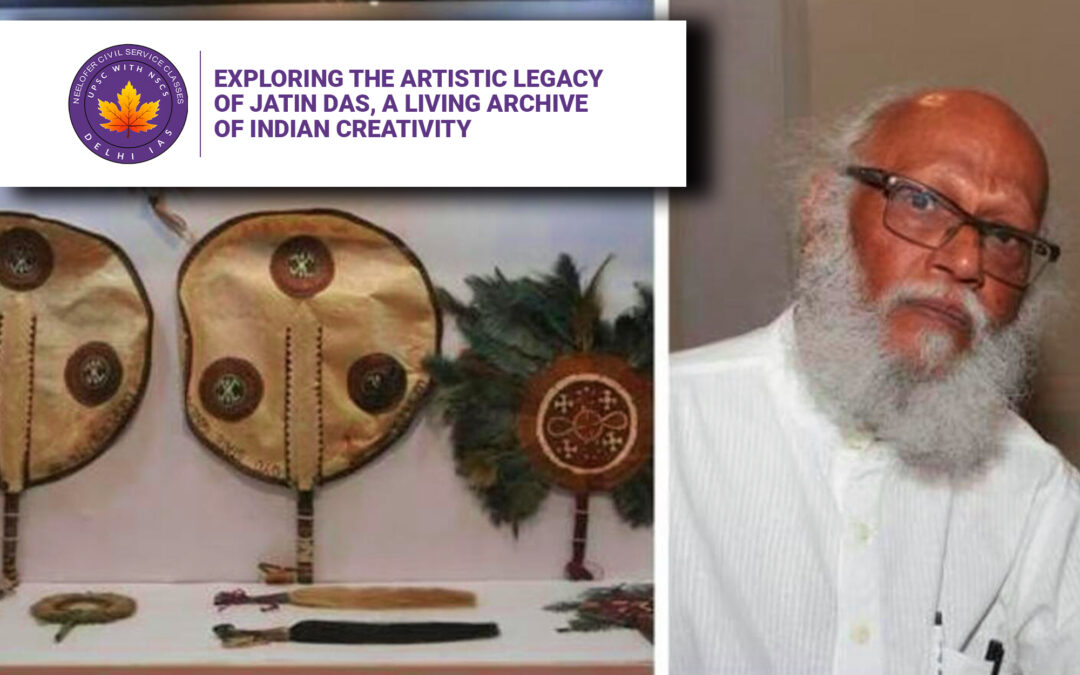
Exploring the Artistic Legacy of Jatin Das, A Living Archive of Indian Creativity
Why in News?
Renowned artist Jatin Das, a pioneer in Indian modern art, was recently in the spotlight as the Sahitya Akademi published a book of poems on the Pankha (fan), compiled by him. During the compilation, he even requested a contribution from writer Pavan K Varma within an hour, showcasing his deep involvement in the literary and visual arts. This renewed focus on his legacy offers an opportunity to reflect on his contributions to Indian culture. 
Introduction
Jatin Das is not just a painter — he is an institution. Having graduated from the Sir J.J. School of Art, Mumbai in the early 1960s, he made Delhi his permanent base, where he built a vast body of work over decades. Known for his tireless work ethic and dedication to preserving Indian craft traditions, Das has carved a niche in both the visual arts and cultural activism.
Key Issues
-
A Multifaceted Artist
Jatin Das is a painter, sculptor, and muralist. His studio in Mehrauli, New Delhi, is filled with thousands of works — an overwhelming yet intimate archive of creativity. -
The Pankha Project
Das has spent decades collecting traditional Indian hand fans (pankhas), treating them as art objects. His recent collaboration with Sahitya Akademi brings literary attention to this visual tradition, merging poetry with craft heritage. -
A Cultural Archivist
Das’s efforts go beyond art for art’s sake. He aims to document, preserve, and elevate Indian folk and tribal traditions, which are at risk of fading in modern times. -
Criticism and Controversy
While Das is not without controversy, his artistic merit remains largely uncontested. His commitment to his craft is evident in the volume and diversity of his work. -
Art as Personal and Political Expression
Das’s body of work doesn’t shy away from social commentary. His paintings and sculptures often explore human emotion, relationships, and the fragility of life.
Five Key Observations
-
Creative Obsession: Das’s studio is a testament to his relentless pursuit of art — cluttered yet meticulously organized in his mind.
-
Traditional Art Revival: His Pankha collection and exhibitions have revived interest in India’s handmade crafts.
-
Cross-Disciplinary Influence: He straddles painting, poetry, sculpture, and curatorial work — influencing artists and writers alike.
-
Cultural Bridge: His work acts as a bridge between modern art and India’s rich craft heritage.
-
Legacy Building: With his immense archive, Jatin Das is not only creating art but also preserving it for future generations.
Challenges and the Way Forward
Preserving cultural traditions like pankhas and indigenous art forms is often overshadowed by modern commercial trends. Das’s work brings attention to these vanishing crafts. However, institutional support and digital archiving must increase for such efforts to have long-term impact. Encouraging young artists to value India’s artistic roots is essential, and that begins with visibility and funding.
Conclusion
Jatin Das represents the rare breed of artist who is both a creator and a custodian of cultural heritage. His work—spanning painting, poetry, and preservation—is not just visually arresting but historically significant. As India modernizes rapidly, figures like him remind us of the value in slowing down, looking back, and protecting the soul of Indian artistry.
Q&A Section
Q1. Who is Jatin Das and why is he in the news recently?
Jatin Das is a veteran Indian painter, sculptor, and muralist. He was in the news for his involvement in a Sahitya Akademi project compiling poems inspired by traditional hand fans (pankhas).
Q2. What is the significance of the Pankha project?
The project highlights India’s traditional hand fans as cultural and artistic artifacts, merging poetry and craft to preserve heritage.
Q3. Where is Jatin Das’s primary studio located?
His studio is located in Mehrauli, New Delhi, and is filled with thousands of artworks and traditional crafts.
Q4. What role does Jatin Das play in preserving Indian traditions?
Beyond his paintings, he is deeply involved in collecting and showcasing traditional Indian crafts like pankhas, aiming to archive and revive cultural practices.
Q5. What challenges does his legacy face in the modern world?
Traditional art forms risk being forgotten amid commercialized modern art trends. Sustaining such work requires institutional support, funding, and youth engagement.

