
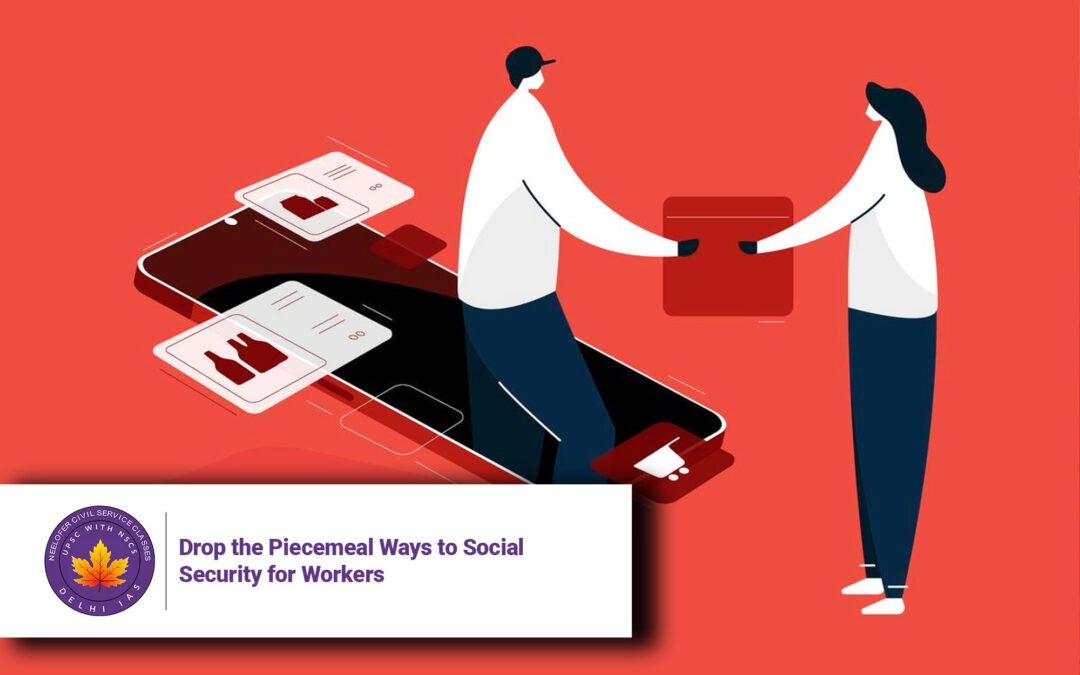
Drop the Piecemeal Ways to Social Security for Workers
Why in News?
India is progressing towards ensuring social security for gig and informal workers, with a central scheme expected to receive Cabinet approval soon. Despite steps like Ayushman Bharat health coverage and the e-Shram portal, concerns remain about the fragmented nature of India’s social protection system. The need for a comprehensive, inclusive, and proactive policy is more urgent than ever. 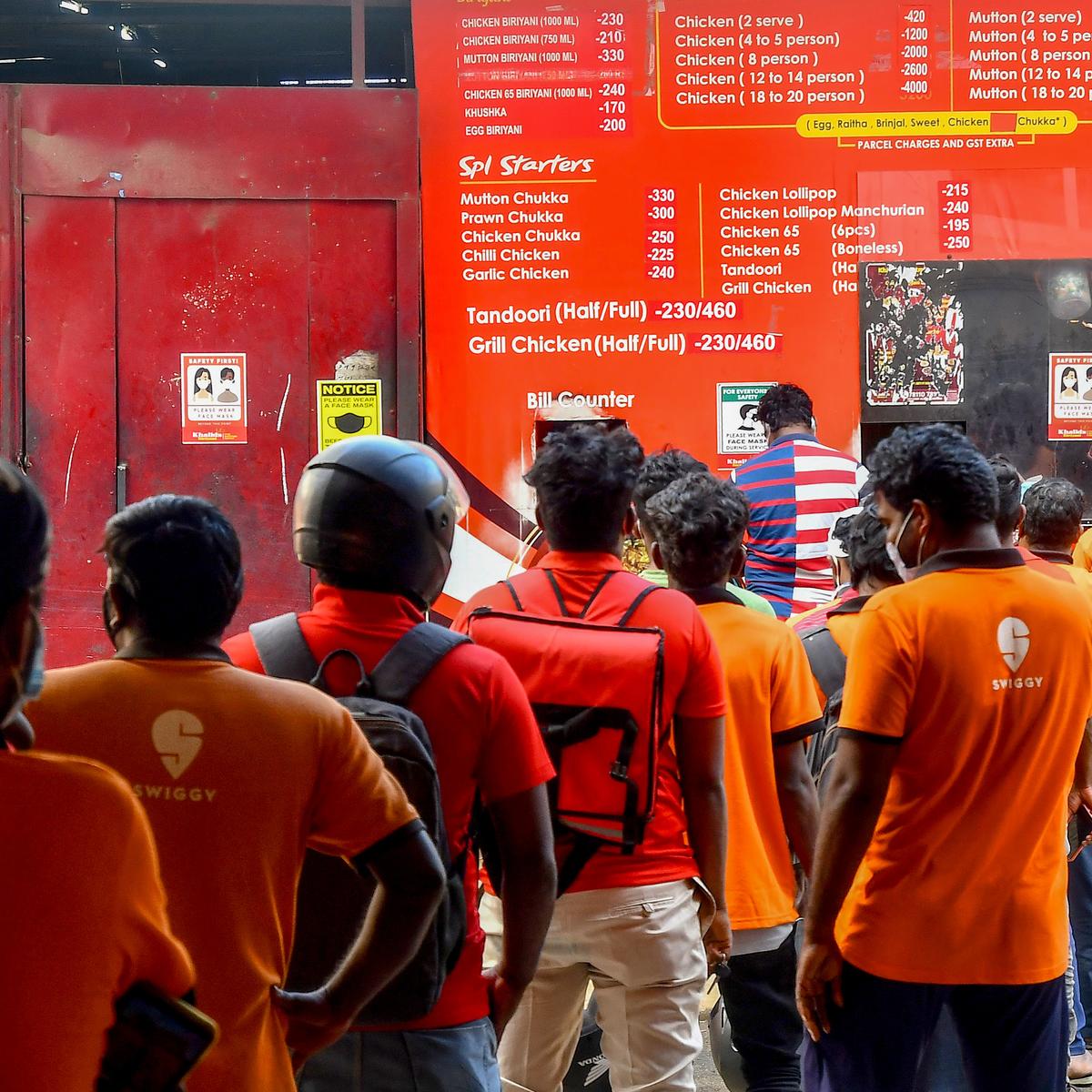
Introduction
India’s move to establish social security for online (app-based) gig workers is gaining momentum. Initiatives like Ayushman Bharat, registration on the eShram portal, and a new pension scheme with a universal account number show progress. These steps reflect an acknowledgment of the new employment landscape, where workers often engage with multiple platforms. However, India’s current system remains largely reactive — addressing challenges only after new worker categories become visible.
Key Issues and Institutional Concerns
1. Fragmented and Reactive Policy Landscape
India’s current social security approach is piecemeal and lacks a long-term vision. It reacts to change rather than anticipating it, as seen in the delay in recognizing gig workers’ needs.
2. Flaws in Existing Welfare Boards
Welfare boards are responsible for distributing social welfare, but many fall short of their objectives. For example:
-
A Right to Information petition revealed that ₹70,744.16 crore collected for construction workers was not fully utilized.
-
The CAG 2024 report showed that 99 local bodies delayed payments totaling ₹221.8 crore to Tamil Nadu’s Workers Welfare Board.
-
In Kerala, only 5 of 16 boards functioned effectively, with some reporting no beneficiaries at all.
3. Incremental Relief Not Enough
Though targeted relief helps specific groups (like Karnataka’s beedi and cigarette workers), such incremental fixes cannot support the wide and changing nature of informal work. Many new job categories emerge rapidly, and ad-hoc responses don’t serve the long-term goal.
4. Hazards of a Segmented Approach
Dividing informal workers into separate categories (gig workers, domestic workers, etc.) can lead to arbitrary thresholds and inequalities in protection. Relying only on one segment like gig workers may falsely appear as a complete solution.
5. Implementation Challenges in the New Code
India’s Code on Social Security was expected to provide a stronger framework, but it faces issues like:
-
Vague definitions
-
Weak protections
-
Poor implementation
Challenges and the Way Forward
Universal Social Protection is the Goal
To prepare the workforce for future shifts, India must implement robust social security systems that:
-
Are universal and inclusive
-
Account for workforce changes
-
Do not exclude informal or newly emerging job roles
The Social Security Code allows some state flexibility, but its mandates must be treated as the bare minimum. The focus should now be on building systems that include all workers — not just a few categorized groups.
Conclusion
India’s attempts to secure gig workers’ welfare are commendable, but relying on piecemeal policies is not sustainable. To truly support its evolving workforce, India must move toward universal social protection systems that ensure no worker is left behind. The time is ripe to shift from fragmented, reactive solutions to a stronger, inclusive, and future-ready model.
Q&A Section
Q1. What is the central government’s new initiative for gig workers?
A scheme is awaiting Cabinet approval that includes Ayushman Bharat health coverage, eShram portal registration, and a pension system using a universal account number for gig workers.
Q2. Why are India’s current welfare boards under criticism?
Reports show that welfare boards often delay payments, underperform, or fail to distribute collected funds effectively, as seen in Tamil Nadu and Kerala.
Q3. What is the problem with India’s incremental welfare policies?
They target only specific groups and fail to address the dynamic and diverse nature of informal work, leaving many workers unprotected.
Q4. How could a piecemeal approach harm workers?
It creates unfair divisions between worker categories and may leave certain groups without protection, despite similar vulnerabilities.
Q5. What is the suggested way forward for social security in India?
India should implement universal, inclusive social protection systems, treating the Social Security Code as a minimum baseline and aiming to cover all informal and gig workers comprehensively.

