
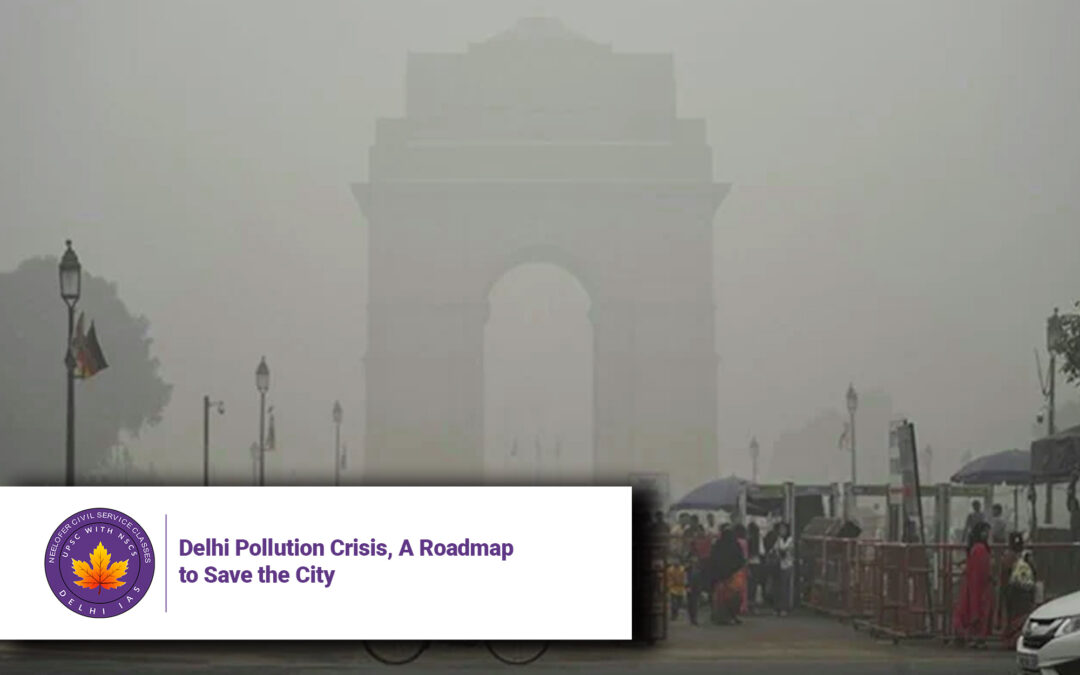
Delhi Pollution Crisis, A Roadmap to Save the City
Why in News
The alarming air pollution levels in Delhi have once again become a national concern, as the capital inches closer to becoming uninhabitable. Amitabh Kant, in a recent op-ed, outlined a clear, data-driven plan to combat this crisis. With the annual PM2.5 average in 2021 peaking at 126.5 µg/m³—over 25 times the WHO safe limit—it is imperative that immediate, systemic reforms are made.
Introduction
Delhi’s pollution crisis is not just an environmental issue; it’s a public health emergency and an economic threat. Air quality continues to deteriorate, especially during winter, leading to health complications and a sharp dip in life expectancy. The Air Quality Life Index estimates 25,000 deaths annually due to pollution in Delhi, shortening average life expectancy by 6.3 years.
Key Issues and Background
1. Biomass Burning
The largest contributor to PM2.5 emissions is biomass burning, responsible for nearly 60%. Rural and urban households continue to burn dung, wood, and crop residue.
Solution: Promote LPG usage with subsidies, scale up clean cookstove access, and phase out agricultural waste burning.
2. Thermal Power Plants
About 31% of PM2.5 emissions come from industrial processes and poorly regulated power plants. Outdated thermal power plants near Delhi still operate with low compliance to pollution norms.
Solution: Enforce emission standards, adopt flue gas desulphurisation, and shift to cleaner fuels.
3. Brick Kilns
Delhi-NCR has around 4,600 kilns, mostly in areas like Baghpat and Bulandshahr, contributing heavily to toxic air.
Solution: Shift kilns to zigzag technology and electric boilers to reduce emissions and improve efficiency.
4. Vehicular Pollution
Old, polluting vehicles continue to dominate Delhi roads. Although India leads in EV sales, Delhi contributes just 5% to total EV numbers.
Solution: Electrify all delivery two-wheelers in 2–3 years, retrofit or replace 2-wheelers older than 10 years, and ensure all auto-rickshaws are electric within 24 months.
5. Waste Management
Delhi generates about 11,000 tonnes of solid waste daily, much of it ending up in overloaded landfills or polluting rivers like Yamuna.
Solution: Adopt decentralised, scientific waste segregation, similar to Surat’s model, with data-driven accountability and public audits.
6. Inadequate Infrastructure and Governance
Infrastructure has not kept pace with Delhi’s explosive growth. Real estate prices have surged, yet transport, sanitation, and water infrastructure lag.
Solution: Invest in urban infrastructure, strengthen municipal governance, and prioritise land reclamation and green zones.
Specific Impacts or Effects
-
Health: Surge in respiratory illnesses, hospitals overwhelmed during winters.
-
Economy: Estimated GDP loss of 3%, around $100 billion yearly due to health costs and lost productivity.
-
Social Inequality: Low-income families bear the worst impact, lacking resources for protection or relocation.
-
Environmental Damage: Depleting water quality, dying Yamuna river, toxic soil degradation.
Challenges and the Way Forward
Challenges:
-
Bureaucratic delays and weak enforcement of laws
-
Political apathy and lack of long-term vision
-
Inadequate funding for green transition initiatives
-
Resistance from industries like brick kilns and transport sectors
Way Forward:
-
Immediate transition to clean fuels and electric mobility
-
Strengthen municipal capacity and decentralised management
-
Public-private cooperation for infrastructure upgrades
-
Community participation in awareness, monitoring, and solutions
-
Regional cooperation to tackle cross-border pollution sources
-
Strict timelines: Reduce PM2.5 by 40–50% by 2028
Conclusion
Delhi’s air crisis is not an unsolvable puzzle—it is a man-made disaster resulting from years of systemic failure. As Amitabh Kant rightly states, progress without clean air is meaningless. The city needs a master plan driven by science, technology, and political will. Urgent reforms must target pollution at its source, supported by transparency, accountability, and strong leadership.
Delhi doesn’t need more promises. It needs a revolution in air governance—starting now.
5 Questions & Answers
1. What is the main cause of air pollution in Delhi?
Biomass burning, industrial emissions, vehicular pollution, and poor waste management are the major causes.
2. What is the current PM2.5 level compared to WHO standards?
Delhi’s PM2.5 level in 2021 was 126.5 µg/m³, over 25 times the WHO safe limit.
3. How is vehicular pollution being tackled?
Through proposals to electrify all delivery two-wheelers, replace older autos, and deploy electric school/public buses.
4. What role do brick kilns play in the pollution crisis?
Delhi-NCR’s 4,600 kilns emit high pollutants using outdated techniques. New zigzag and electric boiler technologies are needed.
5. What are the economic consequences of air pollution?
Pollution reduces GDP by up to 3%, costs over $100 billion annually, and severely impacts productivity and public health.

