
Delays and Dilemmas, India’s High-Speed Rail Project Faces Slow Track
Why in News?
India’s ambitious High-Speed Rail (HSR) project, popularly known as the Bullet Train Project, is experiencing significant delays. Originally launched with great fanfare in 2017 and heavily supported by Japan, the project is now slowed due to cost negotiations, land acquisition issues, and execution bottlenecks. 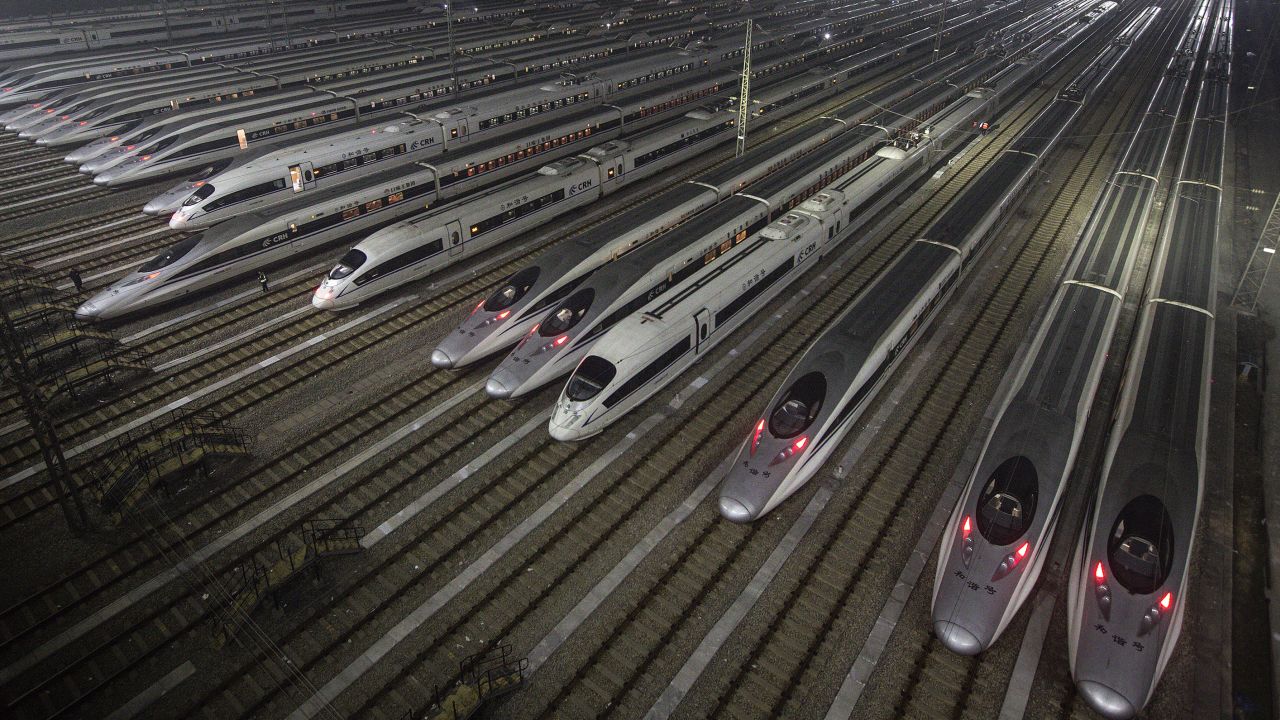
Introduction
High-Speed Rail (HSR) refers to trains that operate at speeds of 250 km/h or more, drastically reducing travel time between major cities. While countries like Japan, France, and China have successfully implemented large HSR networks, India’s journey has hit a slow patch. Despite strong political will and initial momentum, the Mumbai-Ahmedabad HSR corridor has yet to see real traction.
Key Issues and Background
1. What’s Causing the Delay?
-
The National High-Speed Rail Corporation Ltd. (NHSRCL), tasked with executing the project, has been caught up in delays related to:
-
Land acquisition, especially in Maharashtra.
-
Slow-moving civil works despite some progress in Gujarat.
-
COVID-19 disruptions and bureaucratic hurdles.
-
-
A presentation to the Parliamentary Standing Committee on Railways in March revealed that completion of the civil infrastructure is still years away.
2. Dependence on Japan and Technical Constraints
-
The HSR system being developed in India is tied to Japanese technology, including:
-
Rolling stock (trains)
-
Track design
-
Signaling systems
-
-
This dependence means that any delay in Japanese negotiations impacts progress significantly.
-
India had originally committed to buying Japanese-designed Shinkansen E5 trains, but cost escalations and local challenges have created negotiation hurdles.
3. Missed Opportunities in Indigenous Development
-
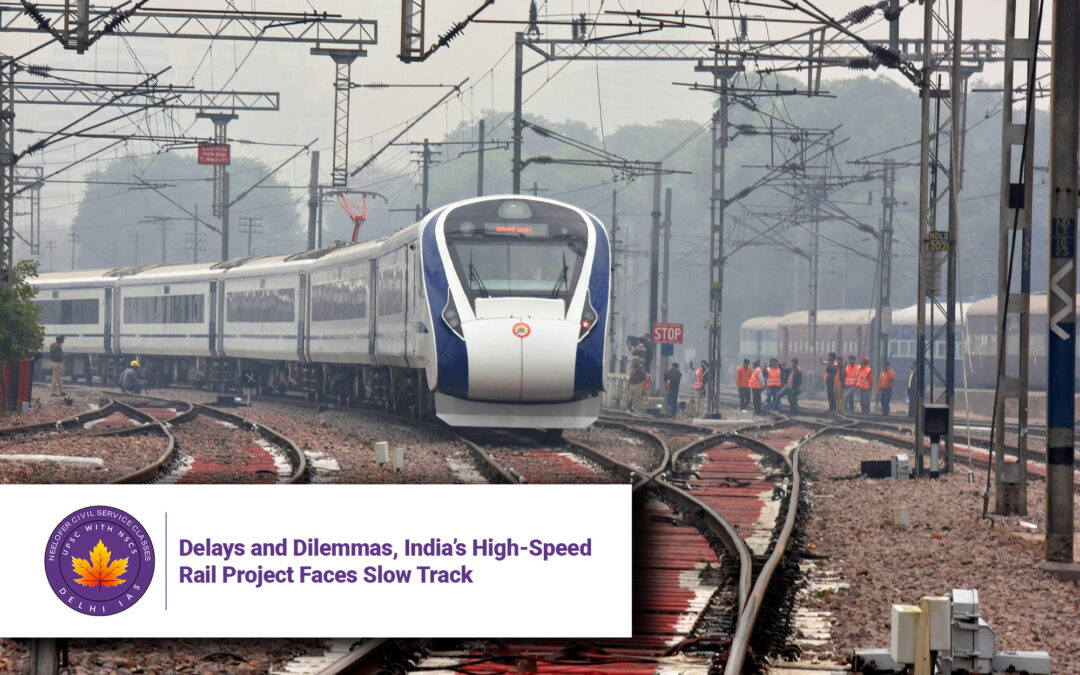
India has developed its own semi-high-speed Vande Bharat Express, which can run at speeds of up to 180 km/h, with plans to upgrade to 200 km/h.
-
Experts argue that India should prioritize such indigenous efforts alongside HSR to modernize the rail network more effectively.
4. Potential and Strategic Importance
-
If successful, the Mumbai–Ahmedabad HSR will:
-
Cut travel time to 2–3 hours from the current 7–8 hours.
-
Enhance regional connectivity and economic integration.
-
-
Future plans include corridors like:
-
Delhi–Varanasi
-
Mumbai–Nagpur
-
Chennai–Bengaluru–Mysuru
-
Conclusion
India’s high-speed rail dream faces serious roadblocks, mostly due to execution delays, excessive foreign dependency, and cost escalations. However, with proper planning, transparency, and parallel indigenous rail upgrades, India can still steer its bullet train project back on track—both literally and economically.
5 Questions and Answers
Q1. What is the current status of India’s High-Speed Rail project?
A: The project, especially the Mumbai–Ahmedabad corridor, is facing major delays due to land acquisition, cost issues with Japan, and execution slowdowns.
Q2. What role is Japan playing in the HSR project?
A: Japan is providing funding, technology, and rolling stock under the Shinkansen model, making India highly dependent on Japanese support.
Q3. What technical challenges are slowing down the project?
A: Challenges include integration with Indian environmental and climate conditions, coordination with Japanese suppliers, and adapting imported technology.
Q4. What alternatives does India have to HSR?
A: India is developing the Vande Bharat Express—a semi-high-speed train that can reach up to 180–200 km/h—as a cost-effective alternative.
Q5. What is the expected impact if the project is completed?
A: It will drastically reduce travel time, improve regional connectivity, and potentially spur economic development along the HSR corridor.

