

Climate Preparedness in India, From Speed to Sustainability
Why in News?
As India faces escalating climate threats like rising temperatures, erratic monsoons, and intensifying disasters, experts stress that the country’s climate response must shift from fast-paced development to future-proof planning. The lack of a unified climate risk assessment framework hampers proactive resilience and long-term adaptation. 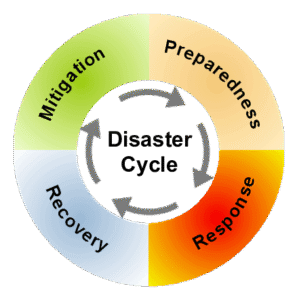
Introduction
India’s climate future is not merely a matter of fate—it’s a question of preparedness. From extreme monsoon floods in the northeast to heatwave-induced power failures in central India, these are no longer isolated climate events. They represent systemic threats to economic stability, health, national security, and development. The urgency lies in building climate resilience, not just responding to disasters.
Key Issues and Background
1. The Absence of a Comprehensive CPR Framework
Climate Physical Risks (CPRs)—from floods to cyclones—are increasing in frequency and intensity. Yet, India lacks a unified national framework to assess and manage these risks systematically. This leaves current adaptation measures reactive, not strategic.
2. Fragmented Risk Assessments
Although India has made progress—such as mapping vulnerabilities through NIDM and IMD—assessments remain fragmented across states, agencies, and institutions, weakening national preparedness.
3. Skewed Resource Allocation
More resources are directed towards renewable energy and decarbonisation than climate adaptation infrastructure. However, investing in resilience is not just about survival—it’s also economically wise. UNEP estimates that every $1 spent on adaptation yields $4 in benefits.
4. Limited Private Sector Engagement
While the private sector is vulnerable to CPRs, especially in supply chains and operations, its role in climate planning remains limited. Mandating climate risk disclosures is a positive step—such as the Reserve Bank of India integrating climate risks into its regulatory framework—but broader adoption is needed.
5. The Global Context and India’s Lag
Countries like the U.S., U.K., and New Zealand have integrated climate risk frameworks with policy. India’s CPR efforts are still dispersed across multiple bodies without a national-level standard.
Five Key Observations
-
CPRs Go Beyond Natural Disasters
They include chronic stresses like heatwaves, shifting rainfall patterns, and water scarcity, not just floods and storms. -
Forecasting Alone Is Not Enough
Short-term weather forecasting must be supplemented with long-term climate projections to enable policymakers to plan effectively. -
Economic Impacts Are Huge
CPRs directly affect business continuity, supply chains, asset valuations, and public safety. -
Transparency Is Increasing Slowly
Regulators like RBI and frameworks like IFRS ISSB S2 are pushing for climate risk disclosures, but uptake remains voluntary for many sectors. -
Unified Assessment Is Key
India needs a centralised, transparent, and science-based CPR assessment that informs district-level planning and national adaptation.
Challenges and the Way Forward
Challenges:
-
Lack of a central repository for CPR data
-
Overlap and fragmentation among regulatory agencies
-
Inadequate private sector involvement
-
Delayed implementation of National Adaptation Plan priorities
Way Forward:
-
Finalise and adopt a national CPR assessment tool
-
Integrate CPRs into both public and private decision-making
-
Expand mandatory climate disclosures
-
Align district-level plans with national resilience goals
-
Encourage state governments and private entities to co-own climate data and action
-
Build climate-resilient infrastructure and ensure proper investment planning
Conclusion
India stands at a critical crossroads. As disasters become the new normal, planning for resilience is no longer optional. It’s time to move from fragmented efforts and short-term disaster responses to future-proof strategies that secure lives, livelihoods, and economic stability. As the article by Dr. Sanjena N.D. urges, progress must be not just fast, but resilient, robust, and rooted in science-backed adaptation.
5 Questions and Answers
Q1: What are Climate Physical Risks (CPRs)?
A: CPRs include natural disasters (like floods and cyclones) and chronic stresses (like heatwaves, water scarcity) that impact economic and human systems.
Q2: Why is a national CPR framework needed?
A: A unified framework allows consistent, science-based assessments across sectors and regions, enabling better policy, investment, and disaster planning.
Q3: How does climate adaptation compare economically to mitigation?
A: Adaptation yields significant economic returns—every $1 spent on adaptation generates $4 in economic gains, according to UNEP.
Q4: What steps has India taken so far?
A: India has committed to publishing National Adaptation Plans (NAPs), improved disaster mapping, and initiated climate disclosures through RBI and other regulatory bodies.
Q5: What role can the private sector play?
A: The private sector must disclose climate risks, integrate them into planning, and invest in climate-resilient supply chains and infrastructure.

