
China Counter to U.S. Tariffs, Strategic Hedging and Trade Diversification
Why in News?
China’s strategic and measured response to U.S. tariffs under the Trump administration has emerged as a textbook example of how a country can manage trade war pressures through long-term planning, risk hedging, and diversification. 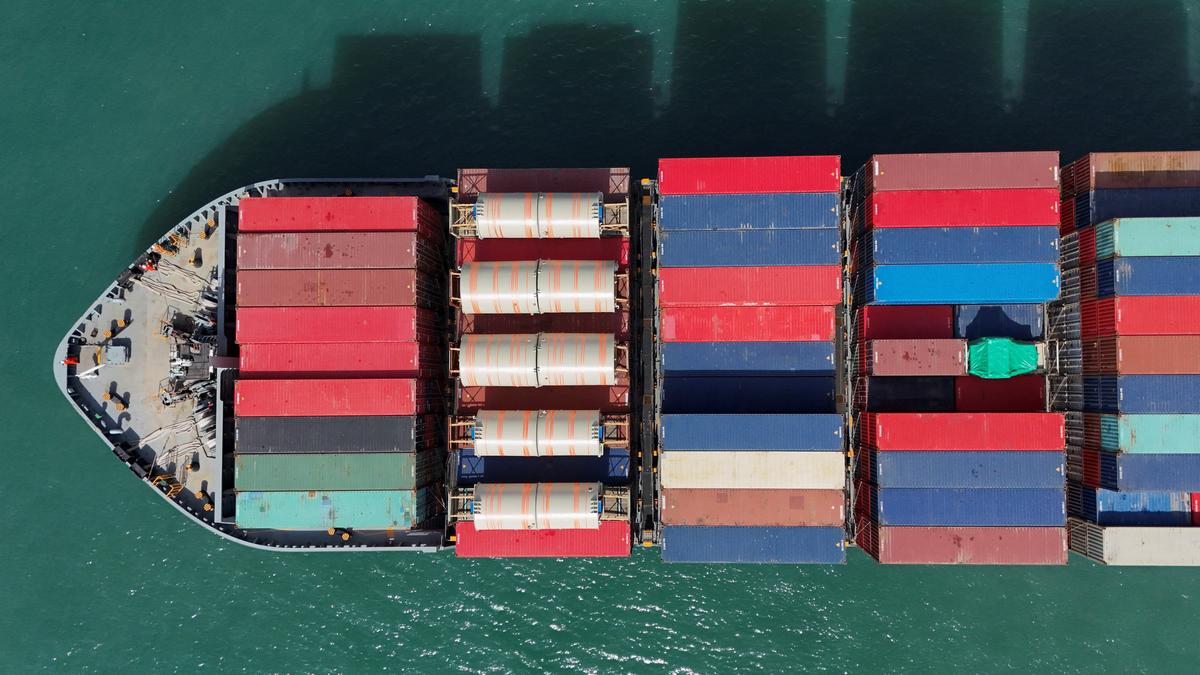
Introduction
When U.S. President Donald Trump launched the “America First” trade policy and triggered a trade war, China’s counter-strategy took the world by surprise. Rather than panic, China retaliated carefully, emphasizing long-term hedging, diversification of exports, and reducing reliance on U.S. assets like treasury bonds.
Key Issues and Background
1. Trump’s Trade War Strategy
-
Trump accused countries like China of “unfair trade practices” and launched tariffs on $370 billion worth of Chinese imports.
-
The U.S. aimed to punish partners and reduce trade deficits through a mix of tariffs, sanctions, and technology restrictions.
2. China’s Strategic Retaliation
-
China imposed retaliatory tariffs equivalent to the U.S. tariffs (up to 25%), targeting American goods.
-
Simultaneously, it diversified its export markets and reduced reliance on U.S. treasury bonds, thereby lowering economic exposure to U.S. decisions.
The Core of the Concern
Economic Shock Absorption vs. Retaliation
-
Unlike the U.S., which resorted to headline-grabbing tariffs, China followed a long-term hedging strategy.
-
China emphasized trade with alternative partners and regions like ASEAN, the EU, and Africa.
-
It also lowered holdings of U.S. treasury bonds, dropping from $1.3 trillion in 2013 to $767 billion by 2023.
-
This reduction gave China greater financial autonomy and reduced leverage in U.S. hands.
Key Observations
1. Diversification of Exports
-
China reduced dependency on U.S. markets by exporting more to Asia, Africa, and Europe.
-
It became the largest trading partner for several economies, thus shielding itself from unilateral American actions.
2. Tech and Sectoral Self-Reliance
-
In response to U.S. bans on companies like Huawei, China increased investment in semiconductors, AI, green energy, and pharmaceuticals.
-
China’s internal innovation ecosystem received a boost, supported by state-led investments.
3. Risk Hedging Against Dollar Assets
-
China’s reduced holdings in U.S. treasury bonds protected it from U.S. monetary policy shocks and financial risks tied to American economic decisions.
Conclusion
China’s reaction to the U.S. trade war underlines the power of strategic patience, economic foresight, and global diversification. Instead of reacting impulsively, China built long-term resilience—both in trade and financial markets—while minimizing the U.S.’s ability to weaponize economic dependencies.
Q&A Section
Q1. What triggered China’s retaliation against the U.S.?
Ans: The U.S. under President Trump imposed tariffs under the “America First” policy, accusing China of unfair trade practices. In response, China imposed retaliatory tariffs and diversified its economic strategy.
Q2. How did China reduce economic exposure to the U.S.?
Ans: China cut its U.S. treasury bond holdings (from $1.3 trillion in 2013 to $767 billion in 2023) and expanded trade with other global partners.
Q3. What was China’s key strategy during the trade war?
Ans: China adopted a hedging strategy—minimizing risk by diversifying exports, investing in new sectors, and reducing reliance on U.S. financial systems.
Q4. Which sectors did China focus on post-tariffs?
Ans: China emphasized growth in technology, pharmaceuticals, agriculture, energy, and digital platforms, particularly where U.S. restrictions had hurt its firms.
Q5. Why is China’s response considered a modern case study in trade diplomacy?
Ans: China’s calm and calculated retaliation avoided escalation, focused on long-term gains, and showed how economic strength can be rebuilt through diversification rather than direct confrontation.

