
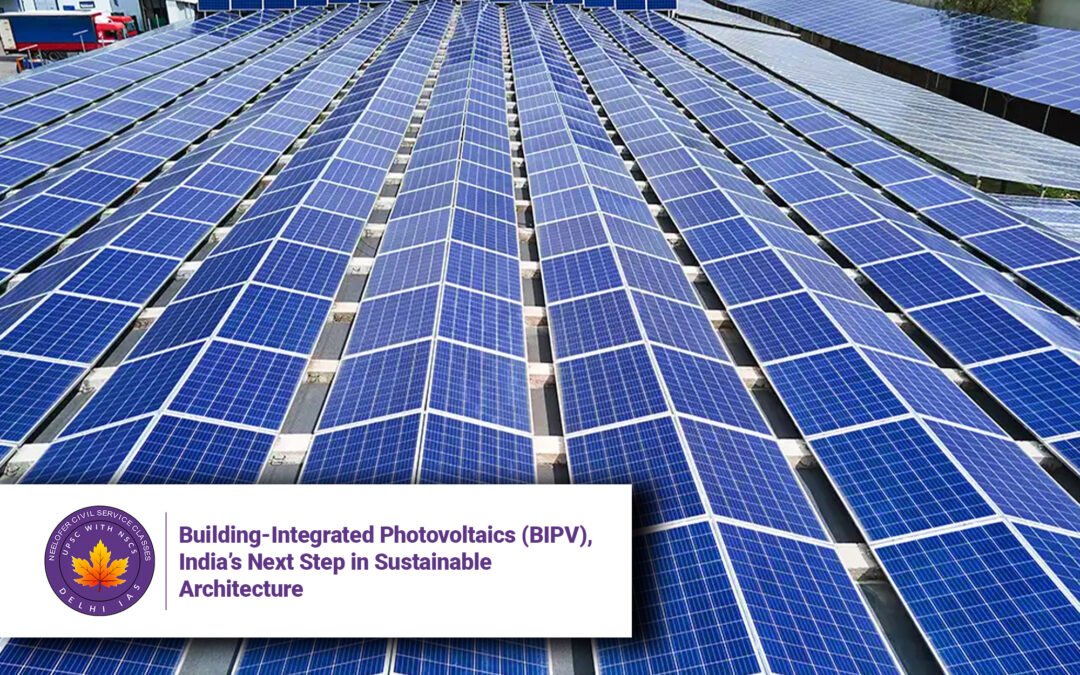
Building-Integrated Photovoltaics (BIPV), India’s Next Step in Sustainable Architecture
Why in News?
With India reaching over 17 GW of rooftop solar (RTS) capacity by April 30, 2024, the focus is now shifting towards innovative and space-efficient technologies like Building-Integrated Photovoltaics (BIPV) to boost urban solar adoption and meet climate goals. 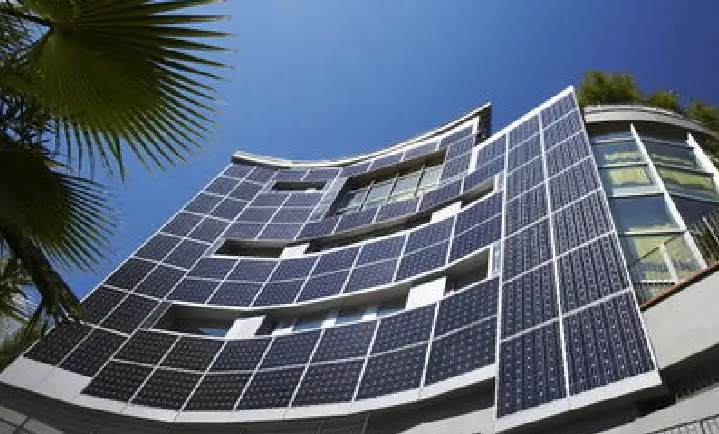
Introduction
Building-Integrated Photovoltaics (BIPV) represents a revolutionary approach where solar panels are not merely placed on rooftops but are built into the structure of buildings—walls, façades, windows, and more—turning entire buildings into energy-generating assets.
In densely populated cities, BIPV offers a space-optimised, aesthetically appealing, and energy-efficient solution for integrating solar power without additional land use.
What is BIPV?
BIPV is a technology that:
-
Converts buildings into power generators by integrating solar cells directly into building elements.
-
Serves dual functions: acts as a structural component (like roofs or walls) and a solar energy generator.
-
Can be used in residential buildings, offices, public infrastructure, and transport hubs.
BIPV differs from traditional rooftop systems, which are added externally. It replaces conventional building materials like glass, shading devices, and façades, thus reducing material costs.
India’s Readiness for BIPV
Current Adoption
-
India has made strides in RTS but lags in BIPV.
-
The CRIS Data Centres in Navi Mumbai, Renewable Energy Museum in Kolkata, and Railway stations like Visakhapatnam and Secunderabad have started using BIPV.
-
Adoption remains low due to high costs, lack of policy push, technical challenges, and limited awareness.
Potential
According to the Handbook of Urban Statistics, India is urbanising rapidly and BIPV can cater to energy needs in commercial and institutional buildings.
It also offers solutions to space issues in urban areas, helping meet the National Solar Mission targets.
Global Experience and Lessons
-
South Korea has made BIPV part of urban planning laws.
-
The EU’s Buildings Directive promotes solar integration in all new buildings.
-
Germany and Japan use financial models like green mortgages and energy service companies (ESCOs) to promote adoption.
The Way Forward
For BIPV to succeed in India:
-
Clear national standards and guidelines are needed.
-
Subsidies or incentives can reduce high upfront costs.
-
Mandatory inclusion of solar features in new building codes can help.
-
Long-term financing and awareness among builders and citizens will be crucial.
Conclusion
BIPV is not just an energy solution—it is a design revolution that aligns with India’s goals for energy security, sustainability, and urban innovation. With rising urbanisation and solar targets (500 GW by 2047), BIPV offers a smart, futuristic path to achieving net-zero goals.
Q&A Section
Q1. What is Building-Integrated Photovoltaics (BIPV)?
BIPV integrates solar cells into the building’s structure itself (like walls, roofs, and glass), unlike traditional rooftop panels that are added on.
Q2. Why is BIPV important for Indian cities?
Because it saves space, is aesthetically better, and helps generate solar power in shadow-prone or congested urban areas.
Q3. What challenges are holding back BIPV adoption in India?
High installation cost, lack of awareness, missing building codes, limited incentives, and a lack of skilled professionals.
Q4. Which Indian projects are using BIPV?
The CRIS data centre in Mumbai, the Renewable Energy Museum in Kolkata, and some Indian Railways stations have adopted BIPV.
Q5. What steps can boost BIPV adoption?
Creating clear policy, offering financial incentives, public-private partnerships, and education campaigns to drive mass adoption.

