
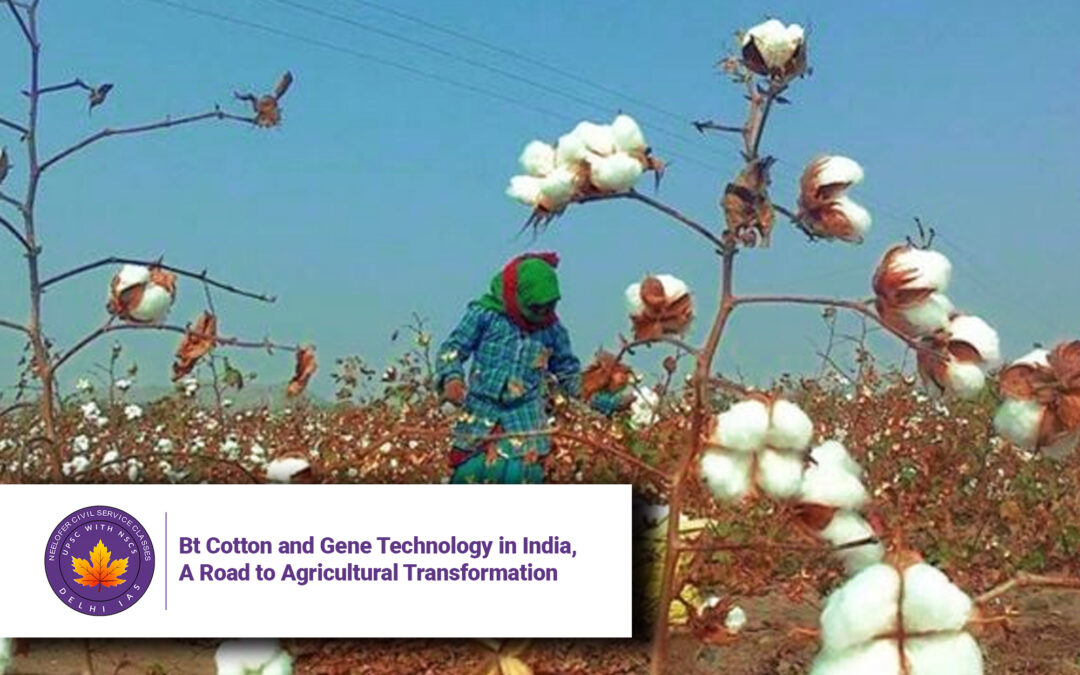
Bt Cotton and Gene Technology in India, A Road to Agricultural Transformation
Why in News?
As global trade negotiations heat up and the United States urges India to open its market to genetically modified (GM) crops, the spotlight has returned to gene technology in agriculture. With Bt cotton being India’s only widely adopted GM crop, its story reflects both the promise and controversy surrounding GM technology in India. Prime Minister Narendra Modi’s call for “Jai Anusandhan” (Hail Innovation) and a significant ₹1 lakh crore Research and Innovation fund highlight the government’s intent to strengthen the sector. However, delays in regulatory approvals, ideological resistance, and trade tensions continue to challenge progress. 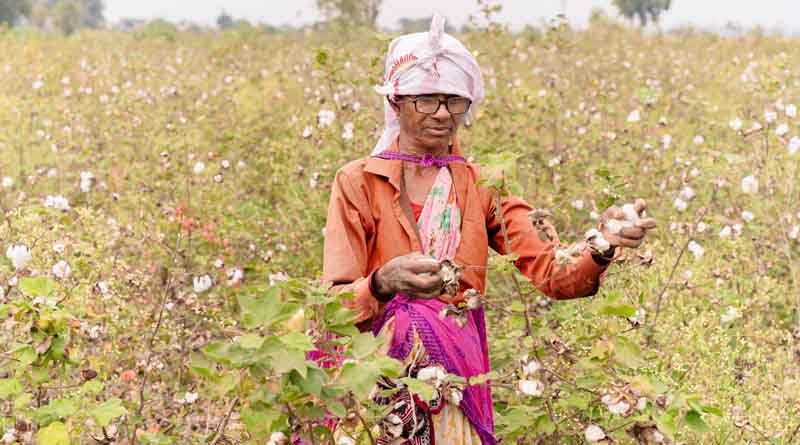
Introduction
The introduction of Bt cotton in India in 2002 marked a significant shift in agricultural productivity, especially in cotton-growing states. However, despite the remarkable gains in yield and production over the years, the future of genetically modified crops in India remains mired in political, ideological, and regulatory challenges. The growing urgency of climate-resilient agriculture, coupled with increasing demand for food and raw materials, underscores the critical need to embrace science-led innovation in agriculture. Yet, India’s ambivalence toward GM crops has created a policy vacuum that threatens its global competitiveness.
Key Issues and Background
-
Rise of GM Cotton and Initial Success:
-
Bt cotton, engineered to resist bollworm attacks, was introduced in 2002 during Atal Bihari Vajpayee’s tenure.
-
Before this, India was dependent on cotton imports, and productivity was low.
-
With Bt technology, cotton production jumped from 13.6 million bales (2002) to 398 million bales (2013–14), marking a 193% increase.
-
Productivity rose by 87% and yield increased from 302 kg/ha to 566 kg/ha.
-
By 2022–23, India was the world’s largest cotton producer and second-largest exporter.
-
-
Impact of Bt Technology:
-
More than 90% of India’s cotton area is now under Bt cotton.
-
Farmers benefited from reduced pesticide usage, higher yields, and increased profitability.
-
The economic gains from Bt cotton were estimated at $41 billion during 2011–12 to 2020–21.
-
-
Controversies and Setbacks:
-
Despite early success, recent years have seen stagnation and even decline in productivity.
-
Activist resistance, legal challenges, and regulatory paralysis have restricted further development.
-
Herbicide-tolerant (HT) Bt cotton was not officially approved but began spreading illegally in several states.
-
Environmental and ideological opposition created hurdles to the approval of other GM crops like GM mustard and Bt brinjal.
-
-
Decline in Cotton Growth Post-2015:
-
From 2015 onwards, the government imposed seed price controls.
-
This led to reduced incentives for private research and investment in biotech seeds.
-
Cotton production declined from a peak of 398 million bales to 365 million bales by 2022–23.
-
The net agricultural trade surplus also began to shrink, falling from $8.4 billion in 2021–22 to just $1.9 billion in 2023–24.
-
-
Global Context and Missed Opportunities:
-
Globally, over 200 million hectares of GM crops are cultivated across 65 countries.
-
India’s hesitation has placed it behind nations like the US, Brazil, and Argentina in biotech deployment.
-
Delays in regulatory approvals, particularly by the Genetic Engineering Appraisal Committee (GEAC), have stalled commercialization of crops like GM mustard and Bt brinjal.
-
India’s cautious stance has also created space for black markets and illegal seed usage.
-
Key Observations
-
Bt Cotton Was a Game-Changer – But Now Needs a Second Revolution:
The adoption of Bt cotton revolutionized India’s cotton sector, boosting yields and exports. But in the absence of follow-up innovation and regulatory support, gains are now stagnating. -
Political Will and Regulatory Reform Are Crucial:
The future of GM technology in India hinges on strong political backing, faster approvals, and transparent regulations. Prime Minister Modi’s slogan of “Jai Anusandhan” is encouraging, but action must match intent. -
India Is Losing Ground in Global Trade:
As competitors innovate and scale up GM crop usage, India’s restrictive biotech stance has led to shrinking exports, growing imports, and reduced competitiveness. -
Illicit GM Crop Use Reflects Farmer Demand:
Despite no official approval, farmers have adopted herbicide-tolerant Bt cotton due to its benefits. This indicates a clear gap between policy and ground realities. -
Innovation in Biotech Must Extend Beyond Cotton:
India needs to adopt next-generation GM crops like GM mustard, Bt brinjal, and GM soybean to meet food security goals, boost exports, and empower farmers.
Challenges and the Way Forward
Regulatory Bottlenecks:
The GEAC has not approved any major GM crop for over a decade. While GM mustard was cleared in 2006 and again in 2022 with conditions, commercialization remains stalled due to litigation and environmental clearances. Regulatory opacity has discouraged private investment in research and development.
Ideological Resistance and Misinformation:
Opposition from activist groups and civil society—often fueled by ideological beliefs—has hindered scientific discourse. Misinformation about GM crops’ safety and environmental impact has led to public mistrust and judicial interventions.
Seed Price Controls and Disincentives for Innovation:
The government’s move to fix prices of Bt cotton seeds since 2015 has made the market less attractive for private seed companies. This has led to lower research spending and fewer new traits being introduced, weakening India’s agri-innovation ecosystem.
Need for Science-Based Policy and Farmer-Centric Approach:
India must balance environmental concerns with farmer needs and food security. Policies should be based on scientific evidence and global best practices. Encouraging public-private partnerships in biotechnology, easing approval timelines, and aligning with WTO norms can transform the sector.
Leveraging the R&D Push:
The ₹1 lakh crore Research and Innovation fund offers a timely opportunity to invest in agricultural biotechnology. A portion of this should be dedicated to GM research and farmer education to foster acceptance and scale-up adoption.
Conclusion
India stands at a crossroads in its agricultural journey. The success of Bt cotton demonstrated the transformative power of gene technology. But without sustained political support, faster regulatory processes, and open-minded dialogue, the promise of GM crops will remain unfulfilled. As climate change, population growth, and food security pressures mount, India cannot afford to delay science-led agricultural reform. If used wisely, innovations like GM mustard, Bt brinjal, and GM soybean can usher in a second green revolution. With the right leadership and public trust, the country can reclaim its place as a global agri-powerhouse.
Q&A: Understanding the Bt Cotton and GM Crop Debate in India
1. What is Bt cotton, and how did it transform Indian agriculture?
Answer:
Bt cotton is a genetically modified crop that contains genes from the bacterium Bacillus thuringiensis, which makes it resistant to bollworm pests. Introduced in India in 2002, it significantly increased cotton yields, reduced pesticide use, and helped India become the world’s largest cotton producer. Production rose from 13.6 million bales in 2002 to 398 million bales by 2013–14.
2. Why has cotton productivity declined in recent years despite the success of Bt cotton?
Answer:
Several factors contributed to the decline: seed price controls introduced in 2015 reduced incentives for innovation; the emergence of pest resistance; and lack of approval for next-generation traits like herbicide tolerance. In addition, regulatory delays and ideological opposition have hindered the release of improved GM variants.
3. What are the regulatory hurdles preventing the approval of new GM crops in India?
Answer:
The Genetic Engineering Appraisal Committee (GEAC), which oversees GM approvals, has not granted full commercial release to any new GM food crop since 2006. GM mustard and Bt brinjal were approved conditionally but later stalled due to environmental concerns, court cases, and lack of political consensus.
4. What does Prime Minister Modi’s “Jai Anusandhan” campaign aim to achieve?
Answer:
“Jai Anusandhan” (Hail Innovation) is part of the Prime Minister’s push for science-led development. It is backed by a ₹1 lakh crore Research and Innovation fund (RDI). The goal is to strengthen India’s innovation capacity across sectors, including agriculture. However, without regulatory reform in biotech, the benefits of this investment may not fully reach farmers.
5. What is the way forward for GM technology in Indian agriculture?
Answer:
India needs science-based regulatory reform, faster approval processes, public-private partnerships, and better communication to address fears about GM crops. Commercialization of GM mustard, Bt brinjal, and herbicide-tolerant cotton must be prioritized. Leveraging the new R&D fund to support biotech innovation can help Indian farmers become globally competitive and secure food sovereignty.

