
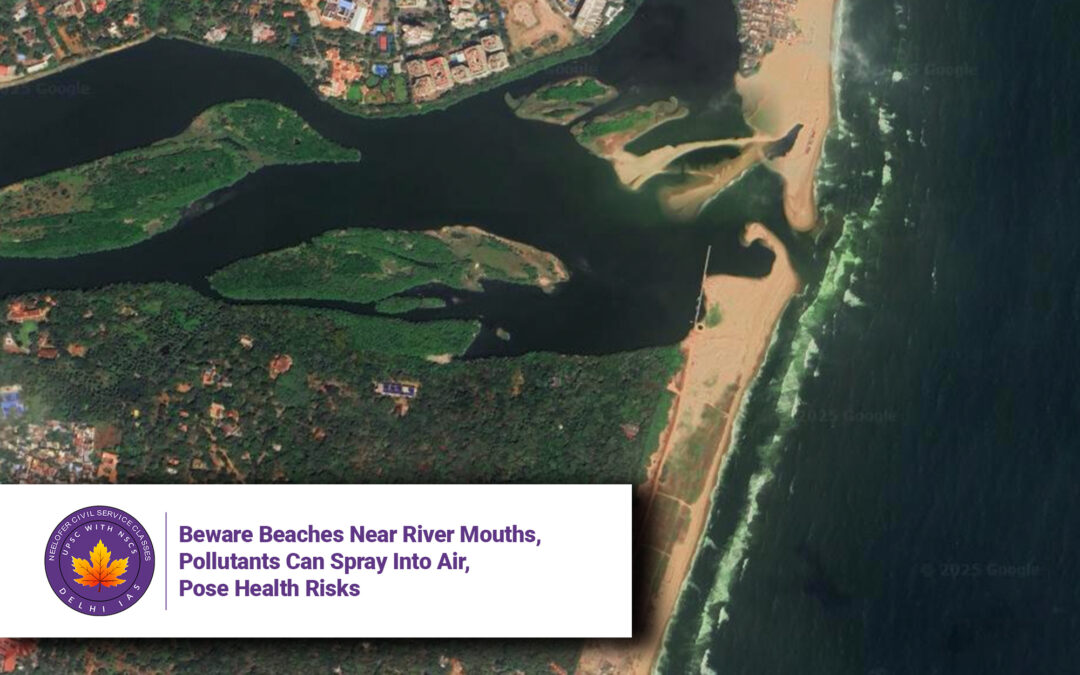
Beware Beaches Near River Mouths, Pollutants Can Spray Into Air, Pose Health Risks
Why in News?
A groundbreaking study published in Science Advances (May 28) has revealed that toxic pollutants from contaminated rivers can aerosolize at ocean mouths and blow back onto land, exposing coastal communities to harmful chemicals. The research focused on California’s Tijuana River but has global implications, particularly for Indian cities grappling with severe river pollution. 
The Alarming Discovery
Scientists sampled air and water along 35 km of coastline near the Tijuana River mouth from January to March 2020. Using advanced mass spectrometry, they detected 12 human-made compounds in seawater and air aerosols, including:
-
Octinoxate (sunscreen chemical)
-
Dibenzylamine (tire rubber additive)
-
Methamphetamine and cocaine metabolites
-
Prescription drugs and agricultural biocides
The highest concentrations were found within 1 km of the river mouth, with aerosols carrying these pollutants inland.
How Rivers Become Toxic Mist
-
Pollutant Pathway: Untreated sewage and industrial waste flow downstream.
-
Wave Action: Ocean waves churn the polluted water, creating airborne droplets.
-
Wind Spread: Onshore breezes carry the aerosolized toxins toward populated areas.
Estimated Global Impact:
-
40,000 tonnes of octinoxate
-
50 tonnes of tire additives
are released annually via this process worldwide.
India’s Vulnerability
-
Critical Examples: Ganga (Kanpur, Varanasi), Yamuna (Delhi), and Mithi (Mumbai) dump millions of litres of untreated waste into seas daily.
-
At-Risk Groups: Fishers, slum dwellers, and tourists near river mouths like Chennai’s Cooum or Goa’s Mandovi face unknown long-term health effects from inhaling this mix.
Health Risks & Policy Gaps
-
Unknown Chronic Effects: No studies exist on prolonged inhalation of this chemical cocktail.
-
Regulatory Blind Spot: Current air quality norms ignore water-to-air pollutant transfer.
-
Urgent Needs:
-
Coastal air monitoring for wastewater-derived toxins.
-
Stricter enforcement of river cleanup programs (e.g., Namami Gange).
-
Way Forward
-
Tech Solutions: Deploy aerosol sensors at polluted river mouths.
-
Community Action: Educate coastal residents about risks near contaminated shorelines.
-
Global Framework: Classify water-to-air pollution as a transboundary health hazard.
Conclusion
This study exposes a hidden dimension of river pollution—one that turns beaches into health hazards. For India, where 70% of surface water is contaminated, integrating coastal air quality into pollution control policies could save vulnerable communities from a slow-moving public health crisis.
5 Key Questions Answered
Q1: What is the main finding of the Science Advances study?
A: Pollutants from rivers can become airborne at ocean mouths and blow back onto land, exposing people to toxins.
Q2: Which chemicals were detected in coastal aerosols?
A: Sunscreen ingredients, tire additives, drugs (including methamphetamine), and biocides.
Q3: Why are Indian coastal areas at high risk?
A: Rivers like Ganga and Yamuna carry untreated sewage and industrial waste to popular beaches.
Q4: Who is most vulnerable to this pollution?
A: Coastal communities, especially fishers and slum dwellers near river mouths.
Q5: What policy changes are needed?
A: Monitoring airborne water pollutants and expanding river cleanup programs to include coastal air safety.

