
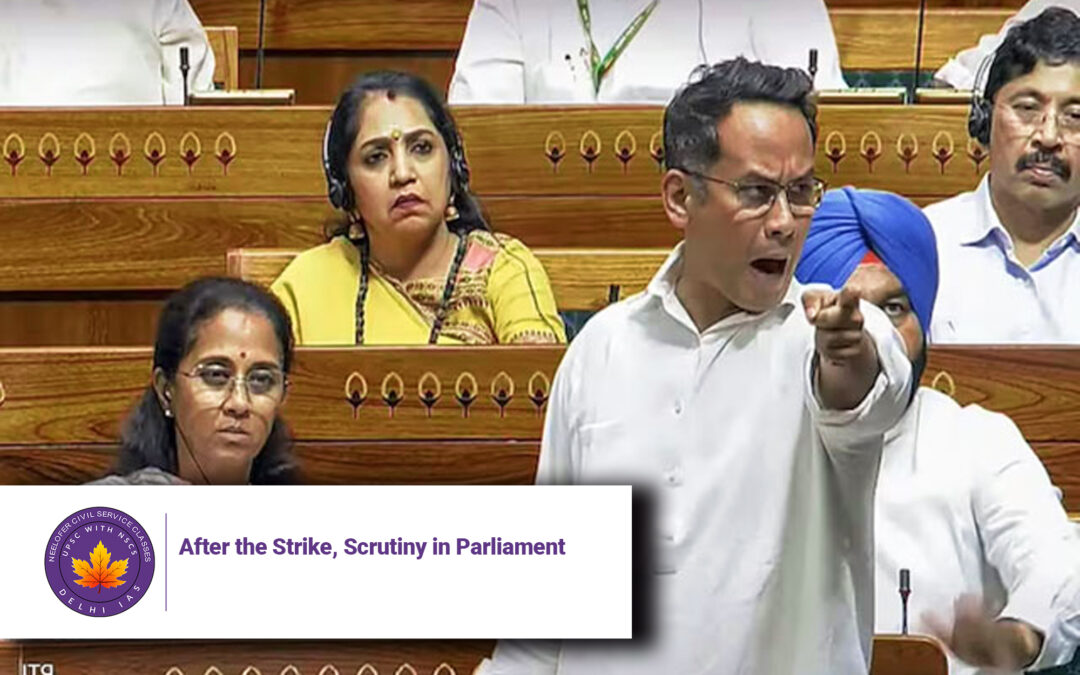
After the Strike, Scrutiny in Parliament
Why in News?
The recent debates in the Indian Parliament surrounding national security and military strikes have sparked a critical examination of government accountability and the role of democratic institutions in scrutinizing executive actions. The discussions, particularly in the wake of the Op Sindoor strike, have underscored the importance of a conscientious republic that is unafraid to question and challenge state actions. As the nation grapples with issues of security, sovereignty, and accountability, these parliamentary debates have taken center stage, prompting both support and criticism from various quarters.
Introduction
The Op Sindoor operation, which involved targeted military strikes, has prompted lawmakers to engage in a robust dialogue about the implications of such actions on national security and civil liberties. The discussions in Parliament not only reflect the urgency of the current geopolitical climate but also highlight the broader need for a transparent and accountable government. In an era marked by rapid advancements in technology and information dissemination, the accountability of state actions is more crucial than ever.
Key Issues and Background
1. Context of Op Sindoor (Normal Bold)
The Op Sindoor operation aimed to neutralize perceived threats to national security. While the operation was lauded by some as a necessary step to protect the nation, it has also raised questions about the justification and oversight of military actions.
- Nature of Threats: The operation was carried out in response to credible intelligence regarding imminent threats to national security. However, the methods employed in such operations have sparked debates about proportionality and the ethical implications of military strikes.
- Government Justification: The government has justified the operation as essential for maintaining sovereignty and deterring potential aggressors. However, critics argue that such justifications must be scrutinized to ensure accountability.
2. The Role of Parliament (Normal Bold)
Parliament plays a pivotal role in overseeing government actions, particularly in matters of national security. The recent debates have highlighted several key aspects:
- Accountability and Transparency: Lawmakers have emphasized the need for greater transparency in military operations, advocating for mechanisms that hold the executive accountable for its actions.
- Public Discourse: The debates have facilitated public discourse on national security, allowing citizens to engage with critical issues affecting their lives and the state.
3. Concerns About Democratic Principles (Normal Bold)
The discussions surrounding Op Sindoor have also raised broader concerns about the principles of democracy and the role of dissent:
- Freedom of Speech: Critics have pointed out that a healthy democracy requires space for dissent and debate. The suppression of dissenting voices can undermine the integrity of democratic institutions.
- Intelligence Oversight: There is a growing recognition of the need for robust oversight mechanisms to ensure that intelligence operations align with democratic values and civil liberties.
Specific Impacts or Effects
The parliamentary debates on the Op Sindoor operation have had several significant impacts:
1. Political Ramifications (Normal Bold)
- Polarization of Opinions: The discussions have led to polarized opinions among political parties, with some supporting the government’s actions while others raise concerns about accountability and oversight.
- Electoral Implications: The handling of national security issues can have electoral ramifications, influencing public perception of political parties and their commitment to democratic principles.
2. Public Awareness and Engagement (Normal Bold)
- Informed Citizenry: The debates have contributed to a more informed citizenry, encouraging individuals to engage with issues of national security and government accountability.
- Civic Responsibility: Increased public discourse fosters a sense of civic responsibility, empowering citizens to hold their representatives accountable.
3. Institutional Strengthening (Normal Bold)
- Reinforcing Democratic Norms: The scrutiny of government actions can reinforce democratic norms, ensuring that the government remains answerable to the people.
- Promoting Checks and Balances: A robust parliamentary debate contributes to a system of checks and balances, essential for maintaining the integrity of democratic institutions.
Challenges and the Way Forward
1. Challenges (Normal Bold)
- Balancing Security and Civil Liberties: One of the primary challenges is finding a balance between ensuring national security and upholding civil liberties. Striking this balance requires careful consideration and dialogue.
- Threats to Democratic Discourse: The current climate of disinformation and polarization poses a threat to constructive democratic discourse. Ensuring that debates remain focused and informed is crucial.
2. Steps Forward (Normal Bold)
- Enhancing Parliamentary Oversight: Strengthening parliamentary oversight mechanisms can ensure that government actions are subject to scrutiny and accountability.
- Promoting Public Engagement: Encouraging public engagement in discussions about national security can foster a more informed citizenry and strengthen democratic values.
- Investing in Civic Education: Promoting civic education can empower citizens to understand their rights and responsibilities, enhancing their engagement in democratic processes.
Conclusion
The debates surrounding the Op Sindoor operation have underscored the importance of accountability, transparency, and democratic principles in matters of national security. As the nation navigates the complexities of contemporary security challenges, it is essential for democratic institutions to remain vigilant and responsive to the needs of the citizenry. By fostering a culture of scrutiny and open dialogue, India can ensure that its democratic values are upheld while addressing the pressing issues of security and sovereignty.
5 Questions and Answers
Q1: What was the Op Sindoor operation?
A: The Op Sindoor operation involved targeted military strikes aimed at neutralizing perceived threats to national security, based on credible intelligence.
Q2: Why are parliamentary debates important in this context?
A: Parliamentary debates serve as a mechanism for oversight, ensuring that government actions are subject to scrutiny and that democratic principles are upheld.
Q3: What concerns have been raised regarding the operation?
A: Concerns include the need for accountability, the balance between national security and civil liberties, and the importance of maintaining democratic discourse.
Q4: How can public engagement impact national security discussions?
A: Increased public engagement fosters informed citizenry, empowers individuals to hold their representatives accountable, and promotes civic responsibility.
Q5: What steps can be taken to enhance democratic oversight?
A: Strengthening parliamentary oversight mechanisms, promoting public engagement, and investing in civic education can enhance accountability and uphold democratic values.

