
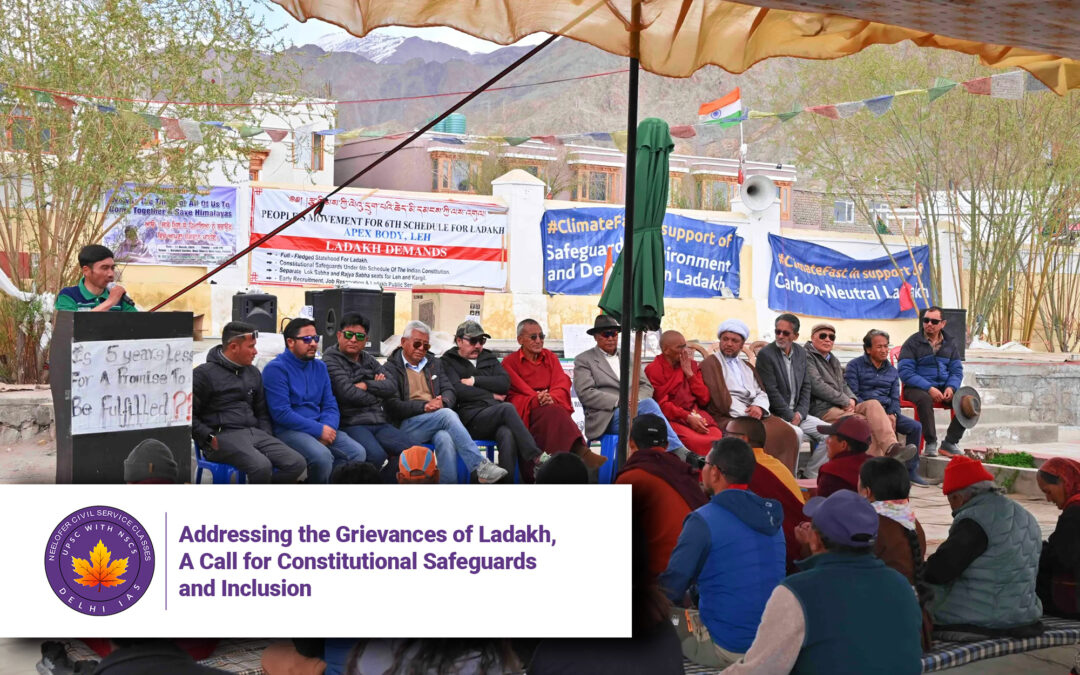
Addressing the Grievances of Ladakh, A Call for Constitutional Safeguards and Inclusion
Why in News?
On June 3, 2024, the Central Government announced measures to address the long-standing concerns of the people of Ladakh. These include issues related to language, culture, land, and political representation following the revocation of Article 370 in 2019 and the formation of the Union Territory (UT) of Ladakh. 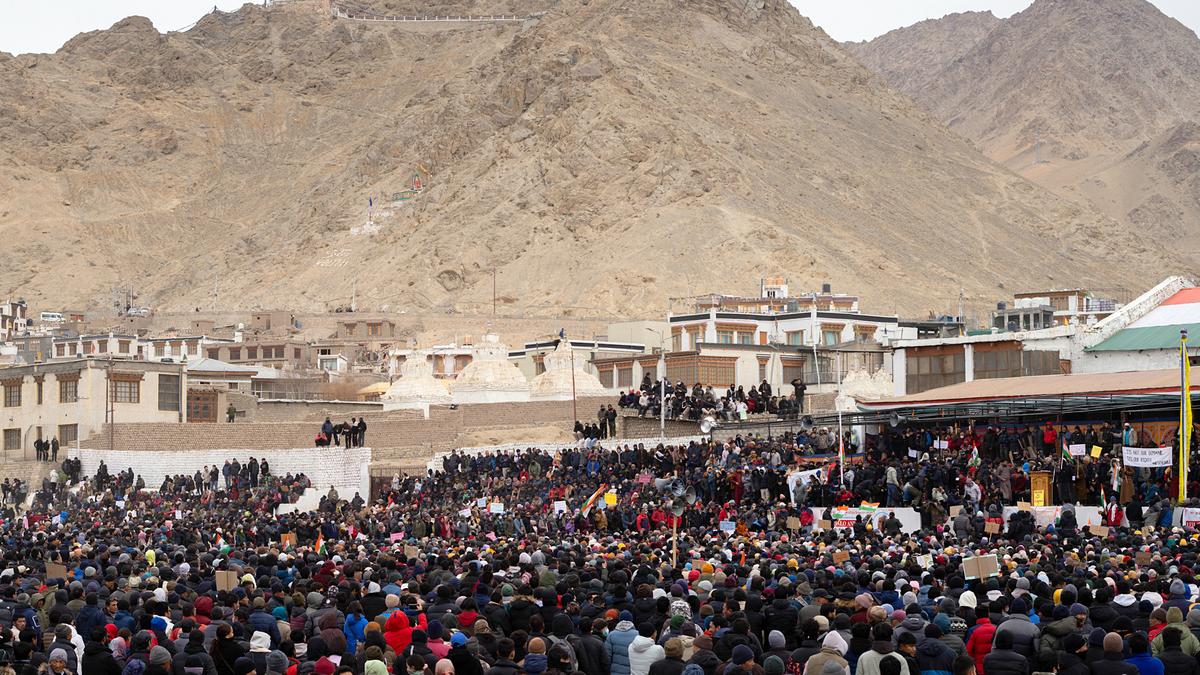
Introduction
Ladakh has faced significant changes since it became a separate Union Territory after the abrogation of Article 370 in 2019. However, this move stripped the region of its special status and led to unrest over identity, political representation, and autonomy. While the new measures are a step forward, many local groups believe they fall short of expectations.
Key Announcements and Provisions
-
Reservation and Domicile Policy:
-
The Centre proposed up to 85% reservation in government jobs for indigenous people.
-
To qualify as a domicile, a person must have a 15-year continuous stay in Ladakh.
-
The domicile policy will apply for hill council elections after 2034.
-
These rules resemble those in other northeastern states (e.g., Mizoram – 92%, Arunachal – 80%).
-
-
Hill Council Reforms:
-
One-third of council seats to be reserved for women.
-
Local languages like Bhoti, Purig, Shina, Balti, and Hindi will be recognized in hill council governance.
-
-
Missed Demands:
-
Civil society groups demanded Statehood, inclusion under Sixth Schedule, and a public service commission.
-
The Sixth Schedule would protect tribal identity and offer autonomy in governance.
-
These demands were not fulfilled.
-
Challenges and Tensions
-
Despite new rules, local communities fear demographic changes, loss of cultural identity, and limited political autonomy.
-
In April 2023, the Ministry of Home Affairs admitted that none of the 1,725 gazetted posts in Ladakh had been filled under the UT’s own recruitment system.
-
The high-powered committee led by Minister of State Nityanand Rai was formed to address these concerns but has not yet delivered major results.
Conclusion
The Centre’s latest steps represent partial progress but are insufficient to meet the full aspirations of Ladakh’s people. With mounting pressure from civil society, the Kargil Democratic Alliance, and religious groups, the demand for constitutional safeguards is louder than ever. Moving forward, the government must ensure that identity, autonomy, and development go hand in hand for a peaceful and prosperous Ladakh.
Q&A Section
Q1. Why were new policies for Ladakh announced on June 3, 2024?
To address long-pending concerns of the people of Ladakh regarding language, culture, land, and political representation, especially after its separation from Jammu & Kashmir in 2019.
Q2. What is the reservation percentage proposed for indigenous people in Ladakh government jobs?
The policy proposes up to 85% reservation for indigenous people in government jobs.
Q3. What is the required residency period to qualify as a domicile of Ladakh?
A person must have stayed in Ladakh continuously for 15 years to be considered a domicile.
Q4. What key demands by civil society groups remain unmet?
Demands for Statehood, inclusion under the Sixth Schedule, and the establishment of a Public Service Commission were not fulfilled.
Q5. Why is the Sixth Schedule important for Ladakh?
It provides autonomy and constitutional safeguards for tribal regions, helping protect the identity and rights of indigenous communities.

