
A land of djinns and poets, Iran in the crosshairs of history again
Why in News?
Iran has returned to global headlines for numerous crises in recent years. Yet, to understand Iran today, one must also revisit its complex and rich cultural past. Through literature and historic accounts, Iran appears not merely as a nation embroiled in conflict but as a crossroads of civilizations, poetry, mythology, and spiritual transformation. 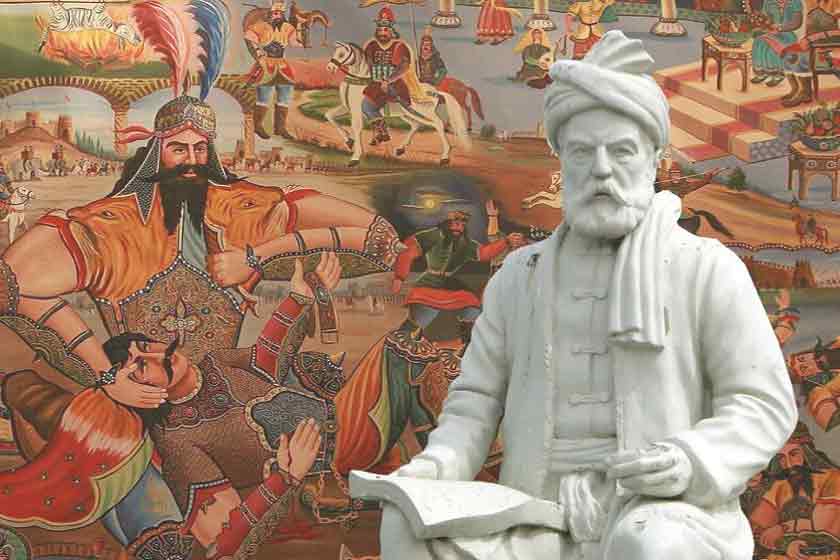
Introduction
Paul E. Erdman’s The Crash of ’79 eerily predicted Iran’s destabilization even before the 1979 revolution, setting the tone for its contemporary global position. Iran’s past is filled with myth, conquest, culture, and exchange. Its role as a marketplace of goods and ideas positioned it as a bridge between the East and West.
Whether in the grand bazaars of Tehran or in the richly illustrated pages of Persian poetry, Iran has consistently stood at the center of spiritual and political upheaval—an emporium of ideas passed along through time by invaders, merchants, and mystics alike.
A Historical Crossroads
Iran has long been at the heart of global intersections—where East met West and ideas flowed as freely as goods. From Nader Shah’s conquest of Delhi in 1739, including the looting of the Mughal empire, to Ferdowsi’s epic poem Shahnameh, Iran has served as a cultural mirror for other civilizations.
Even Zoroastrian fire temples and the myths of djinns reflect its role in shaping ancient religions and regional imagination. Iran’s influence traveled far—from Indian priests adopting “Faravahar” to British colonial strategies shaped by the perception of Iran as a geopolitical decoy.
Cultural and Literary Echoes
Iran’s presence in global literature is formidable. From Ferdowsi’s Shahnameh to modern political writings, including Amir Taheri’s The Spirit of Allah, Iranian narratives often mix spirituality with existential conflict.
Sir Denis Wright’s classic The Persians and the Persians Amongst the English explores the exoticism surrounding Iran in British imagination. Such works reveal how the West perceived Iran—mystical, strategic, and forever unpredictable.
The British Obsession and Its Ironies
British colonial planners often saw Iran as a distraction or decoy, especially during the Cold War, imagining it as a counterweight to Russian influence. Simultaneously, British travelers found fascination in Persian markets, baths, and poetry.
The cultural misunderstanding and exploitation of Iran through history point to a wider issue: misunderstanding a deeply spiritual and culturally rich nation as merely a pawn in the larger global chessboard.
Conclusion: A Nation of Symbols
From Attar’s Conference of Birds to tales of the Simorgh, Iran’s symbols often tell of spiritual rebirth through fire. Each revolution and war in Iran seems to reaffirm the myth of survival through suffering—a motif embedded in its national memory.
Iran today, still facing sanctions, internal dissent, and geopolitical scrutiny, remains what it has always been—a land in the crosshairs of history, poetry, myth, and revolution.
Q&A Section
1. Q: What fictional work predicted the fall of Iran’s monarchy?
A: The Crash of ’79 by Paul E. Erdman.
2. Q: Which Persian ruler looted the Mughal empire and took the Peacock Throne?
A: Nader Shah in 1739 after the Battle of Karnal.
3. Q: What is Ferdowsi’s famous contribution to Persian literature?
A: The epic poem Shahnameh, which includes tales of Persian kings and warriors.
4. Q: How has Iran influenced religious imagery in India?
A: The Parsis brought Zoroastrian symbols like the “Faravahar” to India, integrating spiritual traditions.
5. Q: Which 1985 book by Amir Taheri analyzed Iran’s modern Islamic revolution?
A: The Spirit of Allah.

