
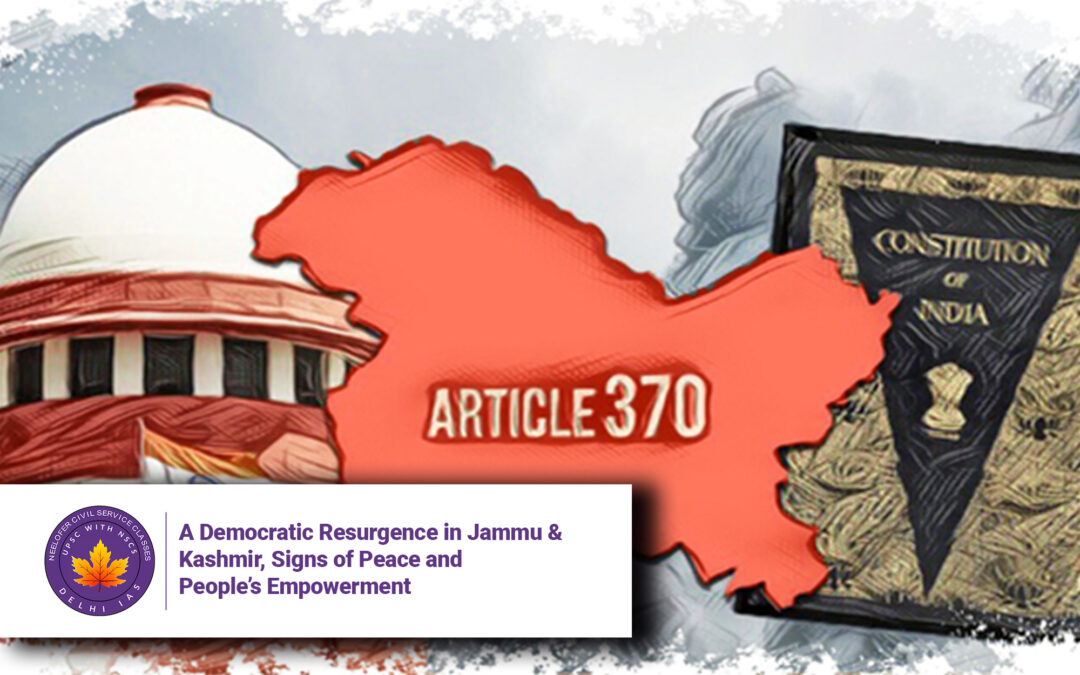
A Democratic Resurgence in Jammu & Kashmir, Signs of Peace and People’s Empowerment
Why in News?
Following the tragic Pahalgam terror attack and Operation Sindoor, Jammu & Kashmir has witnessed a striking shift toward normalcy, marked by peaceful and well-participated Lok Sabha and assembly elections. These developments signify a renewed public yearning for peace, empowerment, and democratic participation. 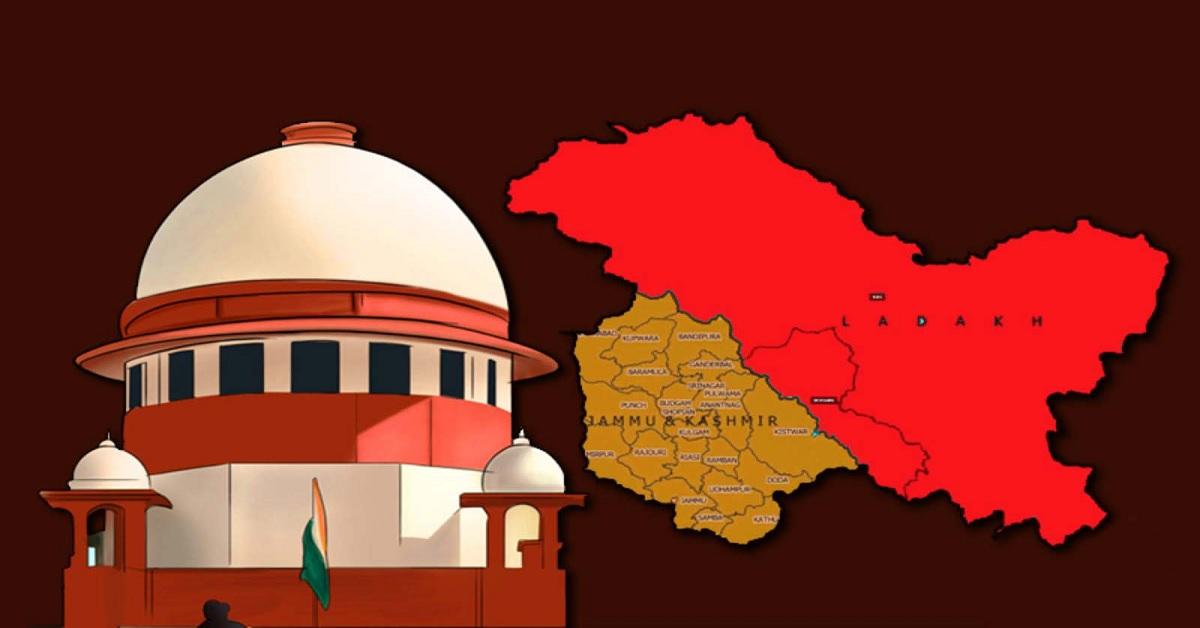
Introduction
In the shadow of violence and tragedy, Kashmir’s resilient population has once again chosen the ballot over the bullet. The holding of two significant elections within a short span—Lok Sabha followed by assembly polls—demonstrated not only electoral maturity but also emotional and civic courage by the people of J&K.
Key Developments
-
Tourism Revival: The re-opening of the world’s tallest rail bridge over the Chenab and the influx of tourists signal increasing confidence in regional stability.
-
Peaceful Elections: Both elections saw high voter turnouts with minimal security incidents, marking a departure from past boycott trends.
-
Women’s Participation: A significantly larger number of women candidates and voters participated, showing inclusivity in the democratic process.
-
No Coercion or High-Handedness: Elections were free of traditional allegations—no coercive tactics, manipulation, or misconduct was reported.
-
Public Ownership of Peace: Public vigils, community marches, and rejection of violence indicated strong grassroots support for democratic processes.
Electoral Significance
-
Lok Sabha Elections: With a remarkable turnout of 58.58 percent in five constituencies and 63.88 percent in the 90-member assembly elections, the people demonstrated their commitment to democratic revival.
-
Youth and Women as Change Agents: Many young voters and first-time participants, especially women, showed their belief in transformation via ballots.
-
‘Jashn-e-Jamhuriyat’: The celebration of democracy was widely acknowledged as the spirit behind these elections.
Broader Implications
-
The success of peaceful elections suggests growing alienation from terrorism and political extremism.
-
These events highlight the effectiveness of democratic structures in integrating aspirations of regions long disturbed by conflict.
-
The Election Commission emphasized the elections as evidence of civic participation and hope in a new era.
Conclusion
The elections in Jammu & Kashmir are more than just a procedural exercise—they are a powerful symbol of transition. From candles in memory of terror victims to ballots cast for a better future, the people have reclaimed their agency. The process reflects a broader consensus among Kashmiris to choose peace, purpose, and progress. While challenges persist, the direction is promising, grounded in democratic legitimacy and people’s trust.
5 Questions & Answers
1. What significant events preceded the elections in Jammu & Kashmir?
The elections followed the Pahalgam terror attack and the military response under Operation Sindoor.
2. How did the public of Kashmir respond to the elections?
With high voter turnout, especially among women and youth, and no significant violence or coercion, indicating a positive shift towards democratic processes.
3. What were the unique aspects of these elections?
They were conducted freely, with minimal security impositions, and highlighted a change in voter sentiment, including emotional unity against terrorism.
4. What message do these elections convey about Kashmir’s future?
They show a yearning for peace, empowerment, and democratic development, rejecting violent alternatives.
5. What role did the Election Commission play?
It ensured transparent, inclusive, and violence-free elections, affirming its role in rebuilding civic faith and public participation in the region.

