
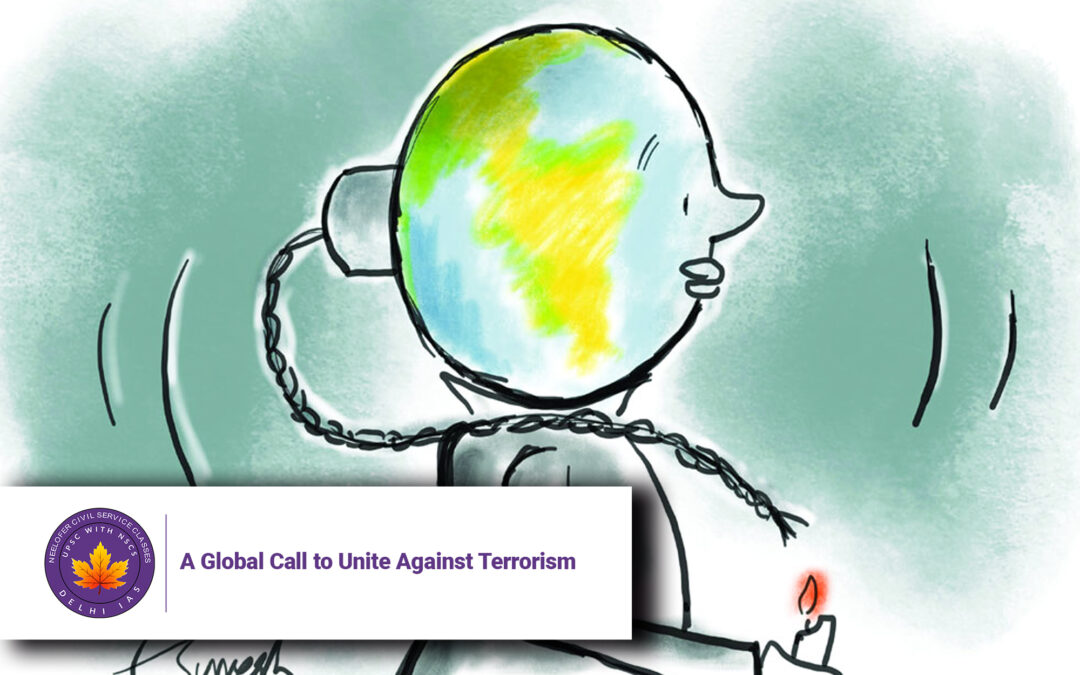
A Global Call to Unite Against Terrorism
Why in News
The recent decision by the United States to classify the Resistance Front (TRF), a proxy of the Pakistan-based terrorist organisation Lashkar-e-Taiba (LeT), as a Foreign Terrorist Organisation and designate it as a Specially Designated Global Terrorist (SDGT) marks a major step in the international fight against terrorism. This decision not only validates India’s zero-tolerance policy on terrorism but also reflects growing convergence between the US and India in building a united global front against terror.
The development coincides with the 2025 Shanghai Cooperation Organisation (SCO) Summit, where India strongly reiterated its uncompromising stance against transnational terrorism. It highlights the urgent need for nations across the globe to close ranks and coordinate collective strategies to fight terrorism in all its forms.
Introduction
Terrorism continues to remain one of the gravest threats to international peace and security in the 21st century. Despite decades of counter-terrorism efforts, violent extremism persists in different regions of the world, causing not just physical destruction but also long-term socio-political instability.
India has long maintained that peace and terrorism cannot coexist, and the world must adopt a zero-tolerance approach. The US designation of TRF vindicates India’s consistent position and demonstrates a shared recognition among global powers that terrorism—whether state-sponsored, ideologically driven, or financially motivated—poses a danger that transcends borders.
Key Issues and Background
1. The Rise of TRF and Pakistan’s Role
The Resistance Front (TRF) emerged as a proxy group of Lashkar-e-Taiba, one of the world’s deadliest terror organisations responsible for the 26/11 Mumbai attacks. TRF has been active in Jammu & Kashmir, carrying out targeted killings, spreading fear, and trying to destabilize India. By designating TRF as a global terrorist entity, the US has sent a strong message that state sponsorship and proxy terrorism will not be tolerated.
2. International Security Challenges
Today’s world is deeply interconnected, and so are the threats it faces. Terrorism has evolved from traditional warfare into multi-layered, transnational networks involving:
-
Terror financing through informal channels and cryptocurrency.
-
Cyberterrorism and digital propaganda on social media.
-
Cross-border infiltration using advanced technologies.
-
Arms smuggling and procurement of weapons of mass destruction (WMDs).
India, which has suffered heavily from terrorism, has consistently pushed for a comprehensive international framework to combat these new-age threats.
3. Growing Complexity of Terror Tactics
Terrorist organisations adapt quickly to new technologies. For instance:
-
Drones have been used to smuggle arms and explosives across borders.
-
Encrypted messaging apps provide safe communication for terrorists.
-
Lone wolf attacks inspired by online radicalisation have become harder to detect.
-
Battery-operated explosive devices are increasingly deployed in suicide attacks.
These developments have forced security agencies to constantly innovate and collaborate globally.
Specific Impacts or Effects
1. Validation of India’s Stance
For decades, India has argued that terrorism cannot be justified under any pretext, including religious or political grievances. The outdated notion that “one man’s terrorist is another man’s freedom fighter” is no longer acceptable. The US action against TRF validates India’s position and strengthens its moral and diplomatic standing on the global stage.
2. Strengthening Global Cooperation
This designation is not just about TRF; it is a signal to all state sponsors of terrorism that the global community will act decisively. It also strengthens US-India cooperation in intelligence sharing, counter-terrorism operations, and diplomatic efforts to isolate countries supporting terror.
3. Pressure on Pakistan
Pakistan, long accused of harbouring and funding terrorist organisations, faces renewed international scrutiny. With the US and India jointly highlighting TRF’s threat, Pakistan will come under pressure to take concrete actions against terror networks operating from its soil.
4. Enhanced Global Awareness
The media, governments, and civil society have a critical role in shaping public opinion against terrorism. By naming and shaming terror organisations, the global community makes it harder for these groups to gain sympathy or legitimacy.
Challenges and the Way Forward
1. Adapting to New Threats
Terror groups constantly evolve, finding new ways to bypass security systems. Cyberterrorism, bioterrorism, and the misuse of artificial intelligence are emerging concerns. Nations must continuously upgrade intelligence and defense systems to stay ahead.
2. Legal and Policy Gaps
Many countries still lack strong anti-terror laws or have loopholes that terrorists exploit. For instance, legal systems must adapt to regulate online radicalisation, terror financing through cryptocurrency, and safe havens provided by certain states.
3. Need for Unified Action
The London Financial Summit Conference convened by NATO states and Japan highlighted the need to cut off terror financing. Yet, progress remains uneven because of political differences. Without collective enforcement, terror groups continue to find financial lifelines.
4. Balancing Security and Rights
While combating terrorism, governments must also respect human rights and prevent misuse of laws. Excessive surveillance or arbitrary restrictions can alienate populations, which in turn fuels radicalisation.
5. Strengthening Intelligence Cooperation
No country can fight terrorism alone. Sharing real-time intelligence, conducting joint counter-terrorism operations, and developing unified global databases of terror suspects are essential steps forward.
Conclusion
The US designation of TRF as a global terrorist entity is a landmark in international counter-terrorism efforts. It validates India’s consistent stance, strengthens US-India cooperation, and sends a strong signal to countries that sponsor terrorism.
However, terrorism remains a dynamic, evolving threat, requiring constant vigilance, collaboration, and innovation. The world must abandon outdated notions, close legal loopholes, and adopt uncompromising principles of mutual respect, rule of law, and unwavering values. Only then can peace and prosperity truly coexist.
As India has always argued, terrorism anywhere is a threat to peace everywhere. The global community must act not in silos, but in unison, to eradicate this menace.
5 Questions and Answers
Q1. What is the Resistance Front (TRF), and why did the US designate it as a terrorist organisation?
Answer: TRF is a proxy of Lashkar-e-Taiba, based in Pakistan, and has been involved in targeted killings and terror activities in Jammu & Kashmir. The US designated it as a Foreign Terrorist Organisation (FTO) and a Specially Designated Global Terrorist (SDGT) to cut off its funding and global support, validating India’s stance against Pakistan-sponsored terrorism.
Q2. How does terrorism threaten global peace and prosperity?
Answer: Terrorism destabilizes regions, disrupts economies, spreads fear, and undermines democratic values. Its links with cybercrime, drug trafficking, and arms smuggling make it a global security issue that transcends borders.
Q3. Why is international cooperation critical in fighting terrorism?
Answer: Terrorism is transnational in nature. Terror groups exploit safe havens, use global financial systems, and spread propaganda online. Only coordinated intelligence-sharing, legal frameworks, and joint operations can effectively counter such networks.
Q4. What challenges do countries face in combating evolving terror tactics?
Answer: Terrorists use advanced methods such as drones, cyberattacks, lone-wolf operations, and encrypted communication. Countries must adapt quickly, modernize laws, and invest in new technologies to counter these threats.
Q5. What is India’s key message to the world regarding terrorism?
Answer: India emphasizes that terrorism and peace cannot coexist. The outdated belief that terrorism can be justified as a form of freedom struggle must be rejected. India advocates for zero tolerance, stronger global cooperation, and uncompromising principles to defeat terrorism.

