
American Foreign Policy Missteps, Lessons from History and the Present
Why in News?
A recent opinion piece by Shinichi Kitaoka, a Japanese scholar and diplomat, has sparked renewed debate about how the United States approaches foreign policy, the consequences of its strategic misjudgments, and the lengthy time it often takes to correct them. Drawing on historical examples such as the Panama Canal toll dispute, U.S.–Japan relations, and more recent events under Donald Trump’s presidency, Kitaoka argues that while the United States is capable of correcting its mistakes, the process can be slow and costly for the international community.
Introduction
The United States holds a dominant position in the global order, with military, economic, and cultural influence that stretches across the globe. However, history shows that even a superpower is not immune to strategic blunders. The problem, according to Kitaoka, is not that America never corrects its mistakes—but rather that the correction can take decades, during which the consequences are felt worldwide.
By weaving together episodes from the early 20th century to the present day, the article highlights the recurring pattern of U.S. missteps: initial arrogance or domestic self-interest, prolonged international backlash, eventual course correction, and a claim of moral leadership.
The Panama Canal Toll Dispute: A Lesson in Selective Fairness
Background
The Panama Canal opened in 1914 after decades of political maneuvering and massive engineering effort. Under the Hay-Pauncefote Treaty signed between the United States and the United Kingdom in 1901, tolls were supposed to be nondiscriminatory—no nation’s ships would be favored over another’s.
However, the U.S. Congress introduced a clause exempting its domestic shipping—such as cargo traveling from the East Coast to the West Coast—from paying tolls, while charging foreign ships full rates.
International Reaction
This policy prompted strong protests from Britain. The U.K.’s ambassador to Washington at the time, James Bryce (1838–1922), argued that the measure violated the treaty and set a dangerous precedent. British objections were rooted in the idea that treaties must be upheld in both letter and spirit, especially in an era when imperial powers were negotiating complex agreements worldwide.
The Bryce–Shidehara Exchange: Diplomacy and Realism
Kitaoka highlights the perspective of Kijūrō Shidehara—later Japan’s ambassador to the U.S., foreign minister, and eventually prime minister—who asked Bryce why the British government protested if they knew the U.S. would ignore them. Bryce replied that the U.S., unlike some nations, was capable of recognizing and correcting its own mistakes—eventually.
This faith in America’s capacity for self-correction proved correct: years later, Washington reversed the toll exemption. But as Shidehara noted, the delay meant enduring years of unfair treatment before justice was restored.
U.S.–Japan Immigration Tensions
The same principle played out in U.S.–Japan relations regarding immigration. Early in the 20th century, U.S. policies restricted Japanese immigration, prompting protests from Tokyo. Bryce advised Japan to remain patient, believing America would ultimately rectify its discriminatory policies. Yet, as history shows, such reforms often take decades—if they come at all.
A Pattern of Slow Realization
Kitaoka frames this as a defining characteristic of U.S. diplomacy: the ability to eventually admit mistakes and reverse them, but only after prolonged resistance. This dynamic has appeared in multiple cases:
-
The Prohibition Era (1920–1933): The U.S. needed 13 years to undo a policy many saw as socially damaging.
-
League of Nations Rejection (1920): It took until after World War II for the U.S. to embrace multilateralism through the United Nations.
-
Immigration Reform: Discriminatory policies persisted for decades before gradual liberalization.
Modern Echoes: The Trump Era
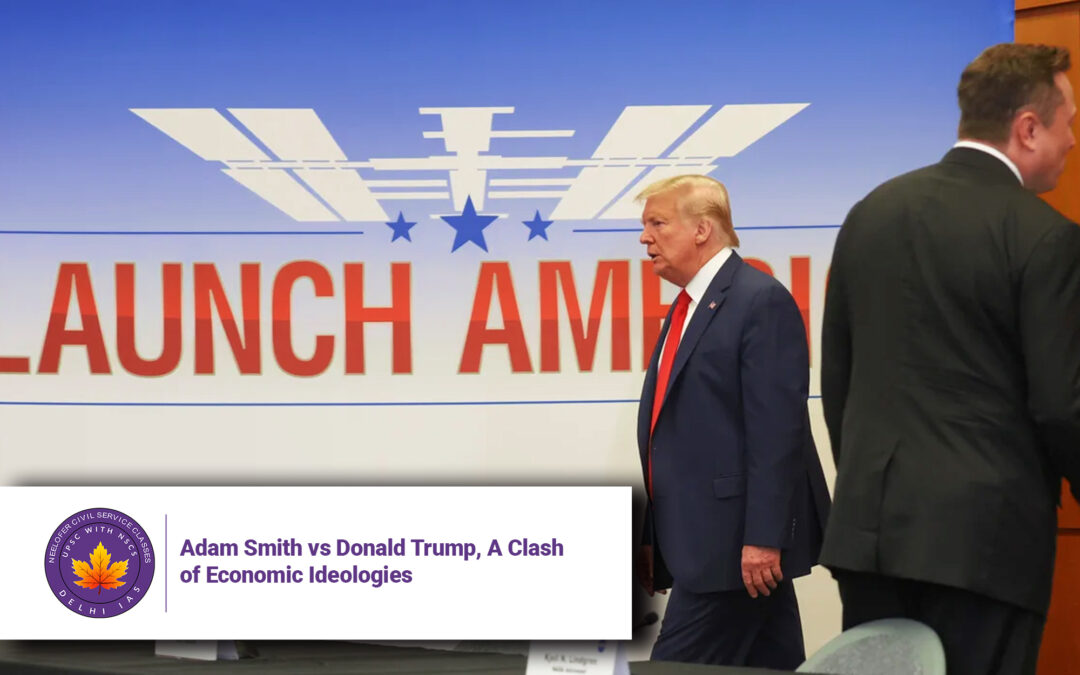
Kitaoka draws parallels between historical U.S. misjudgments and recent political trends under Donald Trump. Trump’s policies—whether on trade, immigration, or foreign relations—have often prioritized domestic appeal over global cooperation. While some initiatives may serve U.S. interests in the short term, others risk damaging international relationships and undermining the global order.
Even when presented with evidence that a policy harms both the U.S. and its allies, Trump (and similar political leaders) tends to double down, appealing to nationalist sentiment. This is in contrast to countries like China and Russia, which, with vast natural resources and territorial size, can absorb more of the damage from isolationist policies.
The Manifest Destiny Mindset
Kitaoka also revisits the 19th-century U.S. concept of “Manifest Destiny”—the belief that America was destined to expand across the continent. This ideology often justified territorial expansion at the expense of indigenous peoples and neighboring countries, such as Mexico.
By the mid-1800s, Texas had declared independence, been annexed by the U.S., and later, vast swaths of Mexican territory—including California, Arizona, and New Mexico—were incorporated after the Mexican-American War (1846–1848). This aggressive expansion reflected a willingness to take unilateral action when it suited national interests, a trait that can still be seen in modern U.S. foreign policy.
The Panama Canal Revisited: 20th Century Negotiations
In the late 19th and early 20th centuries, the U.S. decided to construct the Panama Canal independently. Negotiations with Colombia for rights to build the canal failed, prompting U.S. support for Panama’s secession from Colombia in 1903—a move many saw as opportunistic.
Decades later, dissatisfaction in Panama led to a renegotiation process, culminating in the 1977 Torrijos–Carter Treaties, which transferred control of the canal to Panama by the end of 1999. This, again, was a correction of a historical imbalance, but only after decades of controversy.
Why It Matters Today
Kitaoka’s central thesis is that the United States—while fundamentally committed to certain democratic and legal principles—can take a very long time to align its actions with those values. This slow correction process has global implications, because U.S. policies affect trade, security, and diplomacy worldwide.
For allies and adversaries alike, the challenge is navigating the interim period between policy misstep and eventual reversal—a period that can be marked by instability, economic harm, or diplomatic friction.
Possible Future Scenarios
-
Short-Term: Policies driven by domestic political gain—such as protectionist trade measures or abrupt treaty withdrawals—will continue to test alliances.
-
Medium-Term: The 2026 midterm elections or the 2028 presidential election could mark a turning point in reversing certain policies enacted in the 2020s.
-
Long-Term: Structural changes in U.S. political culture could either shorten the policy correction cycle or entrench it further, depending on domestic polarization levels.
Conclusion
History shows that the United States does eventually correct its foreign policy mistakes—but rarely quickly. From the Panama Canal toll dispute to 21st-century trade wars, the pattern is consistent: an initial assertion of unilateral interest, followed by prolonged dispute, and eventual reform once the political or strategic costs become too high.
For global partners, the lesson is patience mixed with strategic pressure. For the U.S., the challenge is living up to its own ideals in real time, rather than decades after the fact.
Q&A Section
Q1. What was the Panama Canal toll dispute about?
A1. The dispute arose because the U.S. exempted its domestic shipping from tolls while charging full rates to foreign ships, violating a treaty clause mandating nondiscriminatory tolls.
Q2. How did James Bryce view U.S. policy mistakes?
A2. Bryce believed the U.S. was capable of recognizing and correcting its mistakes over time, even if it initially resisted criticism.
Q3. What historical pattern does Shinichi Kitaoka identify in U.S. diplomacy?
A3. He notes that the U.S. often makes policy mistakes driven by domestic priorities, resists external criticism, and only corrects course after prolonged periods.
Q4. How does the Trump era reflect past U.S. policy tendencies?
A4. Similar to earlier periods, Trump’s policies often prioritize domestic political gains over international cooperation, with resistance to reversing course even when evidence shows harm to U.S. and global interests.
Q5. Why is the slow correction of U.S. policy significant for the world?
A5. Because U.S. policies have global reach, prolonged missteps can cause widespread economic, diplomatic, and security consequences before corrections are made.

