
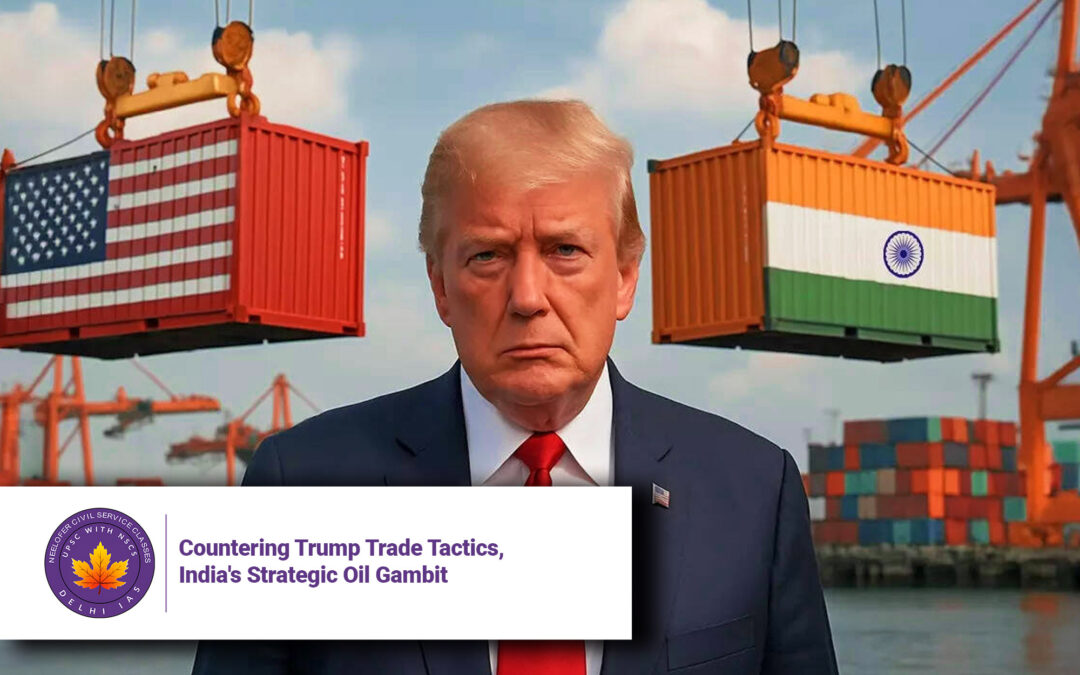
Countering Trump Trade Tactics, India’s Strategic Oil Gambit
Introduction
In an era where traditional trade paradigms are being upended by Donald Trump’s aggressive “America First” policies, India faces a critical challenge: how to protect its economic interests while navigating the volatile landscape of U.S. trade relations. The solution, as proposed by trade expert Raghav Priyadarshi, is both bold and unconventional—leveraging India’s oil imports as a strategic tool to counterbalance trade tensions. This article explores the rationale behind this approach, its potential impacts, and whether such a move could redefine India-U.S. trade dynamics.
The Trump Trade Doctrine: A Disruption of Global Norms
1. Trump’s Trade Philosophy
-
“America First”: Prioritizing U.S. economic interests, often at the expense of multilateral trade agreements.
-
Tariffs as Weapons: Imposing punitive tariffs on countries with trade surpluses (e.g., China, India).
-
Bilateral Over Multilateral: Dismissing WTO frameworks in favor of one-on-one deals.
2. India’s Vulnerabilities
-
Trade Deficit Focus: The U.S. trade deficit with India (~$46 billion in 2024) makes India a target.
-
Export Reliance: $87 billion in Indian exports to the U.S. (e.g., pharmaceuticals, IT, textiles) are at risk if tariffs escalate.
-
Limited Leverage: India lacks reciprocal tariff threats due to asymmetrical trade volumes.
The Oil Gambit: A Strategic Reset
1. The Proposal
India should unilaterally pledge to buy 1 million barrels per day (bpd) of U.S. crude oil, up from the current ~270,000 bpd. This would:
-
Reduce the U.S. trade deficit by ~$17 billion (cutting it from $46B to $30B).
-
Signal goodwill while securing India’s export interests.
2. The Math Behind the Move
| Metric | Current (2024) | Proposed Shift |
|---|---|---|
| U.S. Oil Imports | 270,000 bpd | 1,000,000 bpd |
| Annual Cost (at $70/barrel) | ~$7B | ~$25.5B (+$17B) |
| U.S. Trade Deficit | $46B | Reduced to ~$30B |
3. Sweetening the Deal
-
Replace Russian Oil: For every extra barrel bought from the U.S., cut two from Russia (addressing U.S. geopolitical concerns).
-
Pay in Stablecoins: Adopt Trump’s proposed GENIUS Act (digital currency framework) to appeal to his policy agenda.
Why This Could Work
1. Psychological Leverage
-
Trump’s Ego: A high-profile, “winning” deal (boosting U.S. oil sales) could soften his stance on tariffs.
-
Political Optics: “India as America’s top oil buyer” headlines would resonate with Trump’s base.
2. Economic Benefits for India
-
Protecting Exports: Avoiding tariffs on $87B of goods saves jobs in key sectors.
-
Diversifying Oil Sources: Reducing over-reliance on Russia (currently ~1.8M bpd).
3. Geopolitical Wins
-
Balancing U.S.-Russia Ties: Demonstrates India’s willingness to align with U.S. energy interests.
-
Digital Currency Leadership: Early adoption of stablecoins could position India as a fintech innovator.
Potential Pitfalls
1. Higher Oil Costs
-
Loss of Russian Discounts: Paying ~$10 more per barrel could cost India $2.5B annually.
-
Inflation Risks: Increased fuel prices may ripple through the economy.
2. Overdependence on U.S. Leverage
-
What if Trump Demands More? Future negotiations could become increasingly transactional.
-
Russia’s Reaction: Moscow may retaliate by curbing arms/energy deals.
3. Long-Term Sustainability
-
Green Energy Shift: Betting on crude contradicts global decarbonization trends.
-
Bilateral Trap: Over-reliance on one-off deals undermines multilateral trade stability.
5 Key Q&A on India’s Oil Strategy
Q1: How would buying more U.S. oil help India’s trade deficit issue?
A: By increasing imports from the U.S., India reduces the bilateral trade deficit ($46B → $30B), making tariff threats less justifiable.
Q2: Why target oil specifically?
A: Oil is a high-value commodity where the U.S. seeks markets. It’s also a sector where India can adjust sourcing without disrupting domestic industries.
Q3: What’s the risk of reducing Russian oil imports?
A: Russia may retaliate in other areas (e.g., arms sales, diplomacy), and India loses cost advantages (~$10/barrel discount).
Q4: How does paying in stablecoins help?
A: It aligns with Trump’s GENIUS Act, showcasing India as a forward-thinking partner in digital finance—a political win for him.
Q5: Couldn’t Trump still impose tariffs later?
A: Yes, but this move buys goodwill and time. It’s a tactical pause, not a permanent solution.
Conclusion: A Calculated Risk Worth Taking?
India’s proposed oil gambit is a Shakuni-like move—crafty, pragmatic, and rooted in realpolitik rather than idealistic trade theories. While risks exist (costs, Russia’s response), the potential to defuse trade wars, protect exports, and enhance strategic ties makes this a compelling short-term strategy.
The Way Forward:
Announce the 1M bpd pledge with high-profile U.S. engagement.
Phase out Russian oil gradually to avoid backlash.
Monitor Trump’s reactions and be ready to adapt.
In a world where Trump respects only strength and deals, India must play the game—crude, but effective.
Author
RAGHAV PRIYADARSHI
Partner, Koan Advisory Group

