
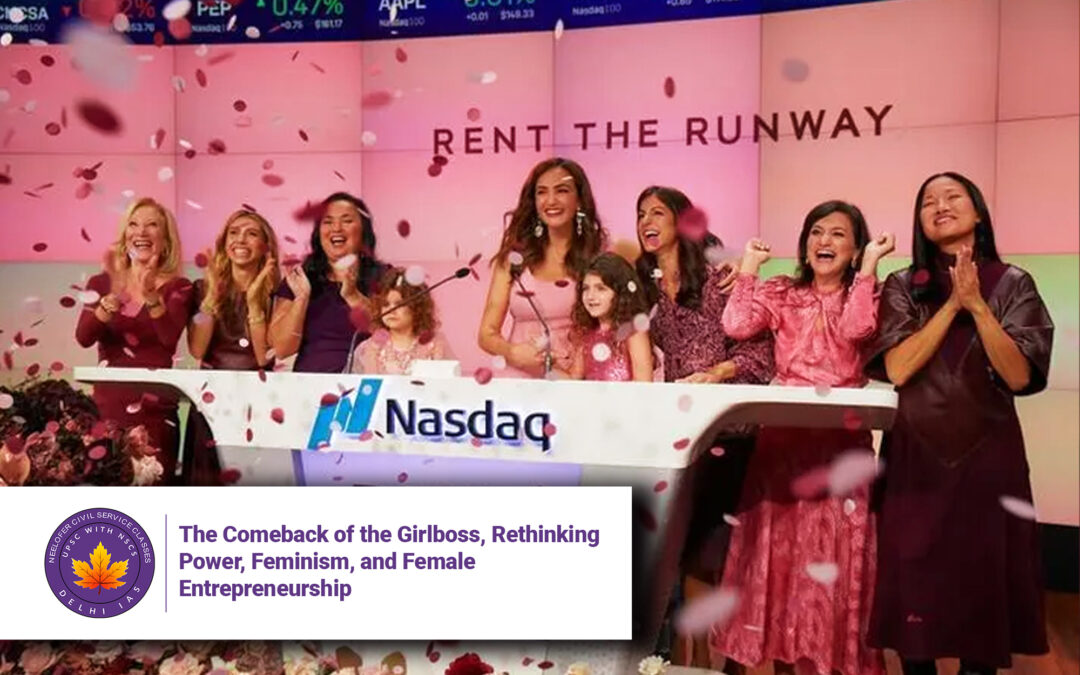
The Comeback of the Girlboss, Rethinking Power, Feminism, and Female Entrepreneurship
By [Your Name]
Date: August 2025
Introduction
In the last decade, the term “girlboss” evolved from a feminist rallying cry into a cultural caricature, before imploding under the weight of its contradictions in the early 2020s. Once used to celebrate ambitious young women redefining power and success on their own terms, the term became tainted—associated with performative feminism, toxic work environments, and brand-first ethics. By 2020, the fall of the girlboss was swift and public.
Now, in 2025, the story has taken a surprising turn. A number of the original “girlbosses”—women who once ruled Instagram-era startup culture and then disappeared under scrutiny—are making a comeback. But this time, they’re doing it differently.
The revival of these figures provides fertile ground for reconsidering questions of gender, leadership, accountability, and the future of female entrepreneurship. The article “The revenge of the original girlbosses” by Bloomberg’s Beth Kowitt explores this evolution with a sharp lens. It’s not just a story of second chances, but one about redefining what power can and should look like for women in the business world.
The Rise and Fall of the Girlboss
The “girlboss” era took flight in the 2010s, especially among White, millennial women building aspirational lifestyle brands. They marketed everything from makeup and activewear to luggage and social clubs—but always tied their business identities to progressive values like feminism, inclusivity, and empowerment.
Coined by Sophia Amoruso (founder of Nasty Gal) in 2014, the term “girlboss” quickly became a catch-all for women who claimed the right to lead unapologetically, break glass ceilings, and support one another in the process. They dominated social media feeds with polished aesthetics, hustle culture, and promises of feminist capitalism.
But the fantasy began to crumble.
Amid the racial reckoning after the murder of George Floyd in 2020, many of these founders were exposed for hypocrisy. Allegations of racism, toxic leadership, elitism, and manipulative marketing emerged. Companies were called out for preaching inclusion while fostering exclusionary environments. In a moment of public backlash, several girlbosses resigned, rebranded, or were ousted.
The fall wasn’t just individual—it marked a cultural shift. The girlboss, once a symbol of empowered leadership, came to represent corporate feminism gone wrong.
The Resurgence: Who’s Back, and What’s Changed?
Fast forward five years. As Beth Kowitt highlights, many of these women are back in the entrepreneurial spotlight—but with a different tone, different goals, and a radically altered business landscape.
Key Players Making a Comeback:
-
Tyler Haney, founder of Outdoor Voices, has reentered the scene with an athletic apparel brand.
-
Audrey Gelman, co-founder of The Wing, has launched a hospitality venture that leans more traditional and family-focused.
-
Steph Korey Goodwin, former co-founder of Away (luggage brand), has launched a children’s brand.
-
Yael Aflalo, founder of Reformation, is back with a new clothing line.
What’s notable about these relaunches is what’s missing: the loud proclamations of social missions and progressive branding that defined their first ventures. There’s no more “change the world” narrative. Instead, there is a return to product, purpose, and practicality.
Why They’re Being Received Differently This Time
This second act of the girlboss doesn’t seem like an accidental return—it feels strategically recalibrated.
Kowitt notes that today’s market is far more anti-woke, skeptical of brand morality, and less forgiving of empty virtue signaling. In contrast to the 2010s, today’s consumers are less interested in whether a brand is progressive, and more concerned about price, product, and transparency.
Take Audrey Gelman, for instance. She was once the face of hustle culture and was criticized for presiding over a toxic workplace while branding The Wing as a feminist utopia. Her return is marked by a drastically softer image: a visibly pregnant CEO on a magazine cover, embracing tradition, community, and home. Her new business avoids social commentary altogether, signaling a clear pivot from her earlier brand activism.
Similarly, Haney has expressed discomfort about being viewed as a female Elon Musk. Goodwin and Haney both admit that over-raising venture capital was a mistake, diluting their equity and control. They’ve committed to smaller-scale, less investor-driven ventures this time.
What This Means for Female Leadership and Feminism
This evolution suggests a broader shift in how female entrepreneurship is perceived—and performed. In their second act, these women seem less interested in being symbols of feminism and more intent on simply being entrepreneurs.
Kowitt rightly points out that male founders with problematic records have often been allowed to return to the business world with little scrutiny. Their female counterparts faced intense criticism and were sometimes judged by higher moral standards—an imbalance that persists.
But what does the comeback of the girlboss signal for gender equity in leadership?
On the one hand:
-
It’s a testament to resilience. These women have endured public humiliation and are still building.
-
It may reflect a wiser generation of female leaders, no longer willing to pretend that optics are a substitute for ethics.
On the other hand:
-
Their return hasn’t been accompanied by apologies or clear reckonings.
-
The lack of diversity remains. The original girlboss archetype—White, wealthy, and well-connected—continues to dominate.
Still, in an environment where female founders continue to receive less than half the VC funding their male counterparts do, the return of these women—flawed as they may be—represents a valuable foothold for women in business.
5 Key Questions and Answers
Q1: What caused the original downfall of the girlboss era?
A: The collapse was driven by public backlash against the contradiction between the progressive branding these women used and the toxic, exclusionary workplaces they allegedly ran. Accusations ranged from racism and elitism to manipulative management and virtue signaling, especially during the heightened scrutiny of the 2020 racial justice movement.
Q2: Why are they being allowed back into the spotlight now?
A: Several factors contribute to their return:
-
Time has passed, and public outrage has mellowed.
-
The current consumer and investor environment is less focused on social virtue and more on business fundamentals.
-
These women have adopted lower-profile, less controversial, and more product-focused business models.
-
The tech and business world remains forgiving to founders, especially when they are able to attract capital and attention.
Q3: What lessons have these women learned from their past experiences?
A: Many have publicly stated that they regret:
-
Raising too much venture capital early on.
-
Diluting their equity and losing control of their businesses.
-
Being perceived as figureheads rather than focused leaders.
They’ve pivoted to building leaner companies, with less investor pressure and fewer ideological trappings.
Q4: Are these returns a sign of gender equality in entrepreneurship?
A: Not quite. While it’s encouraging to see women getting second chances, there’s still:
-
A lack of racial and economic diversity among successful female founders.
-
Less funding available for women than men, especially for women of color.
-
Higher moral expectations placed on female leaders, which can be both unfair and limiting.
So while the comeback is notable, it doesn’t yet indicate full parity or fairness in the startup ecosystem.
Q5: Is the “girlboss” label still relevant or useful in 2025?
A: Increasingly, no. The term has become associated with hypocrisy, elitism, and white feminism. The women making a comeback aren’t using the term to describe themselves, and today’s market favors authenticity and humility over slogans and social media theatrics.
Instead of trying to revive the label, these women are redefining success quietly, focusing on building solid businesses without the ideological baggage.
Conclusion: The Quiet Revolution of the Reformed Girlboss
The return of the original girlbosses is not a redemption story in the traditional sense. There are no grand apologies, no sweeping reforms, and no attempts to reassert their former roles as feminist icons. Instead, what we are witnessing is a quiet, calculated reinvention—one that reflects the changing tides of both feminism and capitalism.
Beth Kowitt’s article eloquently captures this paradox: the comeback of the girlboss is both a reminder of old inequities and a sign of slow progress. If these women are no longer claiming to change the world, maybe that’s a good thing. Perhaps less performative feminism and more real accountability is what the next generation of female leaders needs.
Their success or failure in this second act will shape the future not just for themselves but for how society evaluates women in power. If they succeed—this time more quietly, thoughtfully, and humbly—it might finally make room for a more inclusive and genuine model of female entrepreneurship.

