
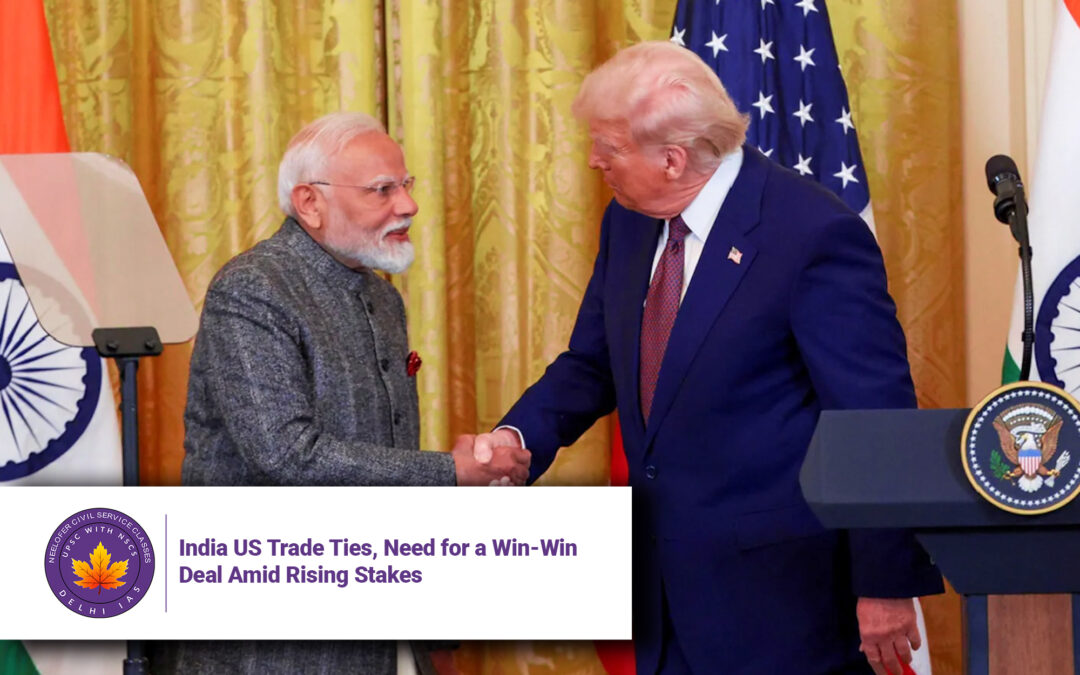
India US Trade Ties, Need for a Win-Win Deal Amid Rising Stakes
Why in News:
As India aims to become a $5 trillion economy and grow its exports from $200 billion to $500 billion by 2030, trade relations with the United States have gained critical strategic importance. However, under the unpredictable trade approach of former US President Donald Trump, challenges to a balanced and mutually beneficial agreement have intensified.
Introduction:
The modern global trade ecosystem is rapidly shifting towards bilateralism, especially under the influence of US protectionist policies. Trump’s administration has steered away from multilateralism and aggressively pursued individual country deals that tilt in America’s favor. India, with its expanding export base and huge consumer market, stands at a crucial intersection in this global trade restructuring.
Key Issues and Background:
-
Trump’s Bilateral Approach: Unlike traditional US policies, Trump preferred bilateral negotiations. He leveraged the US market advantage even against larger blocs like the EU, demanding individual concessions.
-
India’s Challenges:
-
Tariff Increases: India faced retaliatory tariffs from the US and was removed from the Generalized System of Preferences (GSP).
-
Digital & Data Laws: US companies are concerned about India’s digital policies and data localization rules.
-
Non-Tariff Barriers (NTBs): India still maintains NTBs, including high import duties, which hinder free trade.
-
-
Global Concerns: Many nations including Canada, Germany, UK, Japan, and South Korea have expressed similar concerns over the US’s increasing tariff walls.
-
Geopolitical Tensions: The Trump administration also imposed trade restrictions on allies, including Brazil, over judiciary decisions, and discouraged oil imports from Russia — impacting India’s energy security.
Specific Impacts or Effects:
-
On India:
-
Increasing trade tariffs and reduced export incentives from the US have affected India’s competitiveness.
-
Agricultural and data-related regulations remain friction points.
-
-
On the US:
-
It continues to demand greater market access, especially in digital services and agriculture.
-
The US also seeks strategic alignment from India in the Indo-Pacific and QUAD partnerships.
-
Challenges and the Way Forward:
-
High Tariff Wall: India must gradually reduce tariff rates to integrate better into global trade frameworks.
-
WTO Ineffectiveness: With the World Trade Organization’s role diminishing, future deals are likely to be bilateral — making strategic negotiation skills essential.
-
Re-engagement in Multilateral Deals: India could consider joining Comprehensive and Progressive Agreement for Trans-Pacific Partnership (CPTPP).
-
Strategic Alignment: Collaborating with the US on tech, defense, and climate fronts (e.g., Quad, Indo-Pacific strategy) could smoothen trade talks.
Conclusion:
India stands at a critical juncture where its aspirations of becoming a global economic leader must be balanced with pragmatic trade diplomacy. While Trump’s era showcased an aggressive US stance, future trade cooperation must aim at reciprocity, fairness, and long-term strategic alignment. A win-win deal with the US, particularly one that avoids unilateral demands and respects India’s sovereign concerns, will be vital to the success of both democracies.
5 Key Questions & Answers:
1. Why are India-US trade relations crucial now?
Because India wants to grow exports to $500 billion and the US is India’s biggest market.
2. What challenges has India faced from US trade policies?
Removal from GSP, higher tariffs, and pressure on agriculture and digital regulations.
3. What are non-tariff barriers (NTBs)?
Rules like import licensing, standards, and regulatory practices that restrict imports despite low tariffs.
4. How has the US approach changed under Trump?
Trump favored bilateral deals and imposed tariffs even on allies, undermining multilateral trade norms.
5. What should India do going forward?
Negotiate fair trade terms, reduce tariff walls, align strategically with the US, and explore rejoining global trade agreements like CPTPP.

