
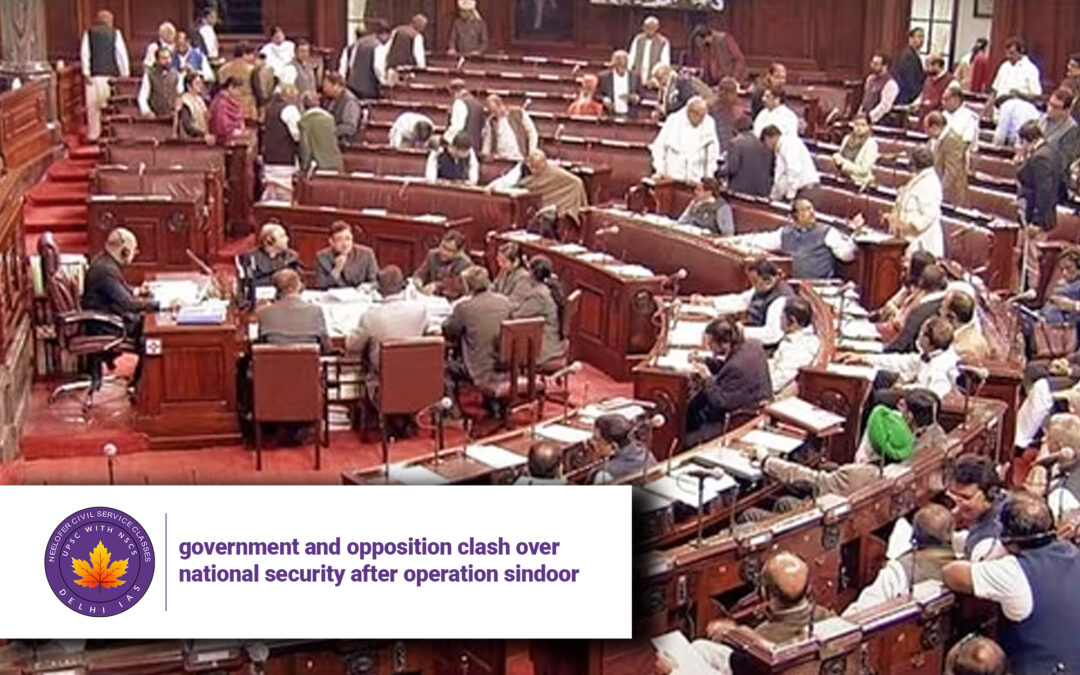
Government and Opposition Clash Over National Security After Operation Sindoor
Why in News?
In the wake of the recent Operation Sindoor, debates in the Indian Parliament have intensified, highlighting crucial changes in national security policy and the need for accountability in governance. The discussions revolve around the government’s strategic military actions and the implications for democratic processes and civil liberties. Both government and opposition factions have raised significant questions, emphasizing the need for transparency and a unified approach to national security challenges.
Introduction
Operation Sindoor, a military operation targeting militant groups in the Kashmir Valley, has reignited discussions about national security in India. The operation, which was executed following credible intelligence about imminent threats, aimed to neutralize terrorist activities in the region. However, it has also raised questions regarding the government’s approach to handling such sensitive issues and the role of parliamentary oversight.
The ongoing debates in Parliament have revealed a divide between the government and the opposition, with each side emphasizing different priorities and perspectives on national security. As India grapples with complex security challenges, the need for a coherent and transparent strategy has become paramount.
Key Issues and Background
1. Context of Operation Sindoor (Normal Bold)
Operation Sindoor was launched in response to increasing violence and terrorist activities in the Kashmir Valley. The operation targeted specific militant groups believed to be orchestrating attacks against civilians and security forces.
- Intelligence and Planning: The operation was based on credible intelligence, suggesting that immediate action was necessary to prevent potential harm to civilians and security personnel. This urgency underscores the complexities involved in counter-terrorism operations.
- Public Safety Concerns: The operation aimed to ensure public safety in the region, where the threat of terrorism has loomed large for decades.
2. Parliamentary Debates and Political Dynamics (Normal Bold)
The debates in Parliament following Operation Sindoor have been characterized by fervent discussions and differing viewpoints:
- Government’s Position: The government has defended the operation as a necessary measure for national security and has emphasized its commitment to protecting the sovereignty of the country.
- Opposition’s Critique: In contrast, the opposition has raised concerns about the transparency and accountability of the government’s actions. They have called for a more nuanced approach to national security that considers the political and social implications of military operations.
3. The Role of the Legislative Assembly (Normal Bold)
The discussions in Parliament have also highlighted the broader role of the legislative assembly in overseeing government actions:
- Checks and Balances: Parliamentary debates serve as a vital mechanism for ensuring that government actions are subject to scrutiny. This oversight is essential for maintaining democratic principles and upholding the rule of law.
- Public Discourse: The debates facilitate public discourse on national security issues, allowing citizens to engage with critical topics that affect their lives and the nation’s future.
Specific Impacts or Effects
The fallout from Operation Sindoor and the subsequent parliamentary debates have several significant implications:
1. Political Ramifications (Normal Bold)
- Polarization of Opinions: The debates have led to polarized opinions within the political landscape, with both sides entrenched in their respective positions. This polarization can hinder collaborative efforts to address national security challenges.
- Electoral Consequences: The handling of national security issues can have electoral consequences, influencing public perceptions of political parties and their commitment to safeguarding the nation.
2. Public Awareness and Engagement (Normal Bold)
- Informed Citizenry: The discussions in Parliament have contributed to a more informed citizenry, encouraging individuals to engage with national security issues. This engagement is vital for fostering a sense of civic responsibility and accountability.
- Civic Engagement: Increased public discourse can lead to greater civic engagement, empowering citizens to hold their representatives accountable for their actions and decisions.
3. Institutional Strengthening (Normal Bold)
- Reinforcing Democratic Norms: Scrutiny of government actions can reinforce democratic norms, ensuring that the government remains answerable to the people. This accountability is crucial for maintaining the integrity of democratic institutions.
- Promoting Accountability: A robust parliamentary debate contributes to a system of checks and balances, essential for ensuring that government actions align with the principles of democracy.
Challenges and the Way Forward
1. Challenges (Normal Bold)
- Balancing Security and Civil Liberties: One of the primary challenges is finding a balance between ensuring national security and upholding civil liberties. Striking this balance requires careful consideration and dialogue among lawmakers.
- Disinformation and Polarization: The current climate of disinformation and political polarization poses a threat to constructive democratic discourse. Ensuring that debates remain focused and informed is crucial.
2. Steps Forward (Normal Bold)
- Enhancing Parliamentary Oversight: Strengthening parliamentary oversight mechanisms can ensure that government actions are subject to scrutiny and accountability. This could involve establishing clearer guidelines for how military actions are reported and debated in Parliament.
- Promoting Public Engagement: Encouraging public engagement in discussions about national security can foster a more informed citizenry and strengthen democratic values. Initiatives such as public forums and discussions can facilitate this engagement.
- Investing in Civic Education: Promoting civic education can empower citizens to understand their rights and responsibilities, enhancing their engagement in democratic processes and encouraging them to participate actively in national discourse.
Conclusion
The debates surrounding Operation Sindoor have underscored the importance of accountability, transparency, and democratic principles in matters of national security. As India navigates the complexities of contemporary security challenges, it is essential for democratic institutions to remain vigilant and responsive to the needs of the citizenry. By fostering a culture of scrutiny and open dialogue, India can ensure that its democratic values are upheld while addressing the pressing issues of security and sovereignty.
5 Questions and Answers
Q1: What was Operation Sindoor?
A: Operation Sindoor was a military operation aimed at neutralizing militant threats in the Kashmir Valley, based on credible intelligence regarding imminent dangers to national security.
Q2: How did the government justify the operation?
A: The government justified the operation as a necessary measure to protect national sovereignty and ensure public safety, emphasizing the urgency of the situation.
Q3: What were the main concerns raised by the opposition?
A: The opposition raised concerns about the transparency and accountability of the government’s actions, advocating for a more nuanced approach to national security.
Q4: How do parliamentary debates contribute to national security discussions?
A: Parliamentary debates serve as a mechanism for oversight, ensuring that government actions are scrutinized and that democratic principles are upheld, fostering public discourse on critical issues.
Q5: What steps can be taken to enhance accountability in government actions?
A: Key steps include strengthening parliamentary oversight mechanisms, promoting public engagement in national security discussions, and investing in civic education to empower citizens.

