
Supreme Court Faces Tightrope Walk in Bihar SIR Case Amid Voter Disenfranchisement Fears
Why in News?
The Supreme Court of India is currently hearing petitions challenging the Election Commission of India’s (ECI) decision to conduct a Special Intensive Revision (SIR) of the electoral rolls in Bihar. This exercise, launched ahead of the upcoming assembly elections, has sparked controversy over its procedure and the potential disenfranchisement of voters. 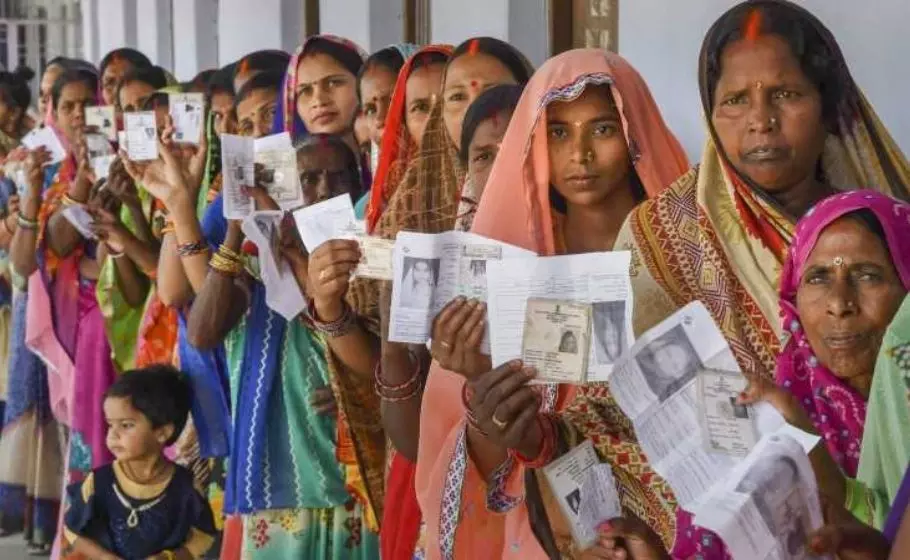
Introduction
The SIR was initiated by the ECI under Section 21 of the Representation of the People Act, 1950, allowing revisions of electoral rolls. Despite concluding the first phase, it revealed that 72.4 million enumeration forms were collected—6.5 million fewer than the total registered voters in Bihar. Petitioners argue that the SIR process is flawed, opaque, and likely to disenfranchise a significant portion of the electorate.
Key Issues and Concerns
-
Eligibility Cut-Off: Voters enrolled after 2003 were required to re-enroll and prove eligibility but were given only one month to do so.
-
Opaqueness and Haste: The speed of enumeration, lack of clarity, and short deadlines have raised concerns over voter exclusion.
-
Supreme Court’s Role: The SC refused to stay the exercise but directed the ECI to consider Aadhaar card, ration card, and voter ID card to avoid disenfranchisement.
-
Statutory Rights vs Fundamental Rights: The right to vote is not a fundamental right but a statutory one, meaning it can be altered by legislation.
-
Precedents and Judicial Limitations: The SC has traditionally avoided interfering in election processes, citing cases like Baidyanath Panjiar v. Sitaram Mahto (1969) and Lakshmi Chandra Sen v. AKM Hassan (1985).
Challenges and the Way Forward
-
Marginalised Groups at Risk: Slum dwellers, the poor, and the illiterate may not understand disqualification notices or complete re-registration.
-
Exclusion from Internal Remedies: Internal redressal mechanisms under the 1950 Act have been ineffective or inaccessible to vulnerable communities.
-
Judicial Caution: The SC may refuse intervention to avoid delaying elections but risks overlooking violations of voting rights.
-
Need for Special Tribunal: If irregularities impact electoral fairness, a special tribunal could be a solution.
-
Call to Uphold Democratic Rights: The Court must act as a sentinel on the qui vive to ensure no voter is unjustly denied the right to vote.
Conclusion
As Bihar prepares for elections, the Supreme Court is faced with a critical task—to ensure no eligible citizen is disenfranchised while maintaining the sanctity and timeliness of the electoral process. The balance between judicial restraint and democratic protection is delicate but necessary to preserve India’s electoral integrity.
Q&A Section
Q1. What is the Bihar SIR case about?
It concerns the Election Commission’s decision to conduct a Special Intensive Revision (SIR) of Bihar’s electoral rolls, which has been challenged in the Supreme Court due to concerns of disenfranchisement.
Q2. Why are petitioners opposing the SIR process?
Because it required voters enrolled after 2003 to re-enroll within a month, potentially disenfranchising millions due to limited time and lack of clarity.
Q3. What is the Supreme Court’s current stance?
The Court has not stayed the SIR but asked the ECI to consider using Aadhaar, ration card, and voter ID to avoid excluding voters.
Q4. Is the right to vote a fundamental right in India?
No, it is a statutory right, which means it is derived from legislation and not guaranteed by the Constitution.
Q5. What are the legal risks if the Supreme Court interferes with the SIR process?
It could delay the elections or be seen as judicial overreach, which the Court historically avoids unless electoral integrity is clearly threatened.

