
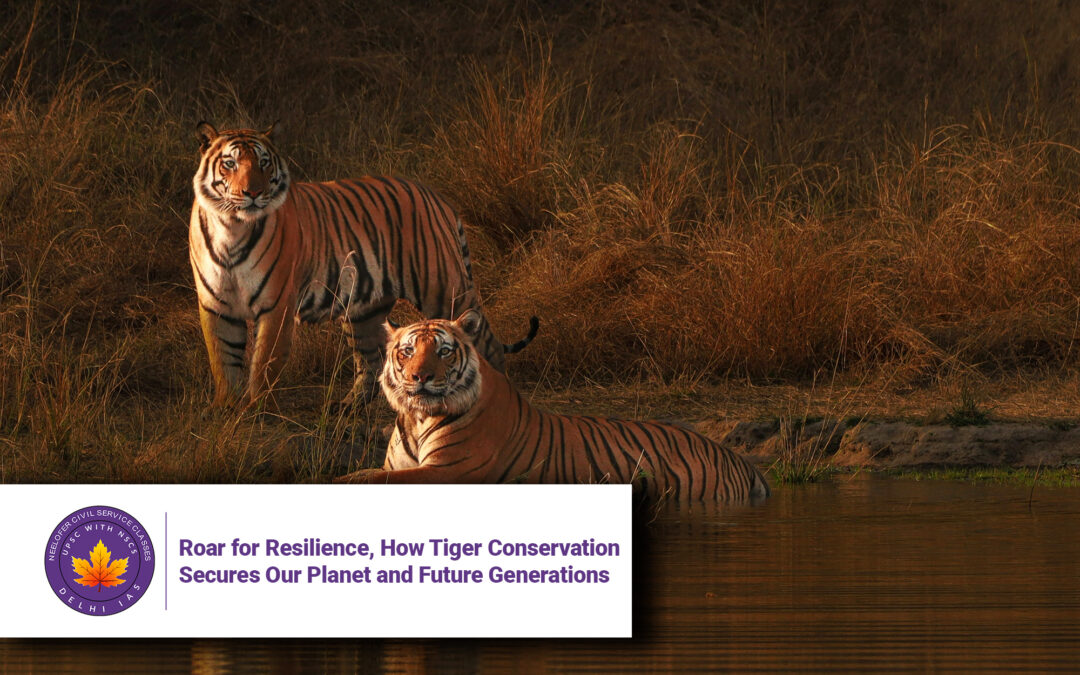
Roar for Resilience, How Tiger Conservation Secures Our Planet and Future Generations
Why in News?
Every year on July 29, the world observes International Tiger Day to raise awareness about the critical importance of tiger conservation. India, home to around 75% of the global wild tiger population, plays a pivotal role in this movement. The day is a reminder that saving tigers not only protects wildlife but also strengthens ecosystems, climate resilience, and human well-being. 
Introduction
Tigers are more than just majestic creatures; they are ecological guardians. As umbrella species, protecting them means protecting entire ecosystems. Forests that house tigers support countless species of animals and plants, absorb carbon dioxide, regulate rainfall, and help reduce the risks of climate change and natural disasters.
India’s Tiger Protection Program
India has shown remarkable progress in tiger conservation:
-
The Project Tiger initiative launched in 1973 was a landmark step toward safeguarding tigers and their habitats.
-
According to the All India Tiger Estimation 2022, India now has 3,682 wild tigers, the highest globally.
-
India has 53 tiger reserves across 18 states, covering around 75,000 sq. km.
These efforts are part of a larger mission to integrate tiger protection with climate action and sustainable development.
Tigers and Climate Change
Tigers and their habitats are deeply linked to climate change in several ways:
-
Forests where tigers live store carbon, help mitigate greenhouse gas emissions, and moderate temperature fluctuations.
-
Rising temperatures, sea levels, and unpredictable weather affect tiger habitats and their prey.
-
Forest fragmentation and habitat loss due to climate change reduce tiger survival chances and genetic diversity.
In particular, the Sundarbans and the Western Ghats face severe challenges from rising sea levels, cyclones, and warming.
Community and Livelihood Connection
Many indigenous and forest communities live near or within tiger habitats. Their livelihood depends on sustainable forestry, water, and eco-tourism.
India has recognised this connection and promoted:
-
Eco-development committees
-
Community-based tourism
-
Joint forest management
These help integrate tiger conservation with community welfare, especially in tribal and rural areas.
Obstacles Ahead
Despite progress, challenges remain:
-
Illegal wildlife trade
-
Infrastructure expansion
-
Poaching
-
Conflicts between communities and forest departments
-
Fragmented habitats
All these reduce genetic diversity, weaken the ecosystem, and threaten tiger survival.
Government Programs and Innovations
Key national initiatives include:
-
National Tiger Conservation Authority (NTCA) – oversees scientific tiger monitoring and management.
-
Green India Mission and NAPCC – aim to expand forest cover and improve ecosystem services.
-
Wildlife Crime Control Bureau (WCCB) – combats illegal trade and poaching.
Efforts are also being made to restore wildlife corridors, such as the Central Indian Landscape, which enable tigers to move between reserves, improving their chances of survival.
Suggestions for the Future
To make tiger conservation climate-smart and inclusive, India should:
-
Incorporate climate risk assessments into tiger reserve management.
-
Promote landscape-level conservation.
-
Involve local communities and recognize their rights.
-
Invest in climate-resilient tourism.
-
Raise awareness via education and citizen science programs.
Conclusion
Tiger conservation is not just about saving a species—it is about saving ecosystems, climate resilience, and our future. By safeguarding tigers, we are investing in a sustainable, safer planet for generations to come.
Q&A Section
Q1. What is the significance of International Tiger Day?
A1. It is observed on July 29 to raise awareness about the importance of tiger conservation for protecting wildlife, ecosystems, and combating climate change.
Q2. How does tiger conservation help fight climate change?
A2. Tiger habitats like forests absorb carbon, regulate temperature, and store water—reducing the impact of climate disasters such as floods and droughts.
Q3. What is India’s role in global tiger conservation?
A3. India is home to about 75% of the world’s wild tiger population and has implemented successful programs like Project Tiger and NTCA to protect them.
Q4. What are the major threats to tiger populations?
A4. Habitat fragmentation, climate change, poaching, illegal trade, and human-wildlife conflict are the major threats facing tiger populations today.
Q5. What steps can improve tiger conservation in India?
A5. India should include climate change data in conservation plans, engage local communities, create secure wildlife corridors, and promote eco-tourism.
